EMAIL
BESPOKE INQUIRY
pureasanaofficial@gmail.com
Explore Articles by Topic:
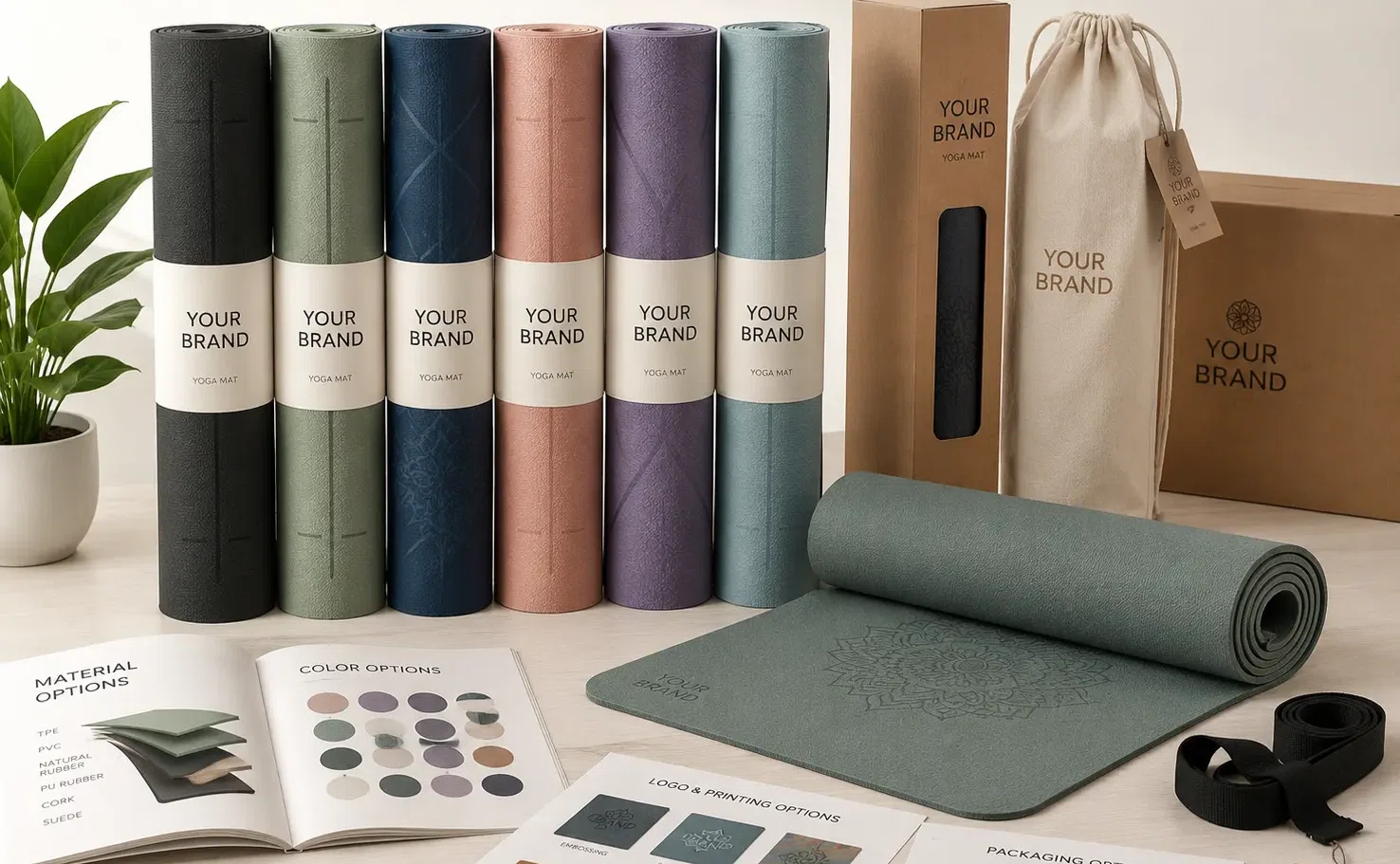
Developing custom yoga mats for private label brands involves more than adding a logo to an existing mat. Material, structure, size, density, color, surface, branding, and packaging influence performance, MOQ, price, sampling, shipping weight, and market positioning.
A successful project starts with a clear target customer and retail strategy. Buyers can then select specifications that support the intended use, cost, and sales channel. This guide covers the key decisions from product planning and quotation to sample approval.
Understanding how to customize yoga mats for a private label brand starts with four key decisions:
There is no single standard configuration for all custom yoga mats for private label brands. The appropriate combination depends on the target market, expected performance, product weight, price position, branding requirements, packaging, and estimated order quantity. Buyers should finalize the product structure before confirming decorative details such as colors, logos, and retail packaging.
Private Label, OEM, and ODM describe different levels of product development and buyer involvement.
|
Project Type |
Typical Situation |
Customization Level |
|---|---|---|
|
Private Label |
An existing product structure receives custom color, logo, and packaging |
Low to moderate |
|
OEM |
Production follows the buyer’s approved design, sample, or technical specifications |
Moderate to high |
|
ODM |
The manufacturer helps recommend materials, structure, and specifications |
Moderate |
Private label yoga mats suit brands that want a proven structure with their own branding. OEM yoga mats fit buyers with detailed specifications, while ODM projects suit buyers who need technical recommendations.
These models can overlap; the main difference is how much of the product is already defined.
A yoga mat can be customized in several areas, but available options depend on material compatibility, order quantity, and production method.
|
Customization Area |
Common Options |
|---|---|
|
Material |
TPE, PVC, natural rubber, PU natural rubber, cork natural rubber, or suede natural rubber |
|
Size and thickness |
Standard or customized specifications |
|
Density and weight |
Adjusted for support, portability, and cost |
|
Color |
Standard colors or Pantone matching |
|
Surface |
Embossed, PU, cork, suede, or printed surfaces |
|
Logo |
Embossing, screen printing, UV printing, or laser marking |
|
Artwork |
Local logo, alignment lines, or full-surface design |
|
Packaging |
Paper band, carry strap, film, bag, hang tag, or color box |
Not every logo process works on every surface. The material and upper structure should normally be confirmed before the branding method. Packaging MOQ may also differ from the MOQ for the mat itself.
Explore available custom yoga mats.
The specification plan should begin with the target market. A product designed for premium studio use requires different materials, weight, packaging, and cost control from a lightweight e-commerce mat or a promotional product.
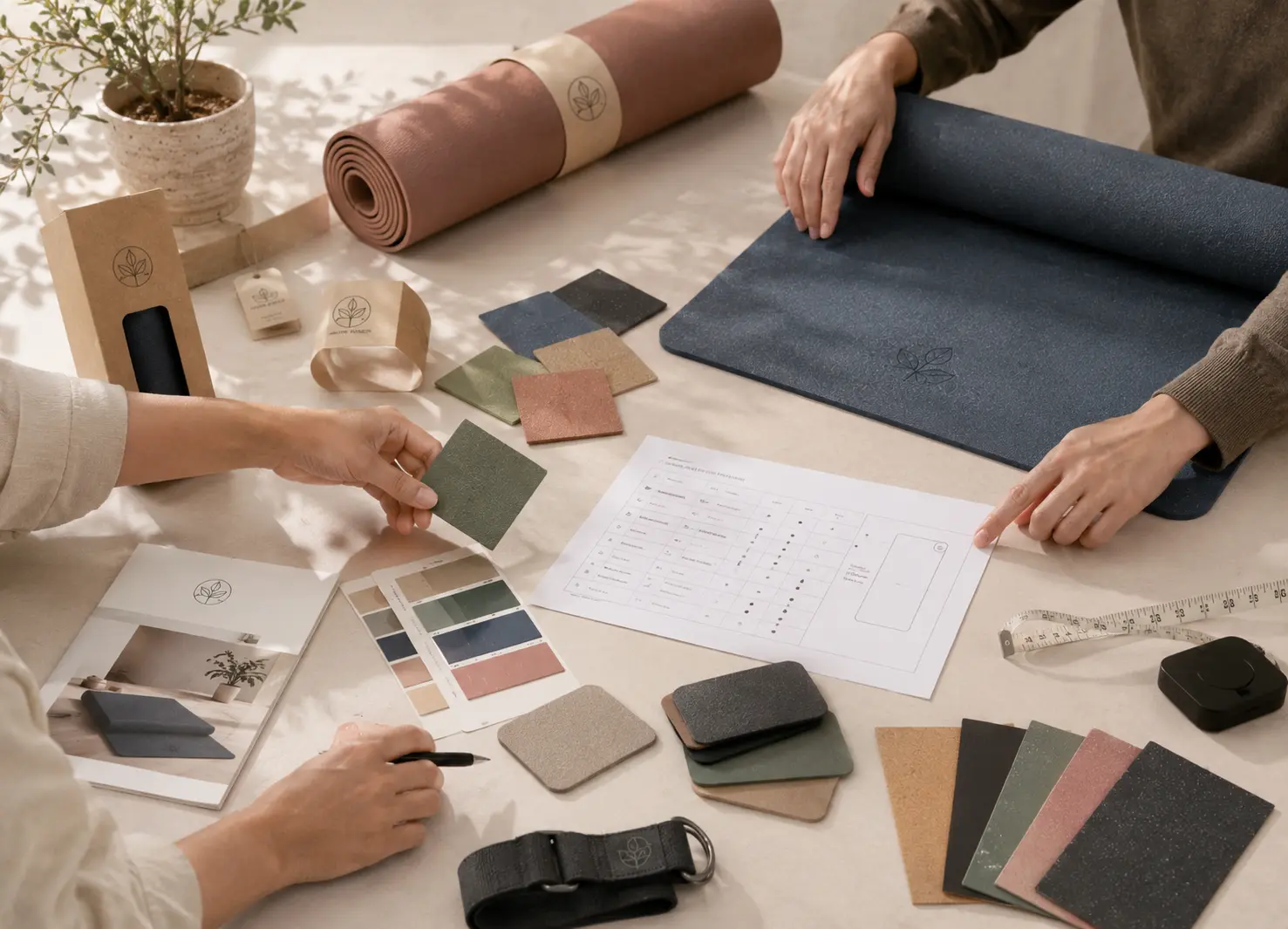
Brands should first decide whether the product is intended for an entry-level, mainstream, studio, or premium market.
Entry-level products usually prioritize controlled cost and basic durability. Mainstream e-commerce products need a balance of appearance, comfort, unit weight, and delivery expense. Studio products may require easier cleaning and repeated-use durability. Premium collections often place more emphasis on grip, surface feel, material presentation, and retail packaging.
The expected retail price should also be defined early. It helps the buyer work backward toward a realistic purchase cost and prevents over-specifying a product that the target market cannot support.
When deciding which yoga mat material is best for private label, brands should start with product positioning rather than a universal ranking.
|
Material or Structure |
Typical Positioning |
|---|---|
|
TPE |
Lightweight mainstream and e-commerce |
|
PVC |
Entry-level, promotional, and cost-sensitive projects |
|
Natural rubber |
Stable, grip-focused, and premium products |
|
PU, cork, or suede with a natural rubber base |
Functional or visual differentiation |
TPE suits lightweight and colorful collections. PVC supports broad price and texture options. Natural rubber provides a denser, heavier base, while PU, cork, and suede surfaces create different grip, cleaning, artwork, and positioning options.
For a detailed comparison, see TPE vs PVC vs natural rubber yoga mats.
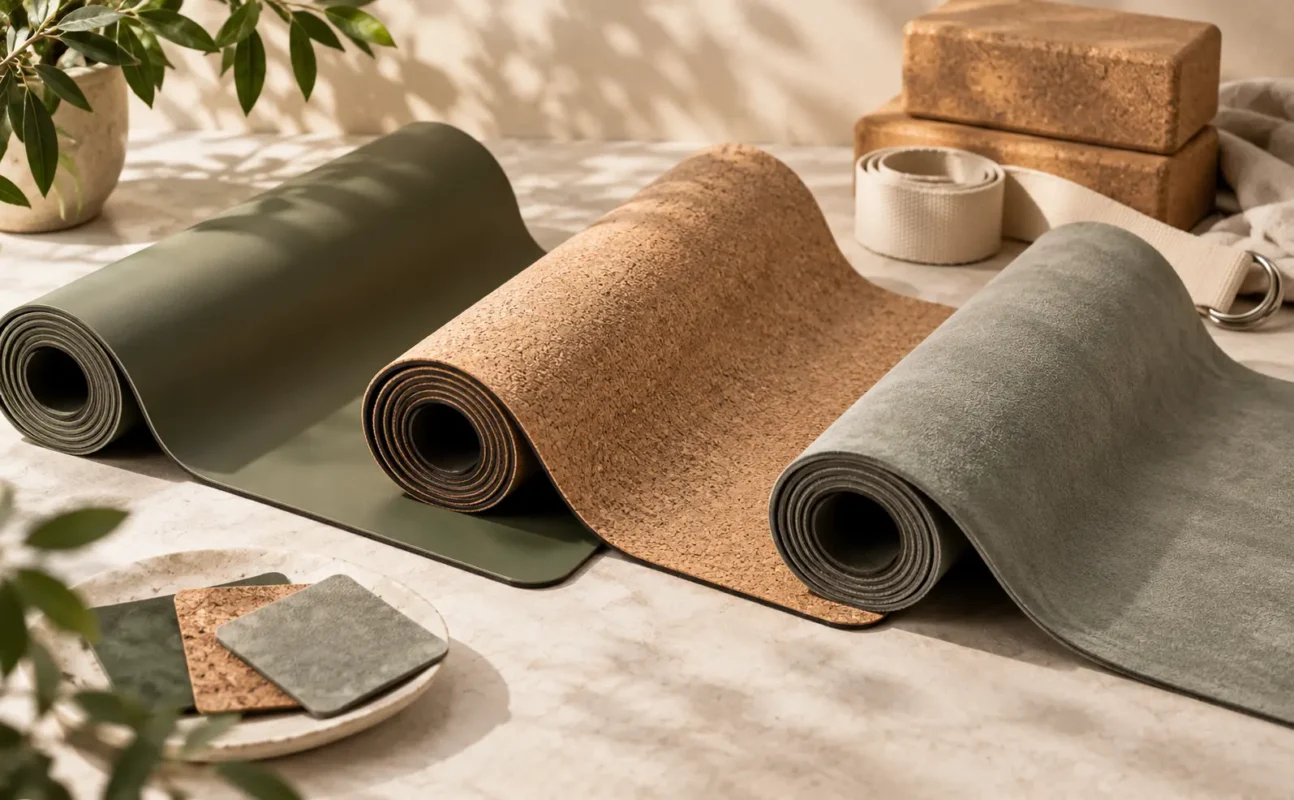
Brands considering a natural-rubber-base construction can compare PU, cork, and microfiber suede yoga mat surfaces before finalizing the upper material.
Common yoga mat sizes include:
Common thicknesses include:
Custom specifications may also be possible.Brands comparing standard and larger dimensions can review our yoga mat size guide before confirming the specification.
Thickness alone does not determine cushioning or quality. Density influences support, rebound, compression resistance, product weight, and cost.
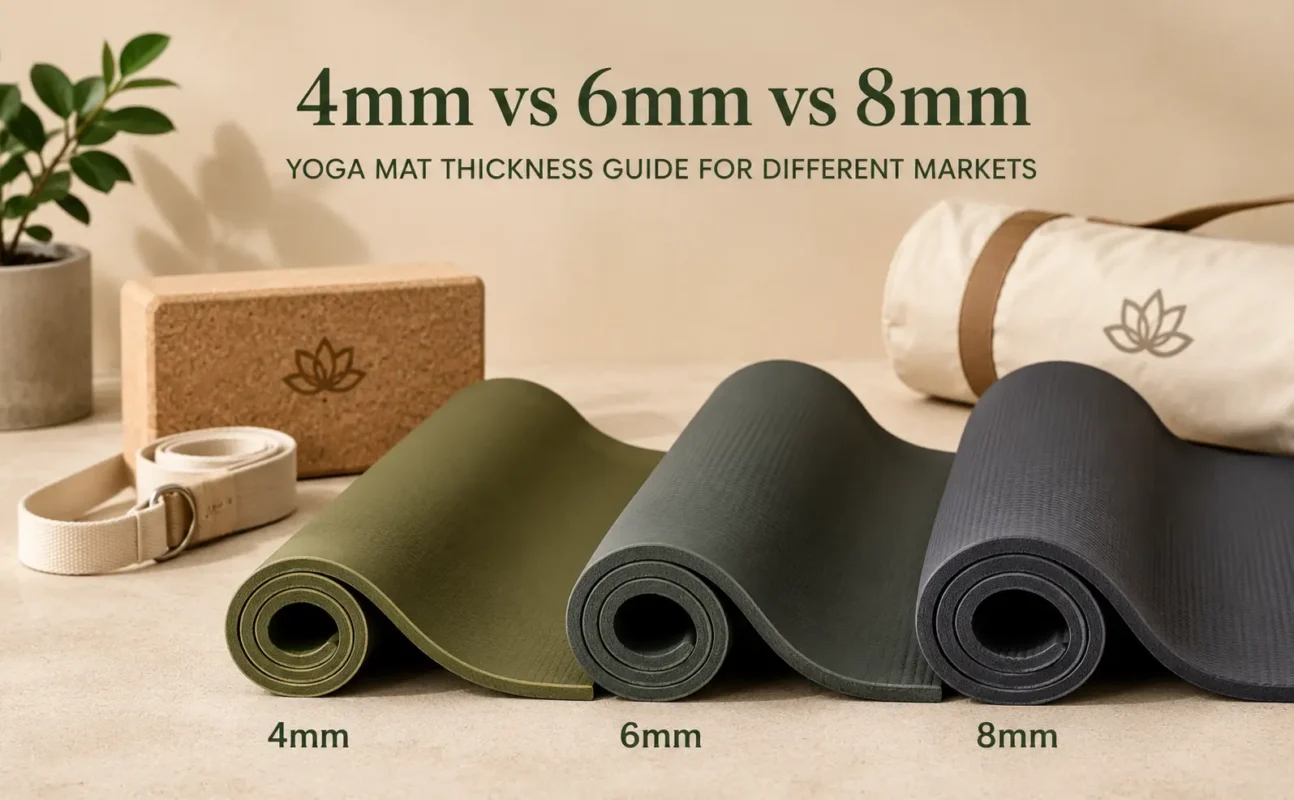
Unit weight also affects carton quantity, carton gross weight, consumer portability, e-commerce fulfillment, and international freight. Buyers should therefore compare size, thickness, density, and unit weight together.Brands comparing standard specifications can use our yoga mat thickness guide to evaluate 4mm, 6mm, and 8mm options by cushioning, stability, finished weight, and target market.
Logo and packaging choices should support the brand while remaining compatible with the yoga mat surface and production method.
|
Logo Method |
Typical Application |
|---|---|
|
Embossing |
Simple, subtle branding on compatible foam surfaces |
|
Screen printing |
Small-area logos with limited colors |
|
UV printing |
Colorful local artwork on compatible surfaces |
|
Laser marking |
Cork and selected suitable surfaces |
|
Full-surface printing |
Artwork, alignment lines, or textile and suede surfaces |
Embossing offers a subtle appearance, while screen printing suits simple custom logo yoga mats. UV printing may support more color and detail, but adhesion should be tested. Laser marking is common on cork, and full-surface printing suits artwork or alignment graphics.
Buyers should provide:
Common packaging options include:
Packaging affects more than appearance. It can change the packaging MOQ, unit cost, carton size, retail labeling, transport protection, and production schedule.
A custom color box may require a different minimum quantity from a mat with a simple paper band.
Pureasana supports color, logo, and packaging customization through its private-label yoga mat services.
For custom yoga mats for private label brands, MOQ, price, and timing depend on the full specification. A custom yoga mat manufacturer cannot provide a reliable final quotation from only a material name and quantity.For a detailed breakdown of material, color, size, logo, packaging, and SKU minimums, see our yoga mat MOQ guide.
|
Information Group |
Details |
|---|---|
|
Product |
Material, structure, size, thickness, density, and color |
|
Branding |
Logo artwork, dimensions, position, and printing requirements |
|
Commercial |
Quantity, packaging, target price, and sales market |
|
Delivery |
Destination, required date, testing, and labeling requirements |
For wholesale custom yoga mats, buyers without final specifications can provide the target customer, use scenario, retail position, and estimated quantity so the supplier can recommend a suitable starting point.
MOQ and pricing depend on the complete product specification rather than the yoga mat material alone. Custom Pantone colors, special dimensions, multi-layer structures, large printing areas, complex logo methods, and customized packaging may increase the minimum order quantity because they require additional material preparation or production setup.
Pureasana’s regular MOQ is typically around 100 pieces, depending on the product and customization requirements. Standard colors, common sizes, and simple branding generally allow greater quantity flexibility than full-surface printing or specialized retail packaging.
Two yoga mats with the same material and dimensions may still have different prices. Density, unit weight, surface structure, artwork coverage, packaging, order quantity, and testing requirements all influence the final quotation.
Standard yoga mat samples generally take about 3–7 days, while customized samples typically require around 10–20 days. Customized sampling may include color matching, logo application, artwork adjustment, specification confirmation, or packaging development.
Bulk production commonly takes approximately 25–40 days after final approval. The actual schedule depends on material availability, order quantity, logo complexity, packaging requirements, sample revisions, testing arrangements, and how quickly the final specifications are confirmed.
For projects with custom colors, full-surface printing, or specially produced packaging, buyers should allow additional time for material preparation and sample approval.
A sample should confirm the final product rather than only its appearance. Buyers should evaluate whether the material, specifications, performance, branding, and packaging meet the intended market requirements.
|
Sample Type |
Main Purpose |
|---|---|
|
Standard Sample |
Evaluate material, texture, thickness, weight, and general workmanship |
|
Customized Sample |
Confirm final color, logo, printing, specifications, and packaging |
A standard sample is useful during early material selection. A customized sample is more suitable before bulk production because it represents the proposed private-label product more completely.For a detailed comparison of sample types, costs, lead times, revisions, and approval records, read our custom yoga mat samples guide.
|
Inspection Area |
Main Checks |
|---|---|
|
Specifications |
Size, thickness, density, and unit weight |
|
Performance |
Grip, cushioning, stability, and flatness |
|
Workmanship |
Edges, surface consistency, cutting, and layer bonding |
|
Branding |
Color, logo size, position, clarity, and adhesion |
|
Packaging |
Protection, labels, barcodes, and presentation |
Inspection priorities should match the product structure. A dual-layer TPE mat requires attention to layer bonding, while a PU natural rubber mat may require closer review of surface consistency and print adhesion.
After sample approval, buyers should record:
Bulk production should follow both the approved sample and the written specification. Any later change should be confirmed in writing because it may affect cost, MOQ, timing, or the final result.
A suitable manufacturer should provide more than a competitive unit price.
These criteria help buyers compare suppliers by project suitability rather than price alone.
Successful custom yoga mats for private label brands begin with a defined market, realistic price position, and clear specifications.
Brands should select materials and dimensions first, confirm compatible logo and packaging options, and then request a quotation with complete commercial information.
Before bulk production, both the customized sample and written specification should be approved. This sequence reduces revisions and helps the finished product match its intended market.
Pureasana supports Wholesale, OEM, ODM, and Private Label projects. Send your material preference, size, thickness, quantity, logo, packaging, target market, price level, and delivery schedule for evaluation.
Pureasana’s regular MOQ is typically around 100 pieces, but the final quantity depends on material, color, logo, packaging, and production method. More complex customization may require different quantities.
There is no single price for wholesale custom yoga mats. Material, size, density, weight, logo method, packaging, quantity, and testing requirements all affect the quotation.
Standard samples generally take about 3–7 days, while customized samples typically require approximately 10–20 days. Actual timing depends on material availability, artwork, color matching, packaging, and revision requirements.
Yes. Adding a logo and branded packaging to an existing product structure is one of the simplest private-label approaches. The suitable method depends on the material, surface, artwork, color count, and required wear resistance.
Buyers should provide the material or target market, product structure, size, thickness, color, logo, packaging, estimated quantity, destination, delivery date, and testing requirements.
A target price can also help the supplier recommend a realistic specification.
Explore Product Materials