EMAIL
BESPOKE INQUIRY
pureasanaofficial@gmail.com
Explore Articles by Topic:
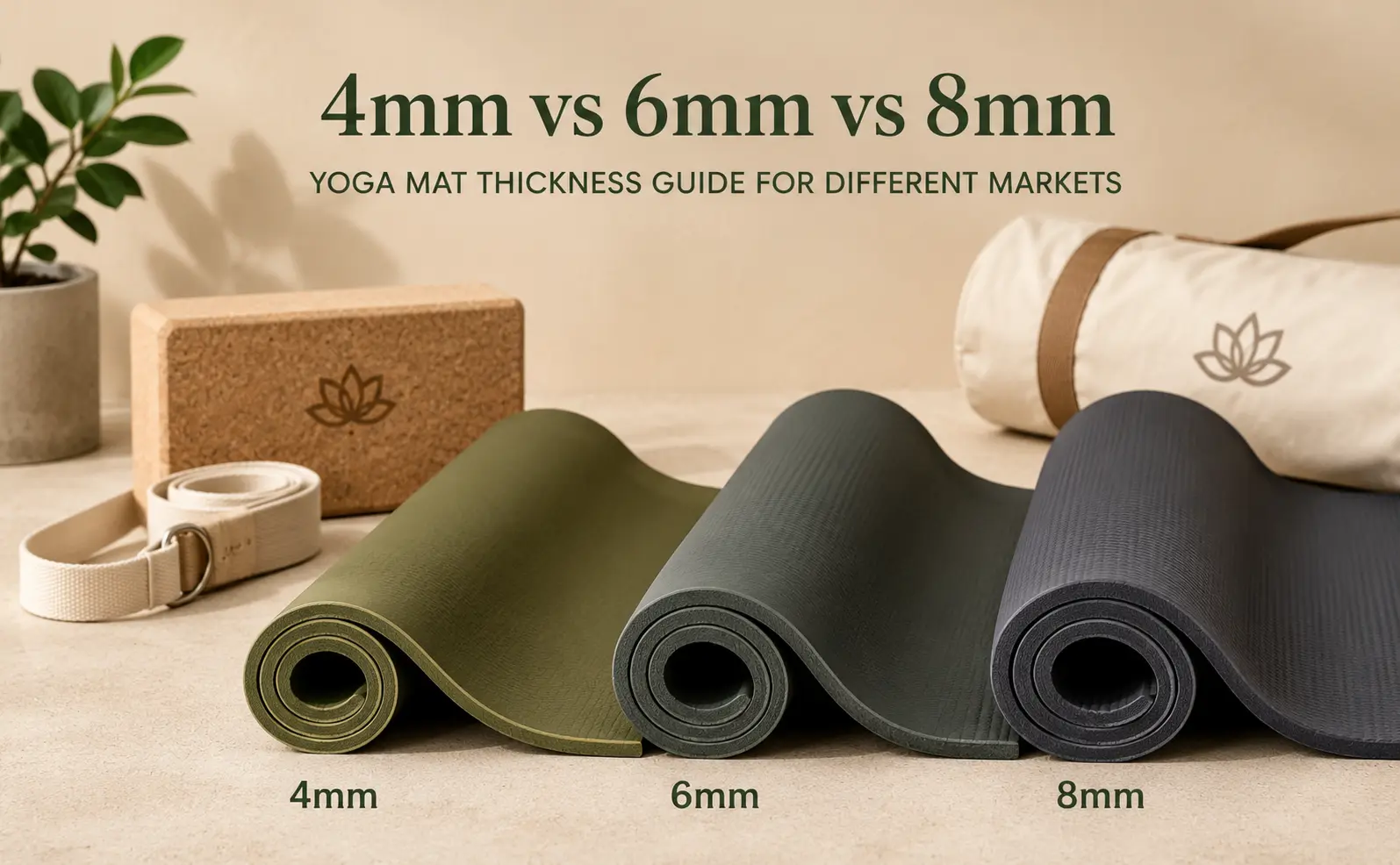
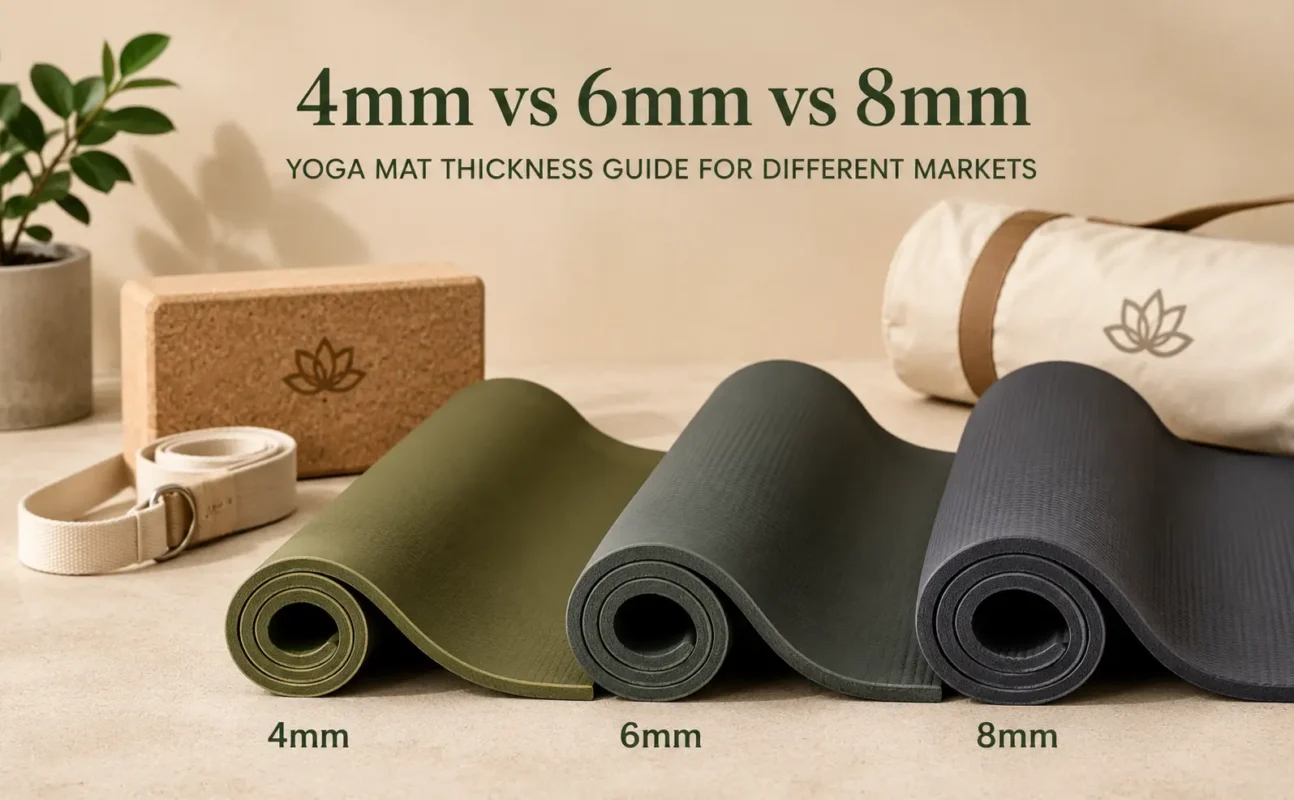
This yoga mat thickness guide compares 4mm, 6mm, and 8mm options from product-performance and B2B sourcing perspectives. The right thickness depends on material, density, structure, target customer, sales channel, and acceptable shipping cost.
In general, 4mm supports stable and compact positioning, 6mm offers broad balance, and 8mm suits cushioning-focused or home-practice collections. These are starting points, not fixed rules. A dense 4mm rubber mat can weigh more and feel more supportive than a soft 8mm foam mat. Buyers should evaluate thickness together with finished weight, roll diameter, packaging, and sample performance.
No thickness is universally better. The best yoga mat thickness depends on the complete material, density, structure, and packaging specification. In a 4mm vs 6mm yoga mat comparison, 4mm generally favors floor feedback and compactness, while 6mm offers more cushioning and broader market flexibility.
Yoga mat thickness affects cushioning, floor feedback, stability, finished weight, roll size, packaging efficiency, and retail positioning. Thickness alone does not determine grip, durability, or overall quality.
Greater thickness generally creates more noticeable cushioning, but density and compression determine the final feel. A thick, soft mat may suit floor-based practice while offering less stability in standing poses. Thinner mats usually provide more direct floor feedback.
A thicker mat usually creates a larger roll, affecting retail packaging, carton dimensions, and e-commerce fulfillment. Weight does not increase directly with thickness: a dense natural rubber mat may outweigh a thicker foam mat.
|
Comparison Area |
4mm |
6mm |
8mm |
|---|---|---|---|
|
Cushioning |
Lower to medium |
Medium |
Medium to higher |
|
Stability |
Often more direct and stable |
Balanced |
Density-dependent |
|
Floor Feedback |
More direct |
Moderate |
Less direct |
|
Roll Diameter |
Smaller |
Medium |
Larger |
|
Portability |
Often easier, material-dependent |
Moderate |
Usually lower |
|
Typical Positioning |
Stable, compact, dense premium mat |
Mainstream and versatile |
Comfort and home use |
|
Main Buyer Check |
Density and support |
Complete specification |
Firmness and packaging |
This table provides general sourcing guidance. Different materials should not be compared by thickness alone, and the approved sample should remain the final reference.
A 4mm yoga mat generally suits brands that prioritize stability, floor feedback, compact packaging, or dense material positioning.
A 4mm specification may fit studio collections, experienced users, premium grip products, compact e-commerce lines, and some travel ranges. It is especially relevant when the product message emphasizes control and a stable base.
Four-millimeter mats are common in PU-surface and natural-rubber constructions, as well as other dense structures, although some TPE and PVC mats also use this thickness. Thin does not mean entry-level: a dense 4mm rubber mat may have a premium position and relatively high finished weight.
The smaller roll can support compact presentation, but customers seeking deeper cushioning may consider it too thin. Buyers should confirm whether the target market values stability more than softness.
A 6mm yoga mat generally offers a practical balance of cushioning, stability, weight, and retail flexibility, making it a useful starting point for many private-label collections.
Six-millimeter mats often suit beginners, general-practice users, sporting-goods retailers, e-commerce brands, yoga studios, and mid-range collections. The specification is easy to position because it is neither especially thin nor unusually thick.
A 6mm mat can use TPE, PVC, foam-based structures, or some layered constructions. Two 6mm mats may still differ in density, compression, texture, weight, and durability, so buyers should confirm the full structure.
The broad market fit makes 6mm useful as a core SKU and for color or logo extensions. However, it may be too bulky for a true travel product, while premium dense-rubber ranges may prefer a thinner construction.
Brands considering lightweight or mainstream 6mm structures can explore our custom TPE yoga mats.
An 8mm yoga mat generally suits cushioning-focused, home-practice, beginner-comfort, or general fitness collections. In a 6mm vs 8mm yoga mat comparison, 6mm is usually easier to position as a versatile core SKU, while 8mm emphasizes comfort and visible cushioning.
Eight-millimeter mats may fit home users, stretching ranges, beginner collections, and retail markets where visible thickness is a key selling point.
This thickness is commonly developed in TPE, PVC, and other foam-based structures. Buyers should confirm density, compression recovery, standing stability, finished weight, and roll diameter. A soft 8mm mat can compress more than expected, so thickness alone does not confirm support.
The thicker appearance is easy to communicate, but the larger roll may reduce carton quantity and increase dimensional weight. E-commerce brands should also consider storage and return-shipping costs.
Material, density, and construction determine how a yoga mat compresses, recovers, weighs, and supports the user, even when two products share the same nominal thickness.
Two 6mm foam mats can feel different because formulation, cell structure, and density affect firmness and recovery. Thickness should be compared together with finished weight, compression, resilience, and shape retention.For a broader comparison of density, weight, grip, durability, and positioning, review our guide to TPE, PVC, and natural rubber yoga mats.
Natural rubber mats and PU-surface mats with natural rubber bases are commonly denser than lightweight foam mats. A 4mm or 5mm structure may provide firm support while weighing more than a thicker TPE product. Grip, stability, and premium material positioning may matter more than visible thickness.
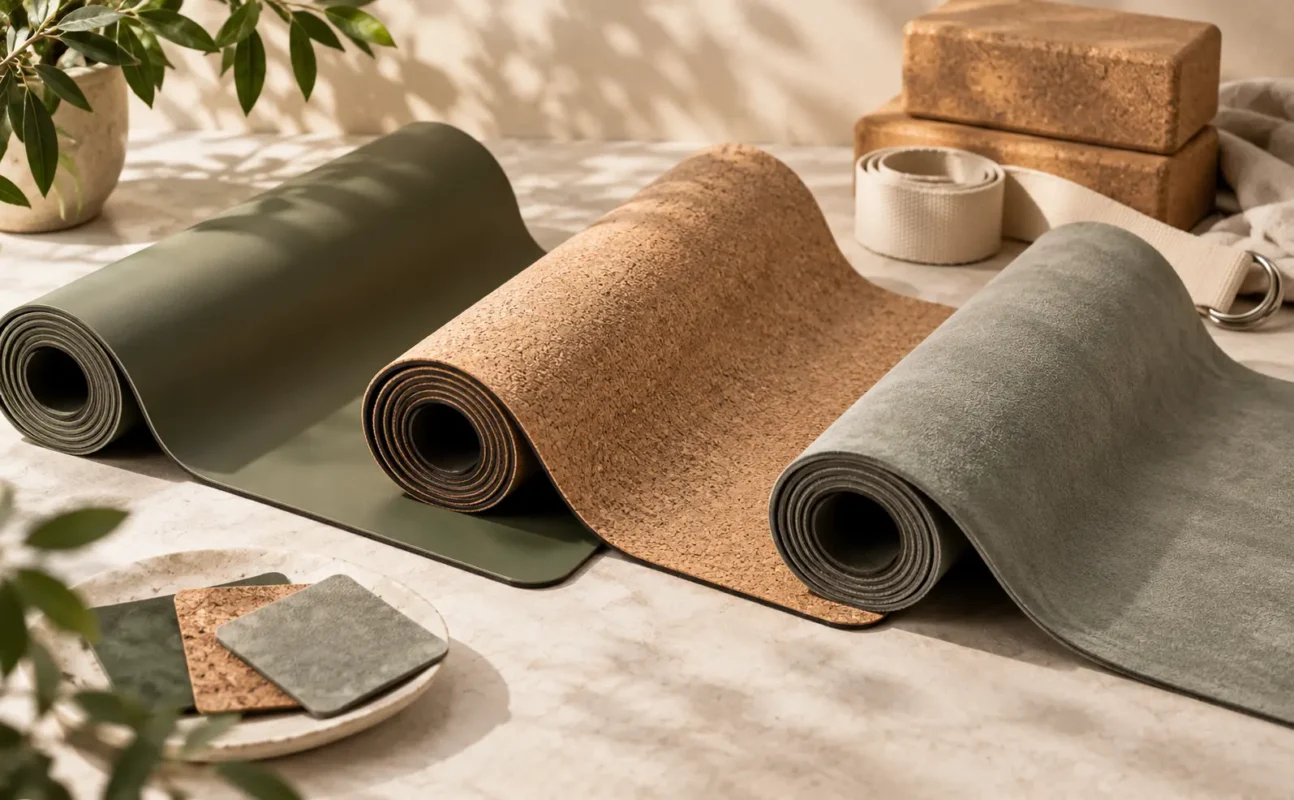
For cork, suede, and other layered products, stated thickness normally includes the surface and base. Buyers should confirm each layer because the surface influences feel and branding while the base provides most support.
Before comparing samples, ask for the material structure, individual layer thicknesses, finished weight or density, measurement method, and compression recovery.
The best starting thickness depends on product positioning, channel, material, and customer expectations.
|
Target Market |
Recommended Starting Point |
Main Reason |
Buyer Priority |
|---|---|---|---|
|
Entry-Level Retail |
6mm or 8mm foam mat |
Visible cushioning |
Softness, weight, target price |
|
Mid-Range Private Label |
6mm |
Broad market balance |
Material, density, packaging |
|
Premium Grip Collection |
4mm–5mm dense structure |
Stability and positioning |
Weight, grip, structure |
|
Yoga Studios |
4mm or 6mm |
Stability and storage |
Durability and replacement consistency |
|
Home Fitness |
6mm or 8mm |
Cushioning and general use |
Roll size and storage |
|
E-Commerce |
4mm or 6mm |
Easier volume control |
Dimensional weight |
|
Travel Range |
Compact 4mm or a foldable travel structure |
Portability |
Folding or rolling design |
Entry-level collections may use 6mm or 8mm foam mats because cushioning is easy to explain. Mid-range brands often use 6mm as the main SKU and differentiate through material, texture, color, logo, and packaging.
Premium grip collections often use 4mm or 5mm dense structures. Studios prioritize stability, durability, storage, and replacements; e-commerce sellers focus on package size; and home-fitness ranges can accept a larger roll when cushioning is central.
These are development starting points. Finished samples and target retail pricing should guide the final decision.[How to Choose the Right Yoga Mat for Your Brand]
Yoga mat thickness for wholesale sourcing can influence roll size, carton quantity, shipping cost, sample development, and production planning.
A thicker mat generally creates a larger roll and may reduce units per carton. Dense rubber products may be limited mainly by actual weight, while lightweight thick foam mats may be affected by dimensional weight. Buyers should compare final package dimensions, carton quantity, gross weight, and shipping method.
Thickness affects material use, but price also depends on material type, density, dimensions, structure, texture, logo, packaging, and quantity. An 8mm mat is not automatically more expensive than every 6mm option.
Standard thicknesses and colors are generally easier to arrange. A custom yoga mat thickness, unusual density, special structure, or printed retail box may affect MOQ and timing.
For Pureasana projects, regular MOQ typically starts at around 100 pieces per specification, depending on the material, thickness, color, logo, and packaging requirements. Standard samples generally take 3–7 days, customized samples 10–20 days, and bulk production 25–40 days, subject to final specifications.
A complete quotation requires more than a thickness number because two 6mm yoga mats can have different materials, structures, weights, performance, packaging, and costs.
Buyers should provide:
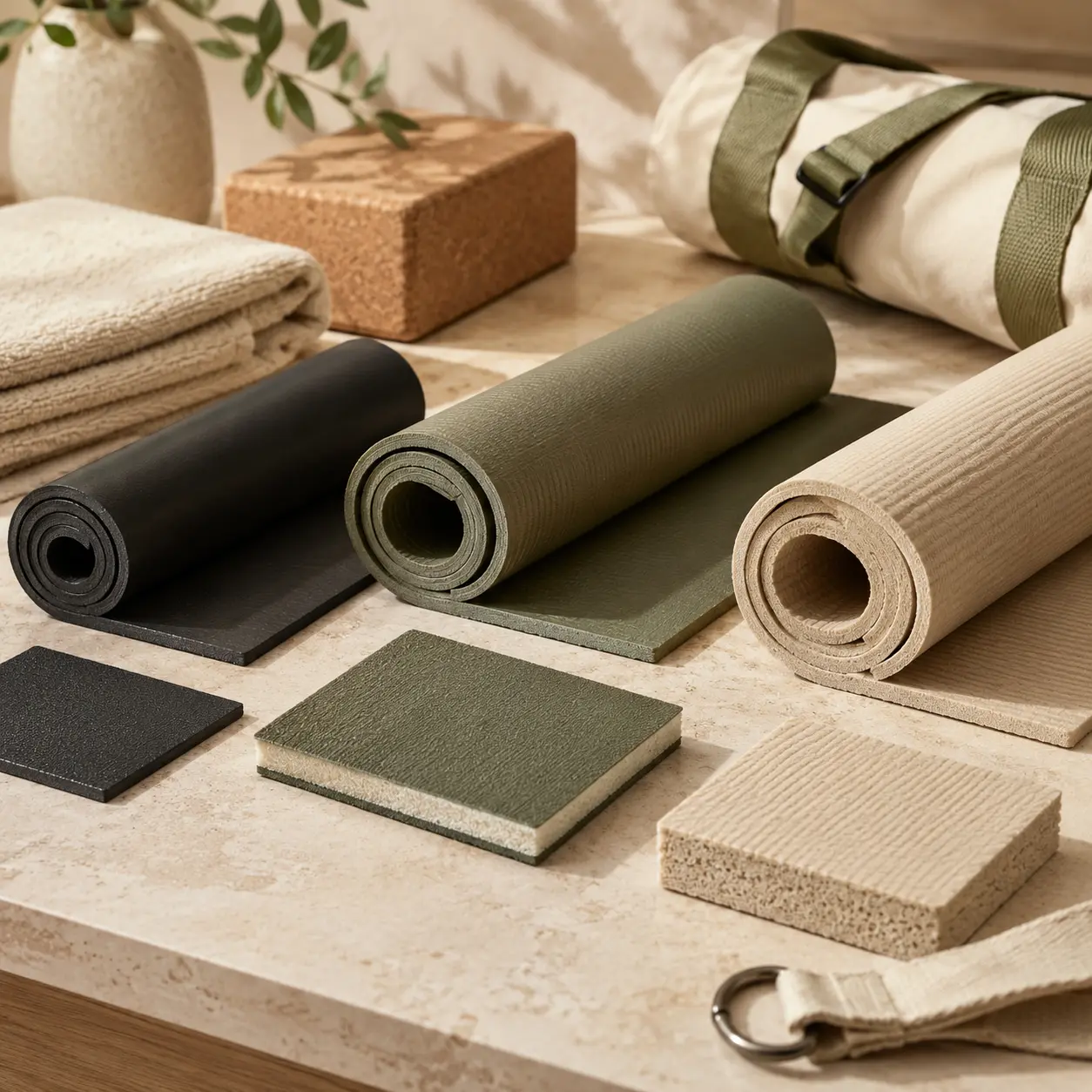
Brands requiring custom thickness, density, colors, logos, or packaging can review our private-label yoga mat services.
Check thickness at several positions, finished weight, cushioning, standing stability, compression recovery, flatness, roll diameter, and packaging fit. The finished sample should remain the main approval reference.
Choose 4mm When:
Choose 6mm When:
Choose 8mm When:
Final sample performance should take priority over thickness specifications alone.Thickness is only one dimensional decision. Buyers can also compare length and width in our yoga mat size guide.
A useful yoga mat thickness guide should compare more than millimeters. A 4mm mat supports stable and compact positioning, 6mm offers broad versatility, and 8mm suits cushioning-focused collections.
Material, density, structure, finished weight, roll size, and shipping cost can change the commercial suitability of each option. Brands should select the specification according to the target market and approve it through a finished sample.
Planning a wholesale or private-label yoga mat collection? Share your preferred material, thickness, size, quantity, logo, packaging, target market, target price, and delivery schedule with Pureasana.
Our team can discuss whether a 4mm, 6mm, or 8mm specification better fits your product positioning and sourcing requirements.
Neither is universally better. A 4mm mat usually provides more direct floor feedback and a smaller roll, while a 6mm mat generally offers more cushioning and broader appeal. Material, density, finished weight, and target use should determine the final choice.
Not necessarily. An 8mm mat can suit home practice, stretching, beginner-comfort, or general fitness ranges. However, a very soft formulation may reduce standing stability, so brands should test density, compression, and recovery.
A 6mm mat is a common starting point because it balances cushioning and stability. An 8mm mat may suit a comfort-focused beginner market, while a dense 4mm mat may appeal to users who prioritize stability.
Studios often consider 4mm or 6mm because these specifications can balance stability, storage, and general usability. The final choice should also account for durability, cleaning, finished weight, replacement consistency, and teaching style.
A thicker mat often has a larger roll diameter and may reduce carton quantity. Shipping cost also depends on material density, product size, individual weight, carton dimensions, and transport method. Use actual packing data for comparison.
Thickness can often be customized depending on the material, structure, and production conditions. Special thicknesses or densities may affect MOQ, sample development, and lead time, so buyers should confirm the full product and packaging specification.
Explore Product Materials