EMAIL
BESPOKE INQUIRY
pureasanaofficial@gmail.com
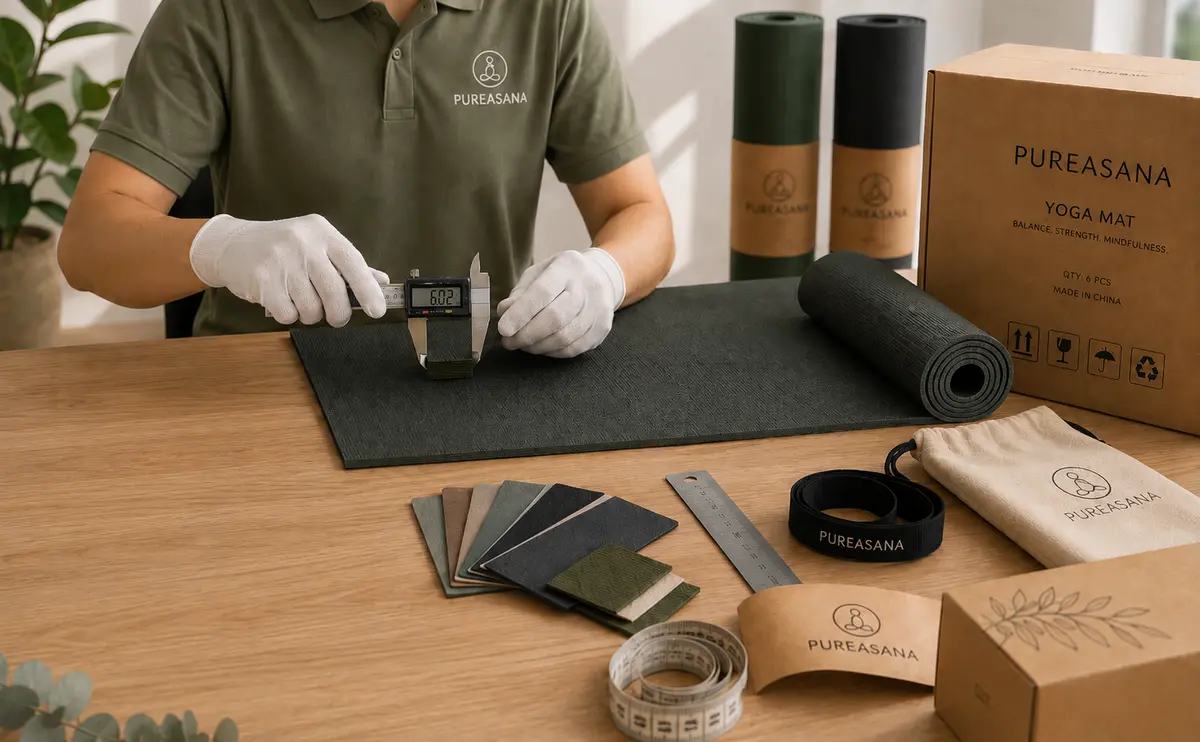
Bulk yoga mat orders require more than a visual review before shipment. A sample may look correct, while the production batch still develops differences in material, thickness, color, texture, logo placement, lamination, or packaging. A practical yoga mat quality control plan should begin before production and continue through raw material checks, in-process inspection, finished-product testing, and final shipment approval.
For yoga brands, importers, wholesalers, and private-label buyers, the goal is to define acceptable standards, identify defects early, and confirm that the finished order matches the approved specification. This guide explains the key checks buyers should use when evaluating bulk yoga mat production.
The best yoga mat material also depends on density, thickness, surface texture, and product structure. Buyers should compare samples with similar specifications rather than judge performance only by the material name. In a TPE yoga mat vs PVC yoga mat comparison, TPE is usually lighter, while PVC often provides broader durability and price options.
Reliable yoga mat quality control begins with an approved sample, a clear specification sheet, and agreed acceptance criteria. These references turn general expectations into practical yoga mat quality standards.
Without them, the factory and buyer may evaluate the same product differently.
The final sample should represent the product entering bulk production. Buyers should confirm the following details:
Photos can support communication, but they should not replace the physical sample when color, grip, hardness, or surface appearance matters.
For customized orders, the sample should also confirm the final artwork version, Pantone reference where applicable, packaging text, barcode information, and accessory combination.
See our private-label yoga mat process for a broader overview of sample development and production approval.Buyers still deciding which type of reference or customized sample they need can review our custom yoga mat samples guide.
The specification sheet should define what will be measured and what variation is acceptable. Common inspection items include:
Tolerances should be agreed before production because different materials and structures behave differently. A TPE mat, PVC mat, and PU natural rubber mat may not share the same realistic tolerance range.
Buyers should also clarify which defects are unacceptable, which require rework, and which minor variations can be accepted.
Raw material inspection helps identify density, color, odor, texture, and bonding problems before they affect the entire production batch.
The production material should match the approved material type and product structure. Relevant checks may include:
The inspection focus varies by material.
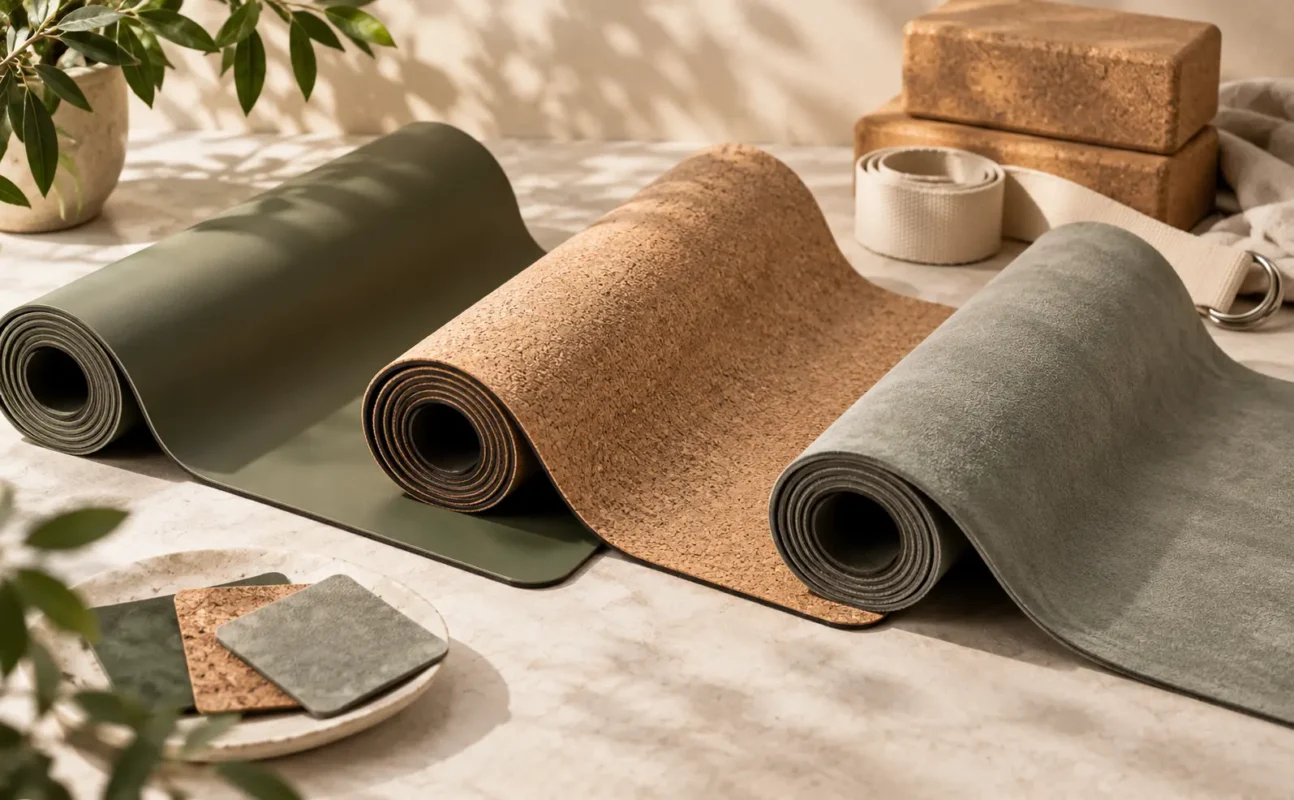
TPE and PVC mats may require closer attention to foam consistency and surface formation. Natural rubber and composite mats may require additional review of density, bonding, and material variation. Cork, PU, and suede surfaces may require specific checks for marks, texture consistency, and adhesion.
Buyers can compare TPE, PVC, and natural rubber yoga mats before defining material-specific quality checks.
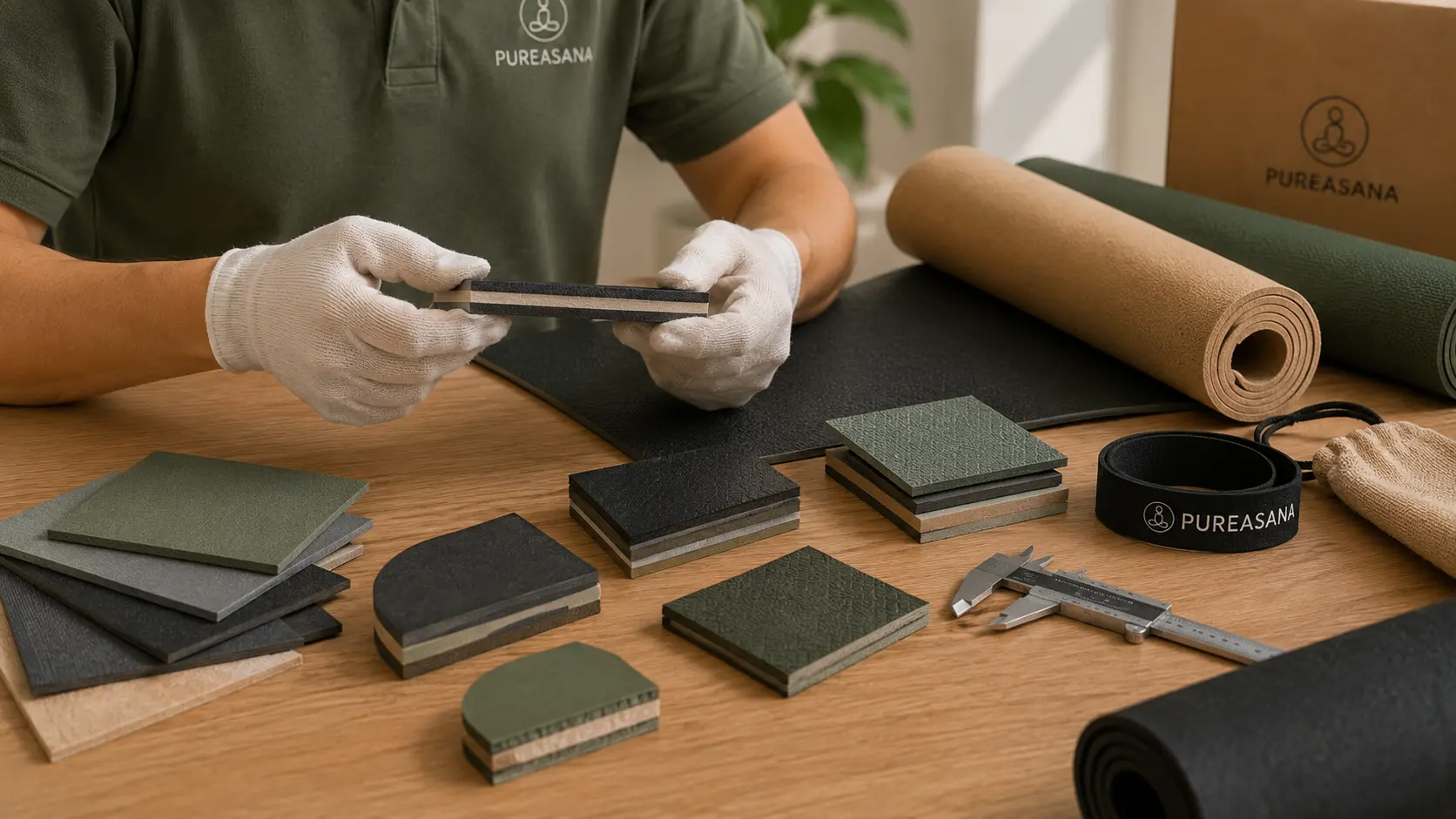
For laminated or multi-layer mats, the top layer and base should be properly aligned and securely bonded.
Inspectors should look for:
The mat should also lie reasonably flat after it is unrolled. Strong curling, warping, or uneven cutting can affect retail presentation and product use.
Edge quality should remain consistent across the sampled batch, especially when the product includes rounded corners, printed alignment, or custom edge details.
A bulk yoga mat inspection should evaluate several sampled mats rather than checking only one finished unit.
Inspectors should measure:
The results should be compared with both the approved sample and the specification sheet.
Thickness variation can affect cushioning, stability, flatness, and rolling performance. Weight variation may indicate differences in density, material use, or layer construction.
When determining how to check yoga mat thickness and size, buyers should select products from different cartons and compare the measurements across the batch. One passing unit does not prove that the full order is consistent.
Finished yoga mats should be evaluated for grip, compression recovery, surface durability, and resistance to peeling or tearing.
Surface grip is the friction between the user and the top of the mat. Floor grip is the stability of the mat base against the floor.
These are separate performance points and should be checked independently.
Depending on the product, inspectors may compare performance under dry conditions or after light moisture is introduced. Finished mats should be evaluated against the approved sample rather than judged only through a general impression.
Different materials should not automatically be held to the same grip standard. A lightweight TPE mat, PVC studio mat, and PU natural rubber mat may serve different product positions, performance expectations, and price levels.
Compression checks help determine whether the mat recovers after pressure or develops permanent dents.
Inspectors can also review:
Test conditions should reflect the material, thickness, intended use, and buyer requirements. The purpose is to confirm consistency with the approved product rather than create unrealistic testing conditions.
Planning a private-label yoga mat order? Pureasana can help review the material, construction, dimensions, branding, packaging, and inspection points before bulk production.
[Discuss Your Private-Label Project]
Private label yoga mat quality control should include both general surface inspection and detailed branding checks.
Inspectors should look for:
Products should be checked under consistent lighting so that sampled units can be compared fairly.
Bulk colors should be compared with the approved sample or confirmed Pantone reference where applicable. However, the acceptable range should account for the material and surface texture.
Natural materials and textured surfaces may show more visual variation than smooth synthetic surfaces. Buyers should define whether color consistency is required within one mat, one carton, or the complete production batch.
For a detailed explanation of defect symptoms, production causes, and manufacturer prevention methods, review our guide to common yoga mat defects.
Inspectors should compare custom branding with the final approved artwork and verify:
The acceptance method depends on the logo process. Screen printing, UV printing, heat transfer printing, embossing, and laser engraving create different surface effects and should not be evaluated in exactly the same way.
Logo durability should also be appropriate for the selected mat surface and intended use.
Buyers can review available custom yoga mat branding options before approving the final process.
Material compliance should be confirmed according to the yoga mat material, intended use, importing country, and buyer requirements.
Not every chemical or safety test applies to every product or destination market.
Where testing is required, buyers should confirm that the tested sample uses the same material and structure as the bulk order. Reports should be reviewed for:
Depending on the market and product, buyers may ask about REACH, PAHs, phthalates, California Proposition 65, EN 71, or other chemical and safety requirements.
These references are not interchangeable. Testing requirements should therefore be confirmed before production, especially when a new material or destination market is involved.
A supplier should not describe all products as certified unless the relevant test reports and supporting documents apply to those products.

Packaging inspection confirms that the correct mat, product label, retail pack, and export carton have been combined.
Inspectors should check:
Packaging should protect the mat without creating additional defects.
Packaging that is too tight may leave compression marks. Inconsistent rolling tension can affect the appearance of the product when unpacked. Labels and barcodes should match the correct color, size, SKU, and destination-market requirements.
Buyers planning branded retail packaging can review custom yoga mat packaging options before approving the final packing method.
A pre-shipment inspection for yoga mats should be completed after production and packaging are finished but before the goods are loaded or released for shipment.
Samples should be selected from different cartons and different parts of the finished batch.
The inspection should cover:
Many buyers use an Acceptance Quality Limit (AQL)-based sampling approach, but the inspection level, defect categories, and acceptance criteria should be agreed in advance.
A structured yoga mat defect inspection makes the results easier to review and compare. Defects may be classified as critical, major, or minor according to their effect on safety, function, saleability, and appearance.
The definitions should be confirmed before the inspector arrives.
The final inspection report should include:
If the order fails inspection, possible actions include sorting, reworking, reprinting, repacking, replacing affected units, producing additional quantity, or arranging a second inspection.
These actions should be completed before loading whenever possible. Shipping first and resolving problems later normally increases cost, delays, and commercial risk.
|
Inspection Stage |
Key Checks |
Buyer Evidence |
|---|---|---|
|
Before production |
Sample, specifications, tolerances, artwork |
Approved sample and specification sheet |
|
Raw materials |
Material, density, color, surface, construction |
Material records and comparison samples |
|
During production |
Size, thickness, bonding, edges, appearance |
Measurement and inspection records |
|
Finished products |
Grip, rebound, durability, branding |
Test results, photos, and approved comparisons |
|
Packaging |
Labels, quantity, retail packs, cartons |
Packing list and carton photos |
|
Before shipment |
Sampling, defects, corrective action |
Final inspection report |
The checklist should be adjusted according to the material, product structure, order quantity, logo method, packaging format, and destination market.
For new suppliers, materials, logo techniques, or packaging formats, buyers may increase the inspection scope or request additional approval samples. Repeat orders can use the same framework, but specifications should still be reviewed whenever the product or market requirement changes.
A reliable yoga mat quality control process starts before production and continues through material checks, measurements, performance testing, branding inspection, packaging review, and final shipment approval.
Using an approved sample, detailed specifications, and clear acceptance criteria helps buyers reduce avoidable inconsistencies and approve shipments with better evidence.
Planning a bulk or private-label yoga mat order? Share your preferred material, size, thickness, estimated quantity, logo method, packaging requirements, target market, and delivery schedule with Pureasana.
We can help confirm the product specifications and quality-control points before production.
Common defects include inconsistent thickness or weight, bubbles, stains, scratches, uneven texture, curling, weak layer bonding, surface peeling, logo misalignment, incomplete printing, and incorrect packaging or labels.
The acceptable defect level should be evaluated against the approved specifications, product function, appearance requirements, and agreed defect categories.
AQL can provide a structured method for selecting samples and evaluating defects in a bulk order.
However, the buyer and supplier should agree on the inspection level, defect definitions, and acceptance limits before the inspection. AQL does not replace a clear product specification or approved sample.
Yes. Buyers can use their own quality-control staff, an independent inspection company, or the supplier’s internal QC team.
Whichever option is selected, the inspector should receive the same approved sample, specification sheet, packaging requirements, and defect criteria.
The order may require sorting, reworking, reprinting, repacking, replacement production, or another inspection.
The corrective action should reflect the type and extent of the defects. The buyer and supplier should agree on the solution and verify the result before shipment.
Explore Product Materials