Yoga Product Bundles: How Brands Increase Retail Value

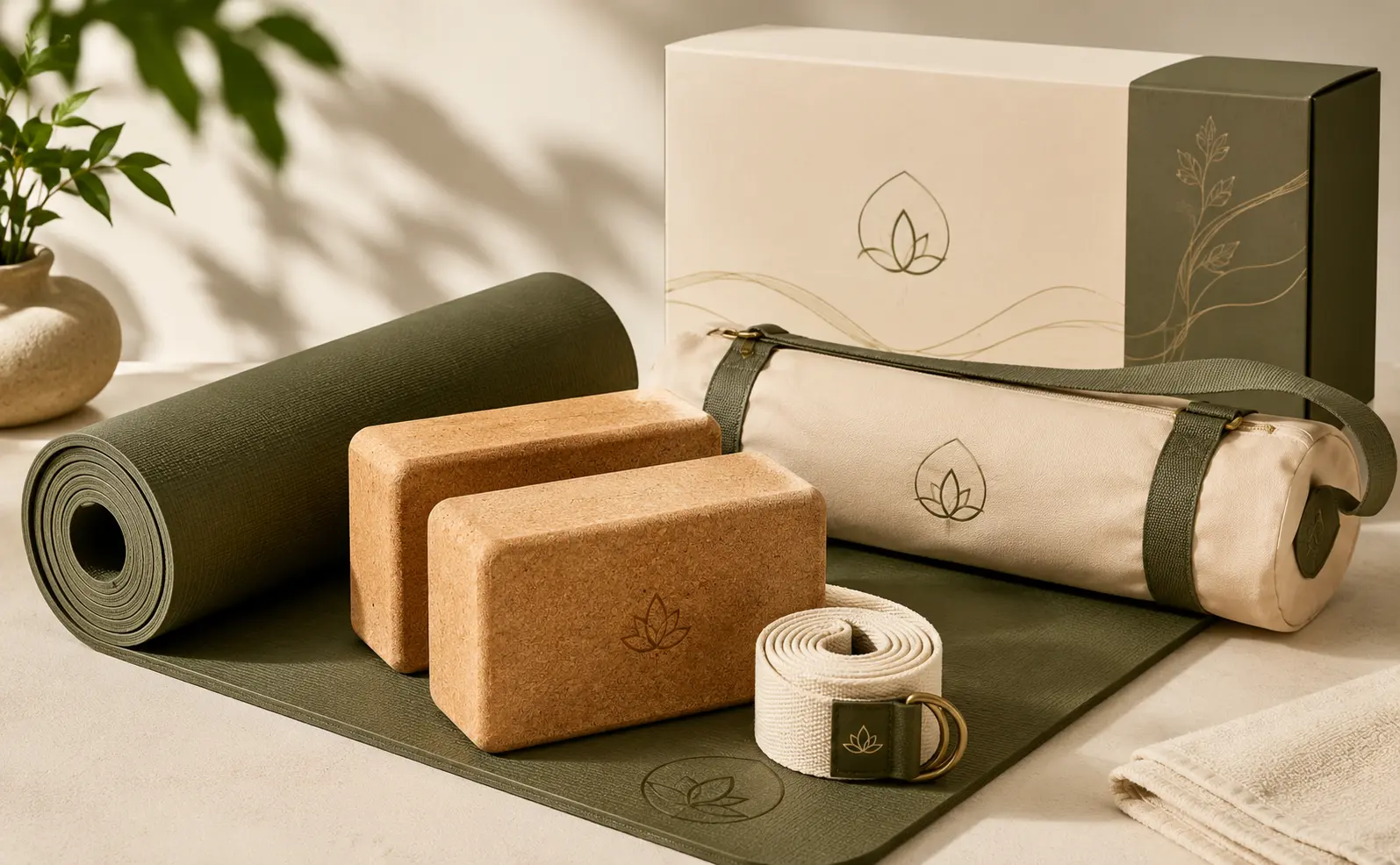
Coordinated yoga product bundle with an olive yoga mat, cork blocks, yoga strap, carry bag, and retail packaging

Yoga product bundles allow brands to sell complementary items as one coordinated retail solution. A well-designed set can increase perceived value, simplify customer decisions, and create clearer product differentiation without depending only on a large discount.

More products do not automatically create more value. Every component must support one customer need and fit the intended price level, shipping method, MOQ, and inventory plan. This guide explains how brands select, price, package, source, and evaluate yoga bundles.

Quick Answer: How Do Yoga Product Bundles Increase Retail Value?

Understanding how product bundles increase retail value starts with product relevance, coordination, clear price tiers, and channel fit.

  • Turn separate items into one clear solution: A mat, block, and strap are easier to understand when they are presented for a specific purpose such as beginner practice, studio use, travel, or gifting.
  • Increase perceived value through coordination: Matching colors, compatible materials, consistent logos, and organized packaging make the set feel intentional rather than assembled from unrelated products.
  • Create clear retail price tiers: Entry, core, and premium bundles can serve different budgets when the tiers differ in material, function, accessories, and packaging.
  • Adapt the offer to each sales channel: E-commerce, studios, retail stores, and corporate programs have different requirements for weight, presentation, replacement products, and delivery.

Yoga product bundles add value when every item supports one customer need. Unrelated accessories, unclear pricing, oversized packaging, or too many variants may increase complexity without improving the offer.

What Is a Yoga Product Bundle?

A yoga product bundle is a coordinated set of two or more complementary yoga products sold as one retail offer. The products normally share a customer purpose, visual identity, price position, or packaging structure.

Product Bundle vs Multipack

A bundle combines different products, such as a yoga mat, two blocks, and a strap. A multipack contains several units of the same product, such as two cork blocks or three straps.

Product Bundle vs Promotional Gift

In well-planned yoga accessory sets, every item should contribute to the intended use. A promotional gift may support a campaign, but a random low-cost item does not create a strong bundling strategy.

Why the Difference Matters for Buyers

The format affects specifications, SKUs, packaging, pricing, inventory, and replenishment. Buyers must manage the bundle as one retail product while controlling each component separately.

Why Do Yoga Brands Use Product Bundles?

Yoga brands use bundles to simplify purchasing, increase transaction value, and create more differentiated offers.

Increase Perceived Retail Value

A coordinated mat and accessories can appear more useful than separate products because customers understand how the items work together. Color consistency, clear naming, and suitable packaging strengthen this effect, but every accessory must remain relevant.

Increase Average Order Value

A customer who planned to buy one mat may select a starter kit that also includes blocks and a strap. The higher order value should come from convenience or coordination rather than a large discount alone.

Simplify Customer Decisions

Beginners may not know which accessories to choose. A clearly named yoga starter kit defines the intended user and included products.

Strengthen Product Differentiation

Exclusive colors, coordinated materials, branded accessories, and custom packaging shift attention from one mat’s unit price to the complete offer.

What Are the Most Common Yoga Product Bundles?

Bundle Type

Typical Products

Target Customer

Main Value

Key B2B Consideration

Beginner Kit

Mat, block, strap

New users

Easy first purchase

Cost and simplicity

Practice Set

Mat, two blocks, strap

General users

Complete support

Weight and balance

Premium Set

Premium mat, cork blocks, cotton strap

Premium buyers

Material positioning

Cost and freight

Travel Set

Lightweight mat, strap, bag

Mobile users

Portability

Compact packaging

Studio Set

Durable mats and accessories

Studios

Coordinated equipment

Reorder consistency

Gift Set

Coordinated items and retail box

Gift buyers

Presentation

Seasonal inventory

Beginner Yoga Starter Kits

Beginner yoga mat bundles commonly combine a lightweight mat, one or two EVA blocks, and a yoga strap. The set should be easy to understand and compact enough for e-commerce shipping.

Practice Support and Studio Sets

These sets may use a durable or higher-grip mat, two blocks, and a strap. Studios often value durability, branding consistency, and separate reorders.

Premium Material Bundles

A premium set may combine a PU and rubber mat, cork blocks, a cotton strap, and upgraded packaging. Heavier materials require a retail price that supports freight and fulfillment.

Travel, Gift, and Seasonal Bundles

Travel sets prioritize low weight and compact packaging. Gift sets depend more on coordinated colors and presentation. Seasonal packaging should be limited because unused boxes may be difficult to reuse.

How Do Yoga Brands Create Product Bundles?

A strong yoga product bundling strategy should solve one clear customer need. Product relevance, quality consistency, and positioning matter more than the number of items.

Start With One Customer or Use Case

The set may target beginner practice, home fitness, studio training, travel, high-grip practice, natural-style positioning, or gifting. One bundle should not attempt to serve every market.

Match Materials and Product Positioning

TPE mats commonly suit lightweight entry-to-mid-range sets. PU or rubber constructions are more suitable for premium or higher-grip positioning but increase weight. EVA blocks fit colorful and cost-conscious lines, while cork blocks support firmer or natural-style collections.

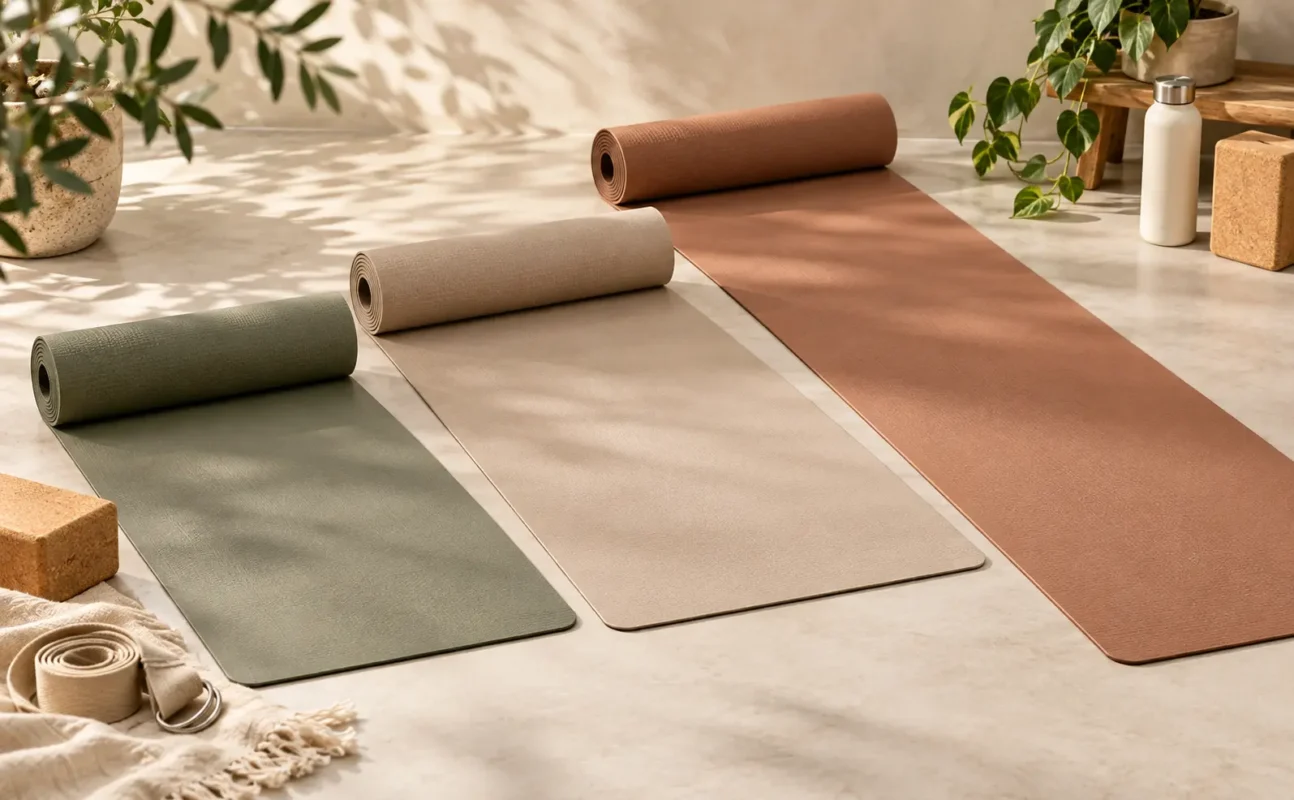
Coordinate Colors, Logos, and Packaging

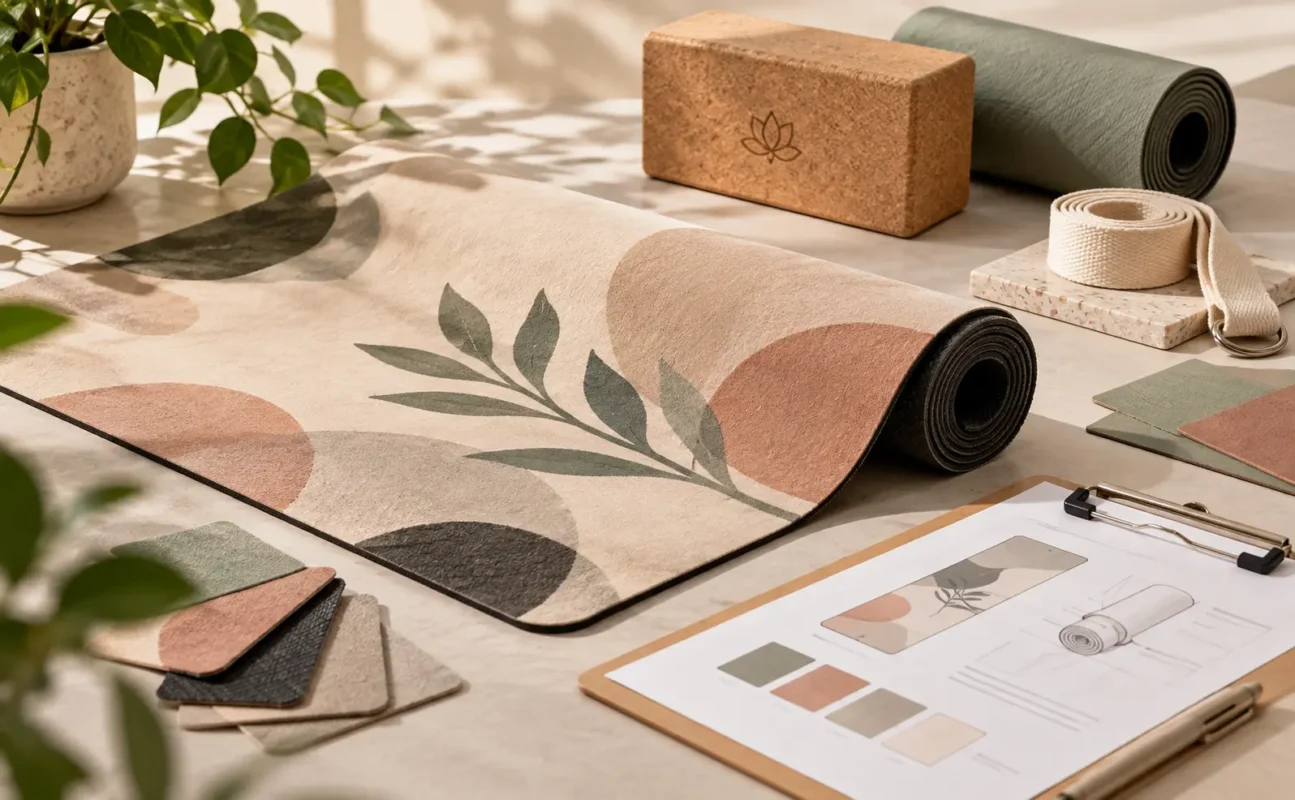
The mat, blocks, strap, and package should look like one collection. Because colors appear differently across materials, buyers should confirm a finished sample.For detailed guidance on artwork, material compatibility, color capability, and sample checks, review our yoga mat logo printing methods guide.

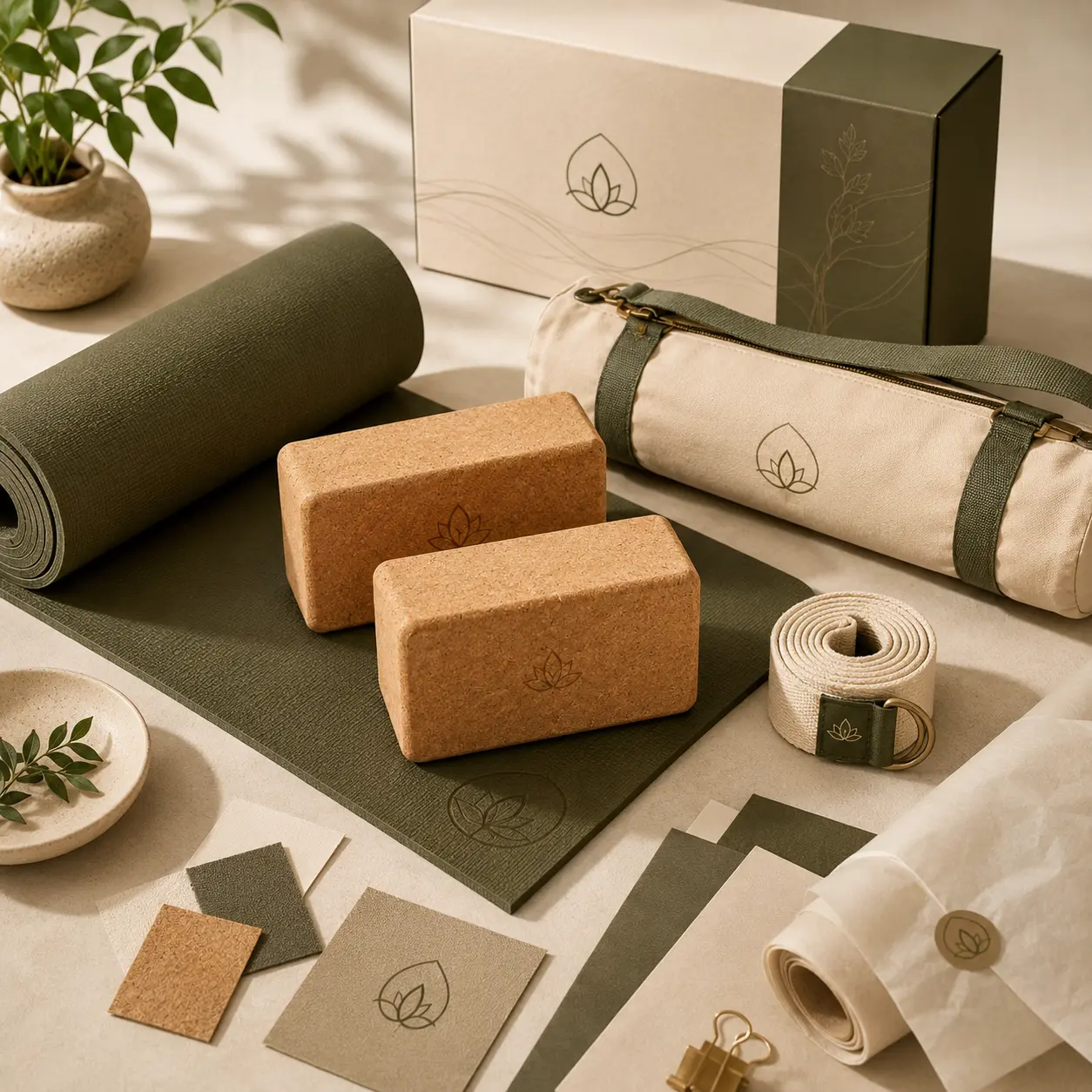
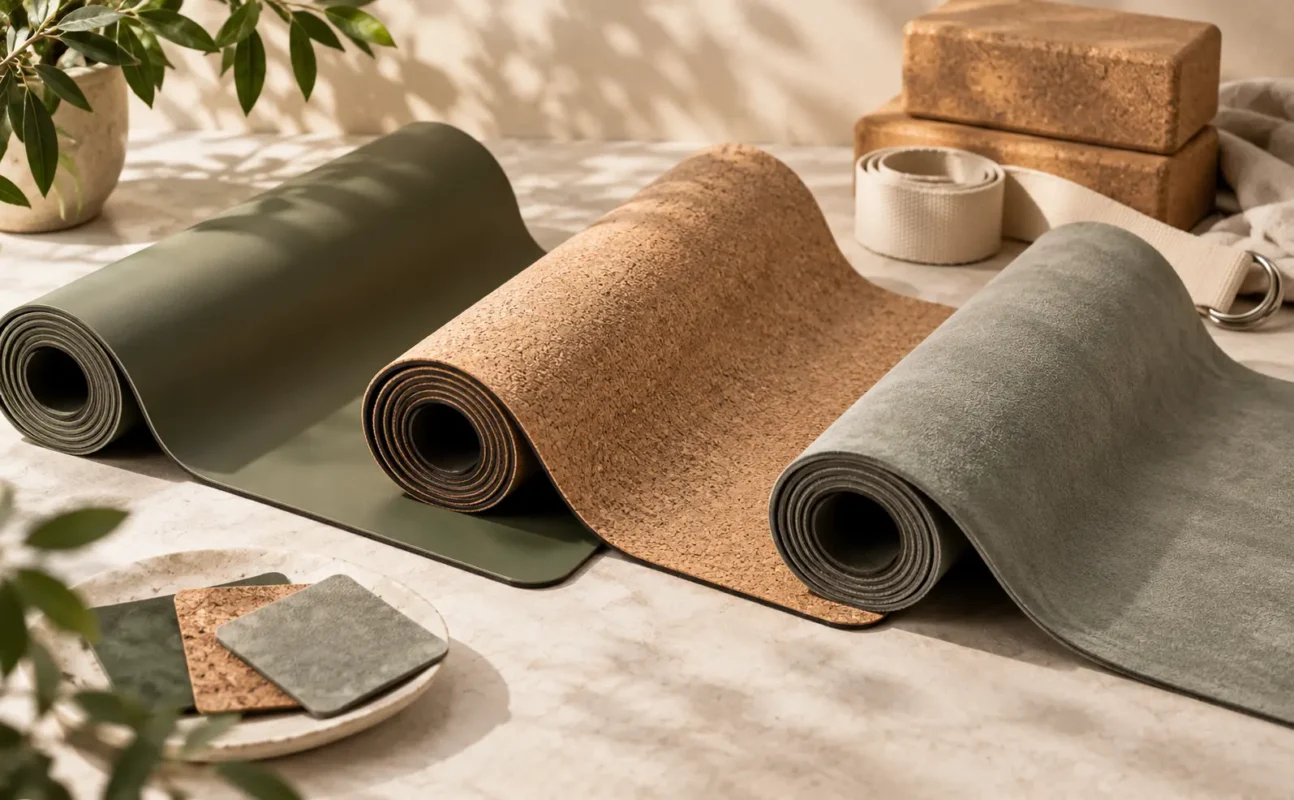
Coordinated yoga product bundle with material swatches, matching accessories, branded packaging, and color samples

Avoid Low-Value Fillers

Unrelated accessories or inconsistent quality can weaken the offer. A smaller, focused set often creates more value than a larger unfocused one.

How to Price a Yoga Starter Kit and Other Product Bundles?

Bundle pricing should balance separate retail value, customer benefit, landed cost, packaging, fulfillment, and target margin.

Compare Separate Value and Bundle Price

Brands should compare the individual retail value with the proposed bundle price. The benefit may come from savings, convenience, exclusive colors, or packaging; no universal discount level suits every bundle.

Use Product Hierarchy

The mat usually provides the main value, while blocks, straps, and bags complete the offer. Every item does not need the same discount. Accessories and packaging can add value while protecting the main product’s price position.

Build Clear Retail Tiers

Entry, core, and premium sets should differ through materials, functions, accessory quantity, and packaging. Changing only the price makes the higher tier difficult to justify.

How Do Packaging, Shipping, and Landed Cost Affect Bundle Value?

Understanding how bundles affect inventory and shipping costs requires buyers to compare product weight, package volume, component availability, and replenishment dependencies together.Packaging and logistics determine whether an attractive retail idea remains commercially practical.

Fit Different Product Shapes

Rolled mats, rigid blocks, and flexible straps require different protection. The package should prevent blocks from pressing into the mat, stop accessories from moving, and keep the contents organized.

Control Weight and Volume

Buyers should calculate total weight, package dimensions, units per carton, gross weight, shipping method, and dimensional weight. Natural rubber mats, cork blocks, and large retail boxes can increase landed cost or reduce carton quantity.

Separate Retail and Shipping Functions

Retail packaging supports presentation and product explanation. The shipping carton protects the sets during storage and transport. An attractive retail box still needs suitable outer protection and efficient loading.

Entry sets may use sleeves, carry straps, or kraft boxes. Premium sets may use printed boxes, inserts, or branded bags, provided the upgrade supports the target price.

How Do Bundles Affect MOQ, Lead Time, and Inventory?

The practical MOQ and lead time may be controlled by the component or package with the highest customization requirement.

The Highest Component MOQ Can Determine the Bundle Quantity

A standard mat may have an accessible MOQ, while a custom strap color, printed box, special block, or exclusive accessory may require more. Buyers should confirm every component before setting the launch quantity.

Every Component Creates Inventory Dependency

One missing item can delay the entire bundle while the remaining products stay in stock. Different lead times and color batches can also create mismatches during replenishment.

Start With Fewer Variants

Brands can reduce risk by limiting colors, sharing packaging structures, and testing a few core SKUs.For broader guidance on controlled launches, inventory risk, packaging, and supplier planning, review the 2026 yoga product sourcing trends.

Plan Reorders and Replacements

Brands should decide whether components can be purchased separately and whether colors will remain available. For Pureasana projects, standard product MOQs often start at around 100 pieces per item, but the practical bundle MOQ depends on the component, color, logo process, or packaging option with the highest minimum requirement. Standard samples generally take 3–7 days, customized samples 10–20 days, and bulk production 25–40 days, subject to final specifications.Brands planning coordinated materials, colors, logos, and packaging can review our private-label yoga product services.

Which Sales Channels Benefit Most From Yoga Bundles?

E-Commerce

Starter and gift sets are easy to explain on one product page and may increase order value. Brands must still manage dimensional weight, packaging damage, and full-set returns.

Yoga Studios

Studios can use new-member kits, instructor sets, workshop bundles, or studio-branded equipment. Durability and separate replacement products are often more important than elaborate packaging.

Retail Stores

Retail packages should be easy to identify, compact enough for shelves, and clear about what is included. Customers should understand the value without a long explanation.

Corporate and Gift Programs

Wellness kits and branded event products often prioritize logo visibility, presentation, delivery deadlines, and distribution efficiency.

When Do Yoga Product Bundles Fail to Add Value?

Yoga product bundles fail when the products do not solve one clear need, the price benefit is unclear, or sourcing complexity exceeds customer value.

  1. Combining unrelated products: Customers may not understand why the items belong together. Remove products that do not support the main use case.
  2. Using inconsistent quality: A premium mat paired with weak accessories lowers the impression of the entire set. Components should support a similar quality position.
  3. Creating too many variants: Excessive colors, materials, and boxes increase SKUs and reorder risk. Start with fewer, clearly different sets.
  4. Ignoring packaging and freight: Weight, volume, assembly, and cartons can reduce margin even when product prices look attractive.
  5. Relying only on discounting: Discounts do not replace relevance, convenience, coordinated design, or clear positioning.

How Should Brands Evaluate a Bundle Before Launch?

Brands should evaluate the completed set as one retail product, not approve each component in isolation.

Review the Finished Sample

Check color coordination, logo consistency, packaging fit, total weight, opening sequence, and retail presentation. This review may reveal problems that separate component samples do not show. Also confirm the quantity of each component, bundle SKU or barcode, labels, inserts, accessories, and the assembly order of every finished set.

Calculate the Full Landed Cost

Include products, logos, packaging, assembly, cartons, freight, fulfillment, and possible replacement costs. The planned selling price must support the complete supply-chain cost.

Test the Customer Message

Customers should quickly understand who the set is for, what it contains, what need it solves, and why buying the products together is useful.

Confirm Reorder Feasibility

Review the MOQ, lead time, color availability, packaging supply, replacement options, and production consistency of every component.

Conclusion: Building Yoga Product Bundles That Add Real Value

Successful yoga product bundles increase retail value by combining complementary products around one clear customer need. The value comes from relevance, convenience, coordinated presentation, and a price structure customers can understand.

Packaging, total weight, MOQ, lead time, and inventory dependencies determine whether the concept is commercially practical. Brands can reduce risk by launching fewer defined variants, approving a complete sample, and calculating landed cost before bulk production.

Discuss Your Yoga Bundle Project

Planning a private-label yoga mat and accessories bundle? Share your target customer, preferred mat and accessories, materials, colors, estimated quantity, logo, packaging, target price, and delivery schedule with Pureasana.

Our team can help discuss a coordinated bundle structure based on your retail positioning and final specifications.

FAQ

What Products Should Be Included in a Yoga Bundle?

A yoga mat is normally the core product. Depending on the target customer, price position, and shipping limits, brands may add one or two blocks, a strap, bag, or another relevant accessory. Every component should serve a clear purpose.

No. Value can come from convenience, coordinated colors, exclusive combinations, or custom packaging. Customers should still understand the advantage of buying the set instead of selecting products separately.

Bundles place several complementary products into one transaction and present them as a complete solution. The result depends on product relevance, pricing, and customer demand rather than item count alone.

A lightweight mat with EVA blocks, a strap, or a compact carrying accessory is often practical. The final choice should consider total weight, roll diameter, package dimensions, fulfillment cost, and customer positioning.

They may. The practical MOQ can be determined by the component, color, logo method, or printed package with the highest production requirement. Confirm every specification before calculating the set quantity.

Separate sales can support replacements, repeat purchases, and customer choice, but they also create more SKUs. The right approach depends on the brand’s channel, product-line strategy, and replenishment plan.