EMAIL
BESPOKE INQUIRY
pureasanaofficial@gmail.com
Explore Articles by Topic:
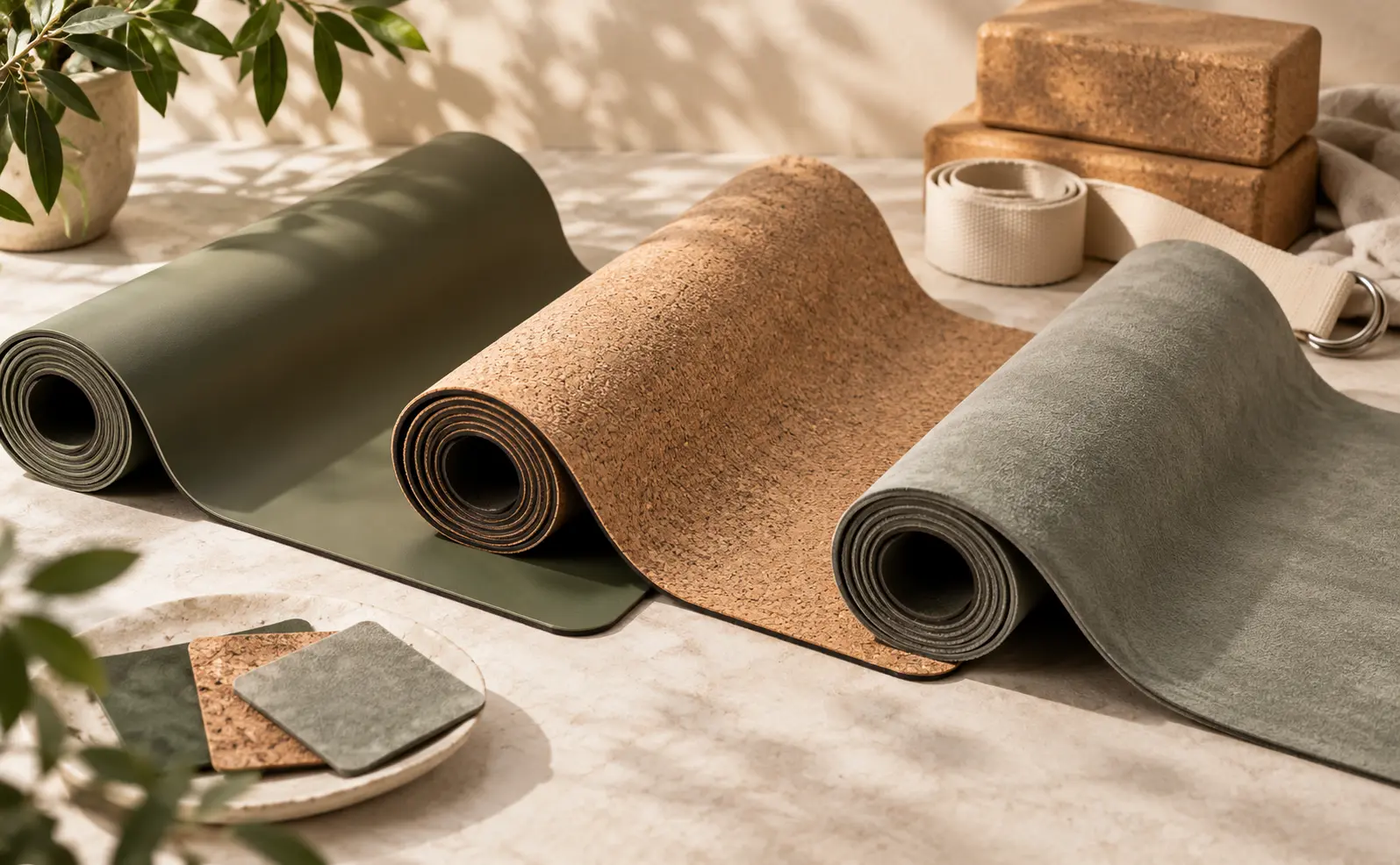
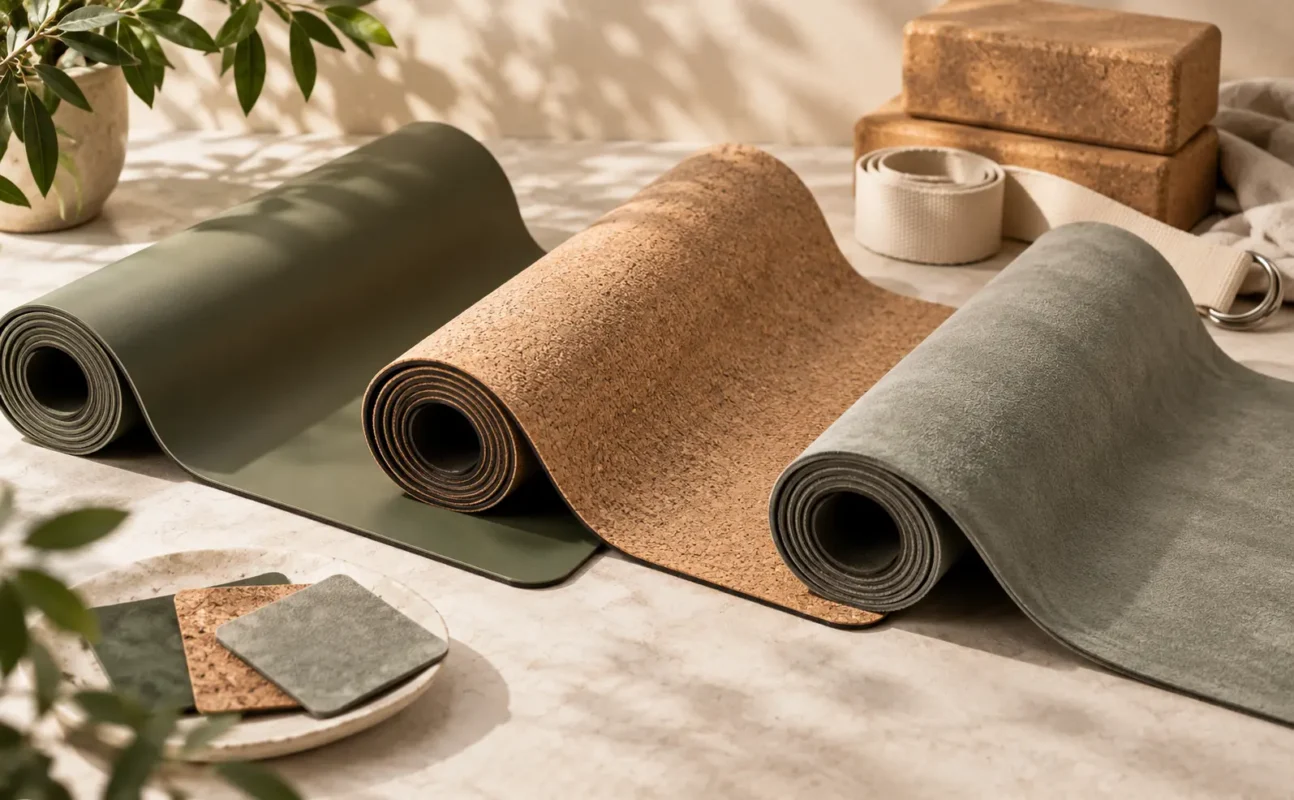
For brands comparing PU vs cork vs suede yoga mats, the right choice depends on grip requirements, artwork and the complete product specification. A surface that suits a minimalist studio collection may require a different customization approach from one designed around colorful illustrations.
PU is worth evaluating for grip-focused collections, cork for its natural texture, and microfiber suede for printed designs. However, surface names alone do not explain cushioning, finished weight or purchasing conditions.
This guide compares each surface primarily with a natural rubber base. Keep dimensions, thickness and backing specifications comparable when evaluating samples. For buyers developing private label yoga mats, that approach connects performance and design decisions with realistic costs, minimum order quantities and production planning.
These are starting points for selection. Consider maintenance, customer expectations and the finished specification before choosing. A visually attractive sample still needs to suit the intended practice conditions, while a suitable material must also support the artwork and order quantity your brand requires.
A practical comparison of PU vs cork vs suede yoga mats should use the same dimensions, thickness and backing wherever possible.
|
Comparison Factor |
PU |
Cork |
Microfiber Suede |
|---|---|---|---|
|
Surface and feel |
Smooth polyurethane |
Visible cork grain |
Soft microfiber fabric |
|
Dry grip |
Often tacky; grade matters |
Depends on texture and finish |
Can feel smoother when dry |
|
Sweaty practice |
Evaluate the specific formulation |
Light moisture may improve grip |
Moisture can change traction |
|
Cushioning |
Depends on rubber construction |
Depends on rubber construction |
Depends on rubber construction |
|
Finished weight |
Check complete specification |
Check complete specification |
Check complete specification |
|
Branding |
Tonal logos; assess printing |
Logos over natural grain |
Detailed heat-transfer artwork |
|
Care and durability checks |
Staining and surface wear |
Surface wear and bonding |
Fabric, print and bonding |
|
Cost and MOQ factors |
Surface grade, color, tooling |
Cork specification, backing, logFabric weight, artwork, quantities |
Fabric weight, artwork, quantities |
Here, tacky describes a slightly sticky contact feel. Treat the table as selection guidance: actual results vary with the surface specification, manufacturing process and finished design.
These names describe the upper contact surface. The backing must be specified separately because it contributes to cushioning, weight and floor stability.Brands comparing how the upper surface works with the supporting base can also review our guide to single-layer and double-layer yoga mats.
PU means polyurethane. A PU-surface yoga mat combines a polyurethane contact layer with a natural rubber base. The surface can suit clean colors and discreet branding, but finishes and printing compatibility vary. Compare the intended surface grade when reviewing PU yoga mat options.
A cork-surface yoga mat combines a cork upper layer with a natural rubber base. Its grain creates a recognizable natural appearance. Buyers should approve the expected texture and visual variation, alongside surface integrity and bonding, when sourcing cork yoga mats with rubber backing.
Here, suede refers to a synthetic microfiber fabric with a suede-like feel, rather than animal leather. In the comparison used in this guide, microfiber suede is paired with a natural rubber base. Other backing structures may also be available depending on the product specification. Confirm fiber composition, fabric weight and printing suitability; heavier fabric may involve a different material supply arrangement.
Grip at the contact surface, cushioning under pressure and stability against the floor are separate properties. Comparing complete samples helps identify which part of the construction creates the difference.
PU surfaces can offer a tacky contact feel, while cork and microfiber suede have different textures and moisture responses. Cork may become grippier with light moisture.Does microfiber suede grip differently when dry and wet? It can. Some microfiber surfaces feel smoother when dry and gain traction as moisture increases, but buyers should verify the actual finished surface.
When comparing PU or cork yoga mats for hot yoga, assess dry contact, light perspiration, and sustained use under the intended conditions.Include the suede option under the same conditions. Separately observe whether the backing moves against the intended floor.
A soft fabric surface does not automatically provide more cushioning. Base thickness, density and compression behavior affect support beneath the hands and knees. Compare pressure response and recovery as well as surface feel.
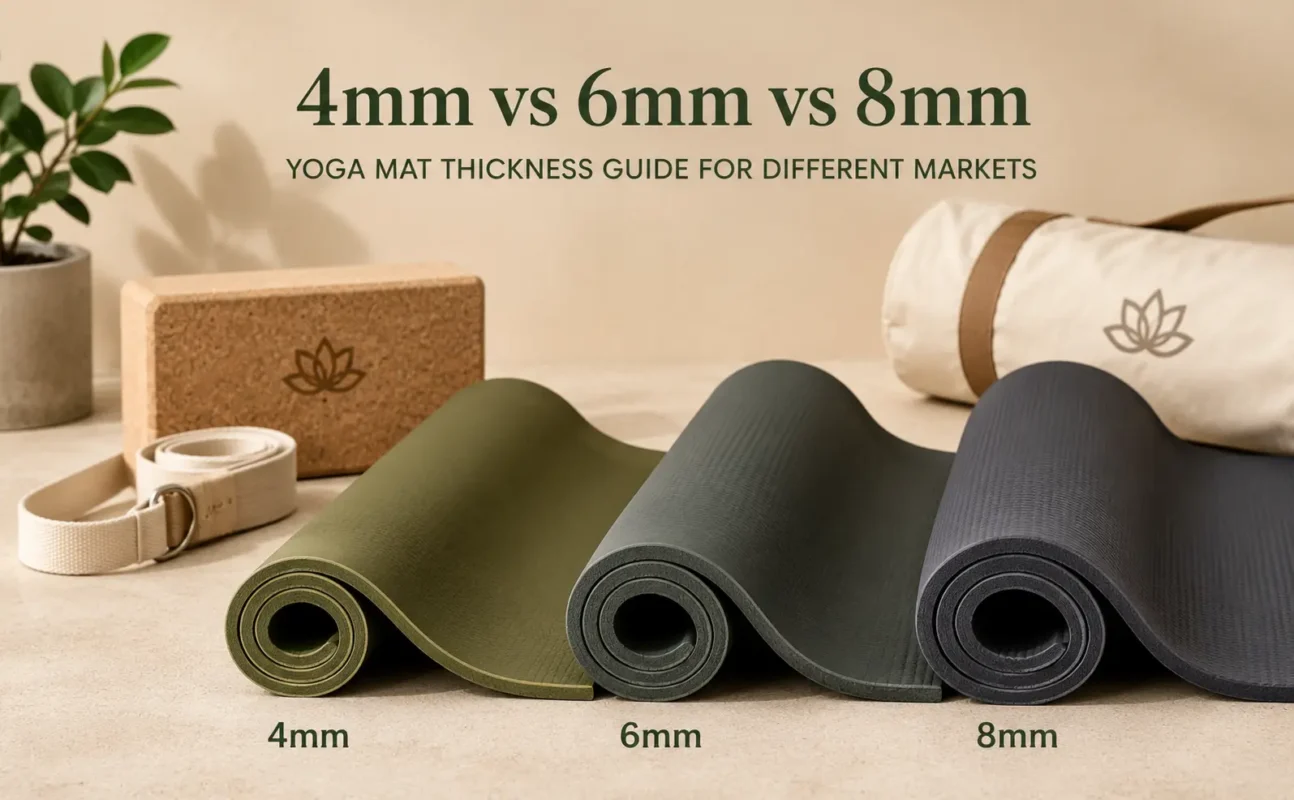
Our yoga mat thickness guide provides a broader framework for comparing thickness choices.
Rubber backing, dimensions and thickness can strongly influence finished weight. Request the actual sample weight and packed carton measurements rather than assuming one surface is lighter.
For e-commerce sellers, compare freight and individual delivery costs alongside unit price. Studio buyers may place greater emphasis on handling, storage and stability during repeated use.
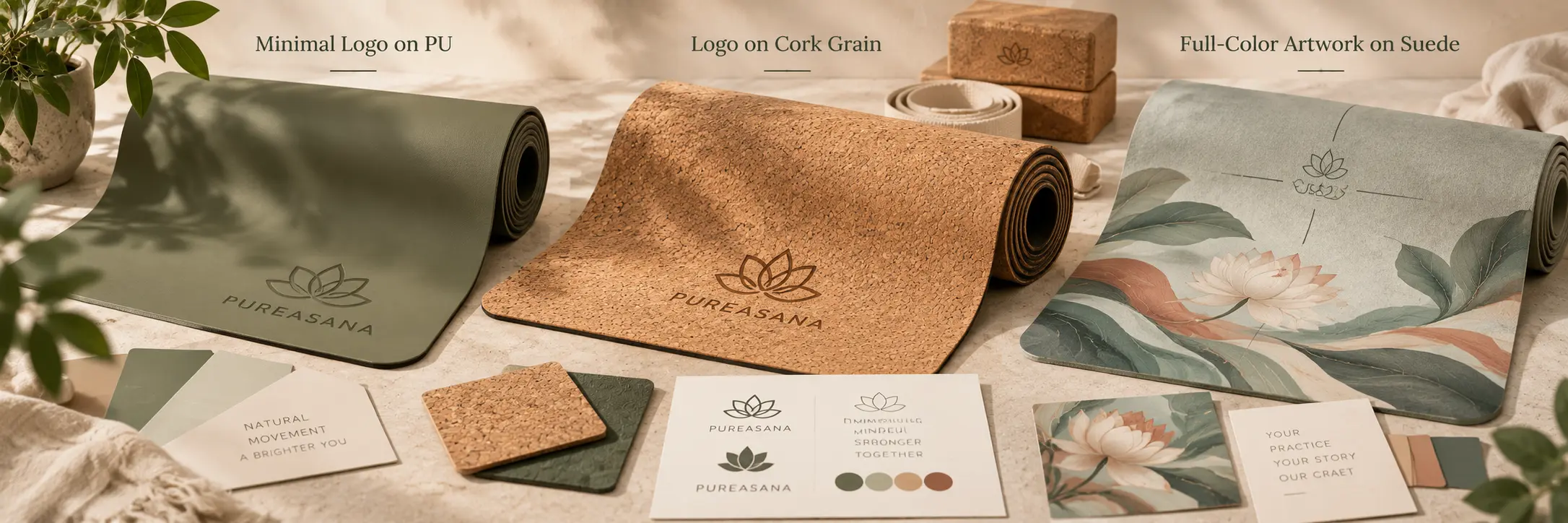
Start with the desired artwork, then confirm a compatible surface and process. Material color, a small logo and full-surface printing create different production requirements.
Existing PU colors can suit understated branding using suitable laser methods or debossing, which presses a recessed logo into the surface. Cork provides a textured background, so logo detail and contrast need checking. On suede, the logo can form part of the printed artwork.
Matching a custom material color is different from printing a color onto an available surface. Confirm which approach the quotation includes.
For buyers comparing suede vs PU yoga mats, artwork compatibility is a useful distinction. Suitable microfiber fabrics support heat-transfer printing, which transfers artwork onto the fabric using heat. This makes suede worth considering for detailed custom printed yoga mats.
Can a PU yoga mat have full-color printing? It may be possible with a compatible and separately approved printing process.PU artwork requires a separately approved printing route. For Pureasana projects that require full-color artwork on a PU surface, latex printing may be evaluated where technically suitable. The finished printed sample should be approved before bulk production.Avoid assuming that adding laser or debossed branding over a full print will produce the intended result.
Cork artwork should account for visible grain. Across all three surfaces, check alignment-line placement and the appearance of fine details.
Provide vector logos, artwork dimensions, placement and color references. Review suitable yoga mat logo printing methods before finalizing the design.
Care requirements depend on the finished mat, including its surface treatment, printing and bonded layers. A care instruction suitable for one construction may not suit another.
Request instructions for cleaning, drying and storage. Check how PU marks respond to approved cleaning, how cork surfaces tolerate the recommended routine, and how printed suede retains its appearance. Do not assume every composite mat supports soaking or machine washing.
Record dimensions, thickness and weight against the specification. Review color consistency, logo placement and surface condition, then inspect edges for lifting or uneven bonding.
Agree on evaluation methods and acceptance criteria before bulk production. Keep an approved reference sample so appearance and workmanship can be compared consistently. Describe natural cork as a surface component; broader environmental claims should reflect the complete construction and supporting evidence.
For a broader inspection framework covering dimensions, surface condition, branding, bonding, packaging and pre-shipment approval, review our yoga mat quality control checks for bulk orders.
The complete specification determines purchasing conditions. There is no fixed price order that applies to every PU, cork and suede mat.
Surface grade, cork specification, fabric weight, backing and dimensions all affect the quotation. Existing materials may support smaller batches than custom colors, unusual fabrics or new structures.
MOQ means minimum order quantity: the smallest batch available under the agreed production conditions. Ask whether it applies per color, design, size or material batch. A combined order total does not automatically satisfy each variation’s minimum.
Some standard Pureasana options typically start around 100 pieces, depending on the product and customization requirements. This does not apply automatically to every surface or design. See our yoga mat MOQ guide for the factors involved.
Ask the quotation to separate unit costs from one-time development charges, such as artwork setup or cutting tools where applicable. Confirm whether prices include retail packaging, export cartons and handling accessories. This helps distinguish a lower product price from a quotation with fewer items included, and makes the initial order budget easier to calculate.
Request packaging and shipping assumptions alongside the unit price. Printed packaging, additional colors and separate designs can introduce their own setup requirements.
Pureasana’s bulk production typically takes around 25–40 days, subject to materials, branding, packaging, quantity and final specification confirmation. Agree on when the production period begins. Sampling, approval and shipping are separate stages, so plan them before committing to a launch date.
Choose against a written product brief. This makes quotations comparable and prevents a late design change from invalidating the original material choice.
Avoid selecting only on unit price or a digital mockup. Record acceptable variations and approval decisions so purchasing and production teams work from the same requirements.
When evaluating PU vs cork vs suede yoga mats, connect surface choice with the finished specification and your customer’s expectations. PU, cork and microfiber suede offer different starting points for grip-focused, natural-texture and printed collections.
A useful sourcing decision combines sample evaluation with a workable design, quantity and production plan. Confirm the full construction before comparing quotations, and approve the intended artwork on the selected surface. This gives your brand a clearer specification for its first order and future repeat orders.
Pureasana supports wholesale, OEM (original equipment manufacturing) and private-label yoga mat projects. Send your preferred material, size, thickness, estimated quantity and quantity per color or design, together with your logo and packaging requirements.
Include your target market, target price and required delivery schedule. These details help us recommend a suitable construction and prepare a quotation based on your project.
No. These names identify the contact surface, not necessarily the backing. Suppliers may offer different constructions, including options with TPE bases. Ask for the complete material description, thickness and finished weight. Comparing a rubber-backed sample with a foam-backed sample can obscure differences caused by the surface itself.
They may suit particular hot-yoga applications, but suitability depends on the actual surface and intended conditions. Evaluate dry grip, grip during sweating and behavior after repeated use. Use finished samples with the proposed artwork, and gather feedback from the target users instead of relying only on the material name.
Yes, printing can affect the contact surface, depending on the process, coverage and finish. Evaluate the printed sample rather than assuming it will perform identically to an unprinted mat. Confirm whether the artwork includes the logo, and review any additional engraving or pressing before approving the combined design.
Sometimes, but the factory must confirm this for the actual specification. Designs sharing an available material may be easier to combine than orders requiring separate custom colors or fabrics. State quantities for each variation and ask whether material, printing and packaging minimums apply separately before placing the order.
Not necessarily. More weight may reflect greater dimensions, thickness or a different backing specification. Durability also depends on surface quality, bonding, printing, care and use conditions. Compare wear and construction against agreed evaluation criteria. Weight is a product specification, not a substitute for assessing workmanship or service life.
Approve the material structure, dimensions, thickness, color, artwork placement and packaging. Confirm agreed tolerances, inspection requirements and the production schedule as well. Keep a reference sample and written specification. If changes are made after approval, ask the supplier to review their effect on price, MOQ and timing.
Explore Product Materials