EMAIL
BESPOKE INQUIRY
pureasanaofficial@gmail.com
Explore Articles by Topic:
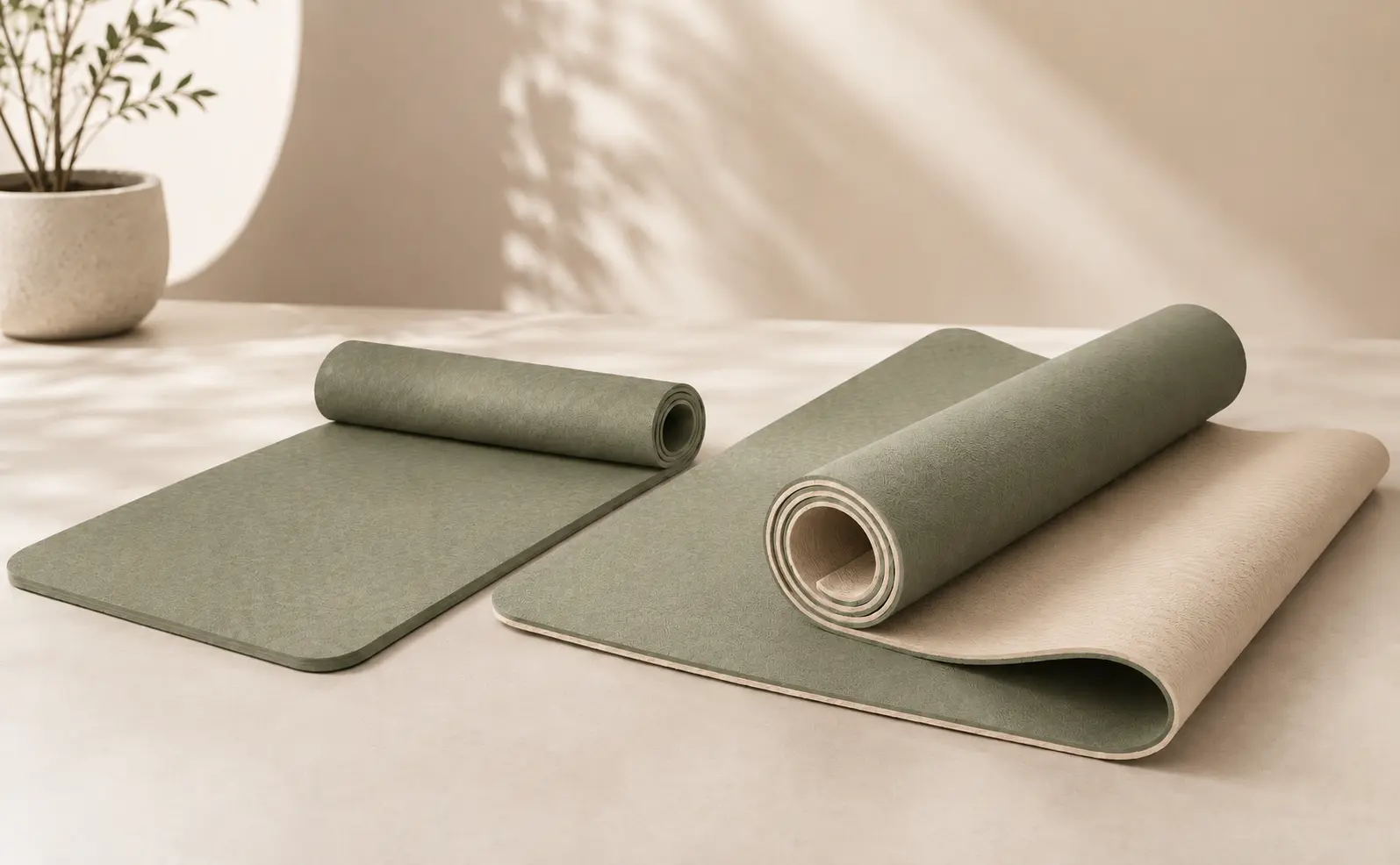
The single-layer vs double-layer yoga mats comparison matters to wholesale buyers because construction affects grip, cushioning, weight, durability, customization, and landed cost. Two mats with the same size and thickness can still perform differently because of material, density, texture, and bonding. This guide explains the main structures, costs, customization options, quality risks, and selection criteria for wholesale and private-label projects.
Neither structure is universally better. A well-designed single-layer mat may perform more reliably than a poorly bonded double-layer mat, while a properly developed double-layer structure can provide stronger functional and visual differentiation. The right choice is the structure that best matches the brand’s target customer, sales channel, performance requirements, and purchasing budget.
A single-layer yoga mat is made from one continuous material structure rather than two separately formed layers bonded together. It may be produced from TPE, PVC, rubber, or another suitable material.
A single-layer mat can still have different upper and lower textures, two colors, or a reversible appearance. Two colors do not automatically mean two bonded layers. Performance depends on material, density, thickness, texture, and finishing. These mats are common in general retail, studio orders, promotions, and weight-sensitive e-commerce.
A double-layer yoga mat consists of two separately formed layers combined into one finished product. The layers may use the same material in different colors or densities, or different materials with separate functions.
The top layer usually affects contact, moisture response, appearance, and branding, while the base affects floor grip, support, weight, and stability. Buyers should confirm the material, thickness, density, and function of each layer.
Before choosing a structure, buyers can also compare how TPE, PVC, and natural rubber yoga mats differ in grip, density, weight, durability, and private-label positioning.
Same-material double-layer mats use two layers from the same material family, often with different colors, textures, or densities. A common concept is a TPE top layer combined with a TPE base.
This structure can create a two-tone edge or combine a softer contact layer with a firmer base. Buyers should still confirm each layer’s density and thickness.
The main differences between single-layer vs double-layer yoga mats are grip design, cushioning control, weight, durability risks, customization, cost, and market positioning.
|
Comparison Factor |
Single-Layer Yoga Mats |
Double-Layer Yoga Mats |
|---|---|---|
|
Structure |
One continuous material structure |
Two combined layers |
|
Materials |
Usually one main material |
Same or mixed materials |
|
Grip design |
Controlled by both surface textures |
Top and base functions can differ |
|
Cushioning |
Depends on one density and thickness |
Can combine softer and firmer layers |
|
Weight |
Generally lighter |
Generally heavier |
|
Main risks |
Wear, tearing, compression, curling |
Also includes bubbles and delamination |
|
Customization |
Color, texture, size, logo, packaging |
Adds layer colors, densities, and combinations |
|
Cost |
Usually easier to control |
Usually more processing steps |
|
Target market |
Entry-level to mid-range |
Mid-range, premium, or specialized use |
Layer count does not determine grip or cushioning by itself. Grip depends more directly on surface material, texture, density, moisture conditions, and floor contact, while cushioning depends on density, recovery, total thickness, and the ratio between layers.
A single-layer mat can use different textures on each side. A double-layer mat can assign contact grip and floor stability to different materials or densities. Double-layer construction may also combine a softer upper layer with a firmer supporting base.
Buyers should compare dry grip, wet grip, floor grip, compression, standing stability, and shape recovery under the intended use conditions.
Double-layer yoga mats are not automatically more durable because service life depends on both material durability and bonding stability.
Single-layer risks include abrasion, tearing, permanent compression, shrinkage, curling, and edge damage. Double-layer mats can experience the same problems, plus delamination, edge separation, bubbles, misalignment, or different shrinkage between layers.
A stable double-layer structure can perform reliably, but a single-layer mat has no layer-separation risk.
Single-layer mats are often lighter in common market configurations, but layer count alone does not determine finished weight. Buyers should compare products at the same size and total thickness. Double-layer mats may be heavier when they use denser base materials or mixed-material structures.
Weight affects carton gross weight, carton quantity, container loading, airfreight, courier fees, and e-commerce fulfillment. Roll diameter also affects packing efficiency.
Buyers should request net weight, carton size, quantity per carton, and gross weight. The lowest factory price is not always the lowest landed cost.
No. Double-layer construction offers more options for combining materials, densities, colors, and functions, but it is not automatically better than a well-designed single-layer mat.
Single-layer production is usually simpler to control. Double-layer production adds material compatibility, alignment, bonding, and delamination considerations. A low-quality double-layer mat may develop bubbles or loose edges, while a good single-layer mat may provide more stable long-term performance.
Layer count should be treated as a structural choice, not a quality grade.
What affects double-layer yoga mat pricing? Separate layer preparation, combining, alignment, trimming, material selection, density, thickness, finished weight, customization, quantity, and packaging can all influence the quotation.
Single-layer pricing is also affected by material formulation, density, specifications, surface treatment, branding, packaging, and order quantity.
Double-layer construction may require additional combining, alignment, stabilization, trimming, and inspection. The exact method depends on the selected materials.
Buyers should approve a finished sample that remains stable during rolling, bending, and storage.
Paper sleeves, straps, bags, shrink wrap, and retail boxes have different cost and carton-volume requirements. Heavier or larger-roll mats may reduce carton quantity and increase freight.
Buyers should compare factory price, packing data, shipping cost, and expected retail position together.
Both structures support custom yoga mats. For private-label yoga mats, the selected construction also affects color combinations, surface functions, logo compatibility, MOQ, sampling, and repeat-order consistency.
Single-layer options may include custom colors, upper and lower textures, embossed patterns, sizes, thicknesses, logos, paper sleeves, carry straps, bags, and boxes.
Available logo methods depend on the material surface. A two-sided texture or two-color appearance may be possible without bonded layers, so buyers should describe the required result instead of requesting a layer count only.
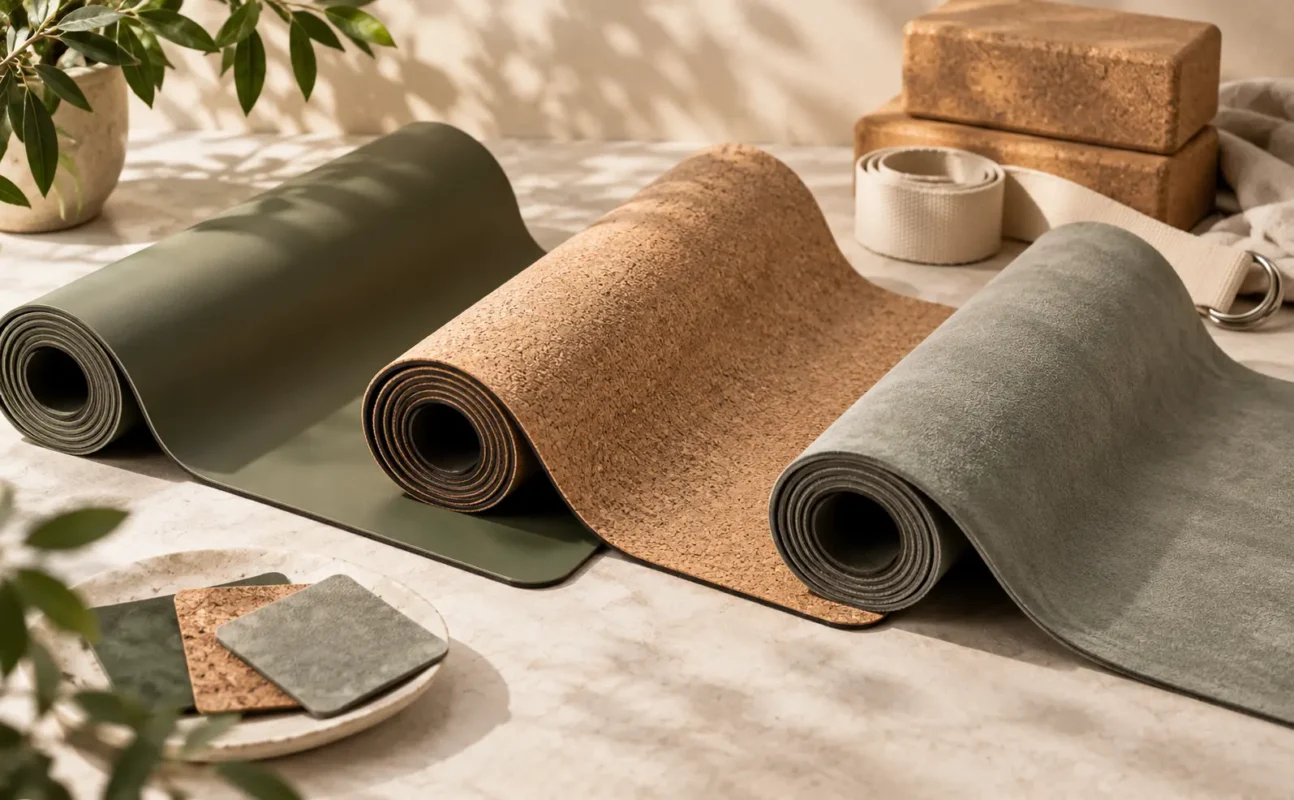
Double-layer options may include different top and base colors, two-tone edges, different densities, mixed materials, printed surfaces, and PU, cork, suede, or microfiber tops.
These options can strengthen private-label differentiation, but may affect MOQ, sample time, and production complexity.
At Pureasana, the regular MOQ is typically around 100 pieces, depending on the product and customization. Standard samples generally take 3–7 days, customized samples about 10–20 days, and bulk production about 25–40 days after confirmation. Timing depends on materials, structure, logo, packaging, quantity, and final specifications.For material-specific minimum quantities and customization examples, review our yoga mat MOQ guide.
For a broader development process covering specifications, logo methods, packaging, MOQ, samples, and approval, see our complete guide to custom yoga mats for private label brands.
Buyers should inspect dimensions, weight, density, surface condition, edges, logo accuracy, flatness, and packaging for both structures. Double-layer mats require additional bonding and alignment checks.
Check:
Appearance alone is not enough because internal density affects cushioning and durability.
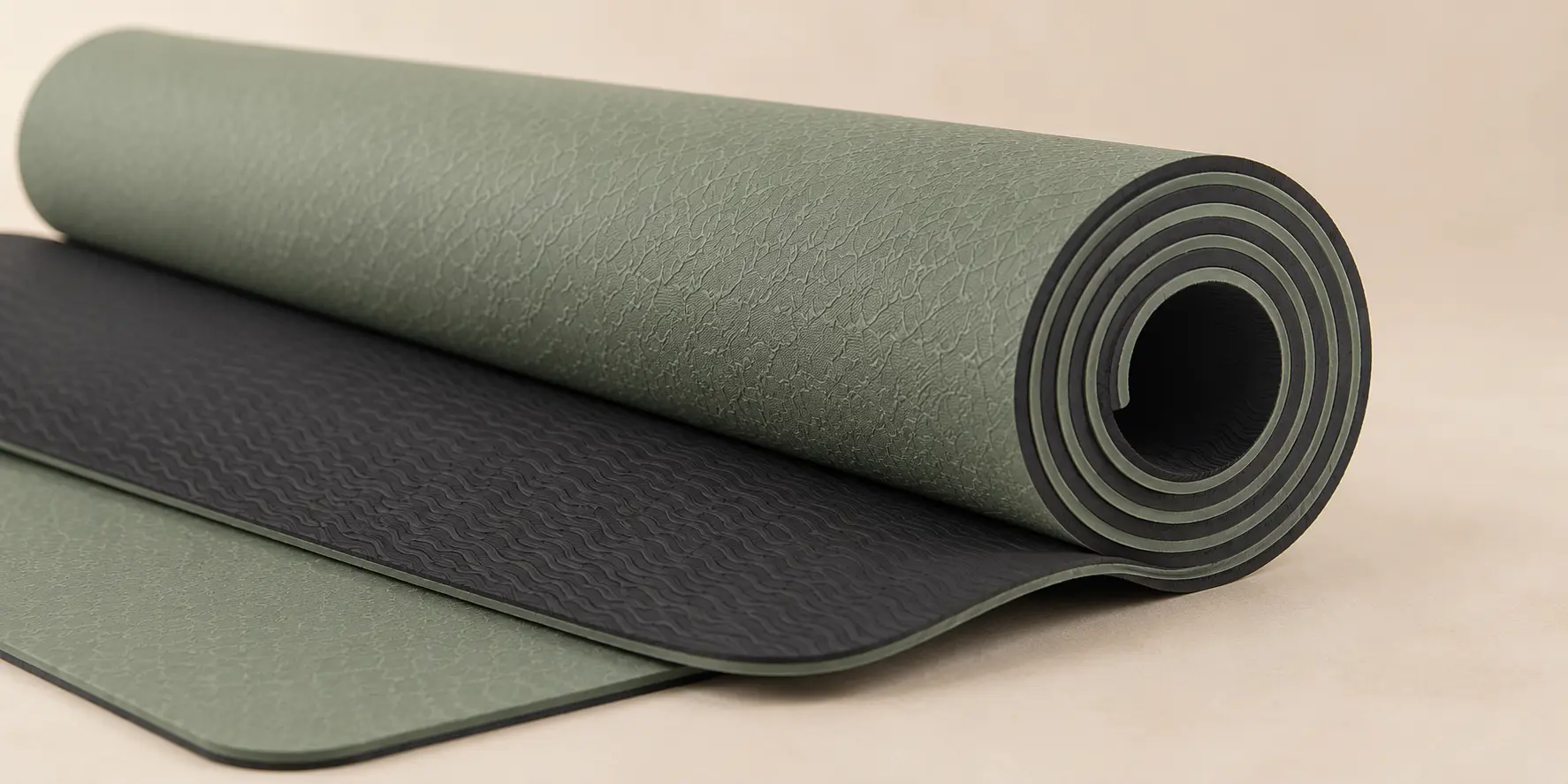
In addition to the basic checks, inspect:
The approved sample should record the accepted structure, weight, appearance, and edge condition.
Delamination may result from poor material compatibility, unstable bonding, uneven combining, insufficient stabilization, edge stress, heat, moisture, or repeated rolling. Buyers can reduce delamination risk by checking edge bonding, repeatedly rolling and unrolling the sample, bending different areas, inspecting for bubbles, and retaining an approved reference sample.
Add edge bonding and layer condition to the final inspection checklist and compare bulk products with the approved sample.[Key Yoga Mat Quality Control Checks for Bulk Orders]
For broader examples of curling, bubbles, delamination, color variation, and packaging problems, review our common yoga mat defects guide.
Wholesale buyers should match the structure to the target customer, sales channel, retail position, weight requirement, and quality-control needs.
Brands that have not yet defined their target customer, sales channel, or price position can use our yoga mat buying guide for brands before selecting the final construction.
Choose single-layer construction when:
Single-layer construction does not automatically mean low quality. A carefully specified material, density, and finish can support a strong mid-range product.
Choose double-layer construction when:
Offering both structures can cover different price levels and use cases, but too many similar SKUs can increase inventory pressure.
A single-layer mat can serve as a lightweight core model, while a double-layer mat can serve as a specialized or upgraded model. Begin with limited SKUs and expand according to sales feedback.
Comparing yoga mat construction only by appearance, thickness, or layer count can lead to inaccurate product selection and unexpected quality or shipping costs. Wholesale buyers should evaluate the complete material structure and approved sample before confirming a bulk order.
Clear specifications allow suppliers to recommend a more suitable yoga mat construction and provide a more accurate quotation. They also reduce misunderstandings during sample approval, bulk production, and final quality inspection.
The single-layer vs double-layer yoga mats decision should be based on performance, target market, customization, quality risk, and landed cost rather than layer count alone.
Single-layer mats suit lightweight, cost-controlled, and simpler product lines. Double-layer mats suit mixed materials, separate surface and base functions, and stronger premium differentiation. The final choice should be approved through complete specifications, sample evaluation, packing data, and a clear inspection standard.
Planning a wholesale or private-label yoga mat collection? Share your preferred material, structure, size, thickness, estimated quantity, logo, packaging, target market, target price, and delivery schedule with Pureasana.
We can help evaluate a suitable custom yoga mat structure based on your final specifications.
Not necessarily. Double-layer mats can combine different features, but they add bonding and delamination risks. Single-layer mats have no layer-separation problem. Durability depends on material, density, construction, finishing, storage, and intended use.
No. A double-layer mat may use the same material in different colors or densities. It may also combine materials such as PU and natural rubber or cork and a supporting base. Buyers should confirm each layer’s material and thickness.
Yes. A single-layer mat may have different colors or textures on its two sides without bonded layers. Appearance alone cannot confirm construction. The supplier should state whether the mat is one continuous structure or a laminated product.
Single-layer yoga mats are generally more suitable for weight-sensitive e-commerce products. Final weight still depends on material, density, size, and thickness. Compare net weight, roll size, carton quantity, carton dimensions, and gross weight.
Pricing depends on top and base materials, the thickness and density of each layer, product weight, processing, surface treatment, logo, printing, packaging, quantity, and quality requirements. A complete specification is necessary for an accurate comparison.
Inspect edge bonding, bend different areas, repeatedly roll and unroll the mat, and look for bubbles, wrinkles, or loose sections. Keep the approved sample as the reference for bulk production and final inspection.
Explore Product Materials