EMAIL
BESPOKE INQUIRY
pureasanaofficial@gmail.com
Explore Articles by Topic:
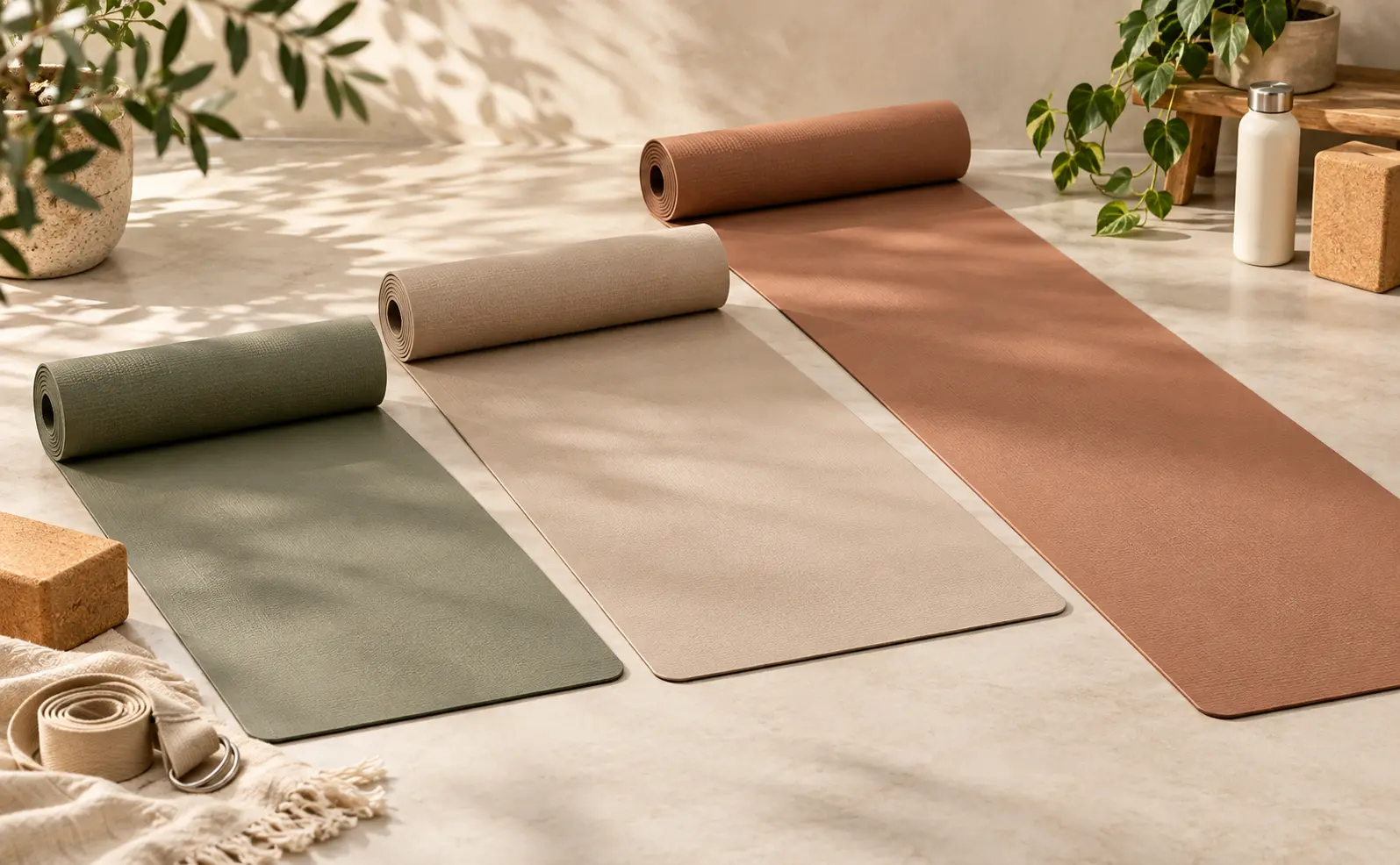
his yoga mat size guide helps brands choose length and width for their target users, practice spaces and product lines. The right dimensions should support the intended movements while fitting the places where customers use, store and carry the mat.
Standard options provide a starting point for a core collection. Wider mats add lateral space, while longer mats accommodate users or movements that need more room along the mat.
Here, size means the finished mat’s length and width. Thickness is a separate specification to consider alongside material construction. The sections below compare dimensions, user needs, product ranges and purchasing checks. For broader material and positioning decisions, see our yoga mat buying guide for brands.
Standard: Start with conventional dimensions when your main customers have no clear need for additional length or width.
Wide: Consider greater width when customers need more lateral space for hand placement, foot placement or movement.
Extra-long: Consider greater length when the intended users or movements require more room along the mat.
A mat can be both wider and longer. Confirm the exact dimensions, available floor space and finished sample before deciding which option belongs in your collection.
Compare measurements before comparing size labels. This yoga mat size guide uses the examples below to show how length and width can change independently.
|
Dimensions (L × W) |
Approx. Inches |
Comparison Role |
Buyer Check |
|---|---|---|---|
|
173 × 61 cm |
68.1 × 24.0 in |
Conventional size example |
Does the length suit the main users? |
|
183 × 61 cm |
72.0 × 24.0 in |
Conventional size example |
Could this be the core specification? |
|
183 × 66 cm |
72.0 × 25.98 in |
Wider than 183 × 61 cm |
Is the additional width useful? |
|
200 × 80 cm |
78.7 × 31.5 in |
Longer and wider example |
Do user needs and available space match? |
Standard, wide and extra-long are product descriptions whose meaning varies across brands and ranges. These examples do not establish universal category boundaries or confirm availability in every material.
Inch measurements are rounded. State which unit controls the purchase specification to prevent conversion differences from becoming production misunderstandings.
For inch-based markets, agree whether a nominal 72-inch length should be produced as 182.88 cm or 183 cm, subject to the agreed tolerance. Use the same convention on the specification sheet, product listing and packaging.
Evaluate thickness separately using our yoga mat thickness guide.
The main difference is the amount of usable space in each direction. Grip, cushioning and overall quality still depend on the complete material and product specification.
Dimensions such as 173 × 61 cm and 183 × 61 cm provide useful starting points for a core range. Assess whether either option meets the needs of your main customer group before adding further sizes.
A conventional format may leave some taller users or particular movements needing more room. Ask which dimensions are available in the chosen construction, then evaluate the actual sample. An existing size can simplify specification discussions, but its suitability still needs to be checked against your product brief.
Wide yoga mats increase lateral space. For example, changing from 183 × 61 cm to 183 × 68 cm adds seven centimetres of width while keeping the length unchanged.
That extra room may suit customers whose hand or foot positions approach the side edges during their intended practice. Check the corresponding floor area, storage space and carrying bag before selecting it. Wider dimensions do not automatically provide greater cushioning; confirm the material and thickness separately when reviewing the sample.
Extra-long yoga mats increase the longitudinal practice area. They are worth evaluating for taller users or movements requiring more room from one end of the mat to the other.
Width remains an independent decision. A 200 × 80 cm sample changes both dimensions compared with a 183 × 61 cm mat. To isolate the benefit of extra length, ask whether samples with the same width and construction are available. Assess the intended movements before committing to the larger specification.
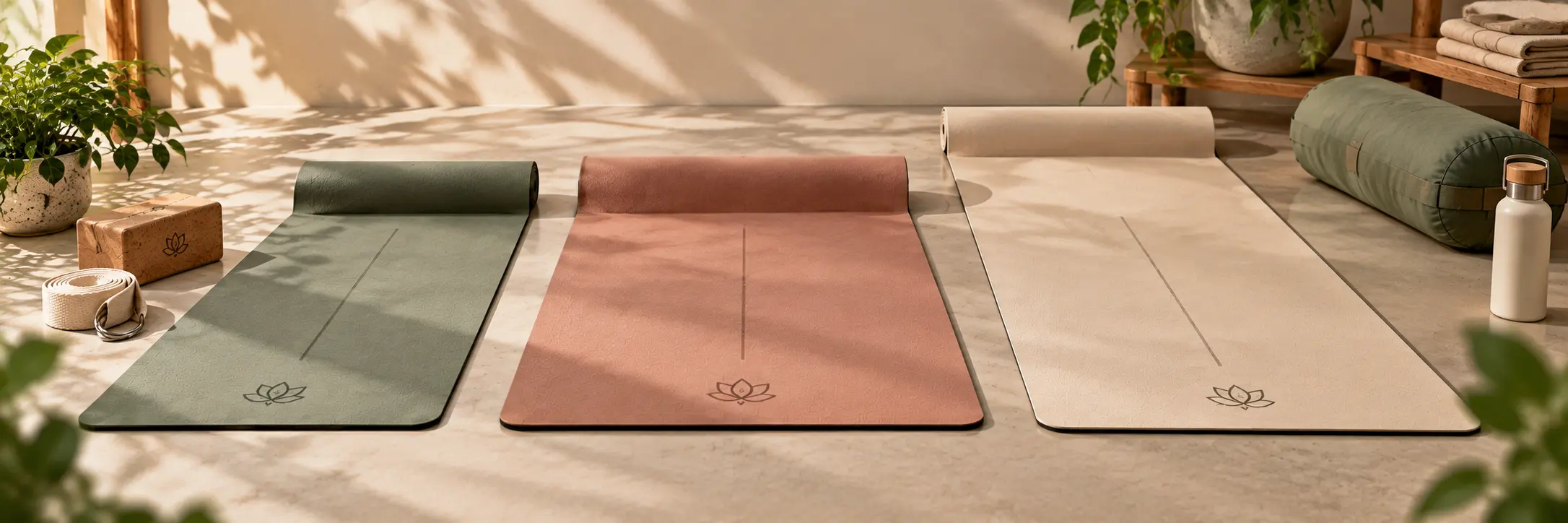
Start with the intended user and practice setting, then check the physical space required. Realistic sample comparisons help turn a general preference for a larger mat into a specific requirement.
Share your target users, sales channel, candidate dimensions and estimated quantity. Pureasana can help you review yoga mat size customization and identify specifications to evaluate before sampling, including the material, thickness and storage requirements relevant to your collection.
Height is a starting point for selecting length. Also consider the contact area needed during lying positions, stretches and transitions, because users of similar height may have different practice requirements.
Ask representative users to compare the candidate sizes under the intended conditions. Record where additional room makes a noticeable difference. A fixed rule such as adding the same number of centimetres to every user’s height cannot account for all movements and preferences.
For home use, compare yoga mat dimensions with the available floor area, furniture boundaries and storage location. A larger mat needs to work in the customer’s actual practice space.
For studios, mark candidate dimensions on the floor and assess several mats together. Review movement space, walkways and the intended class layout before setting quantities. This helps the buyer evaluate the room as a whole instead of choosing solely from an isolated product photograph.
Check the mat in its intended storage form. When a mat is rolled from one short edge toward the other, the roll’s length corresponds approximately to the mat’s width.
Confirm that carrying bags, straps and storage racks fit the selected sample. Foldability depends on construction and should be checked separately. For customers who carry their mats frequently, assess handling and packed size alongside the extra practice space.
Larger dimensions increase material area. The effect on weight, unit price and shipping depends on construction, production conditions and packaging.
With identical construction, layer thicknesses and weight per square metre, mat weight approximately follows area. A 183 × 61 cm mat covers 1.1163 m²; a 200 × 80 cm mat covers 1.6000 m², an increase of approximately 43.3%.
Use that difference only as a preliminary weight estimate under those conditions. Weigh the finished sample; calculate price and freight separately.
Unit cost depends on material use, cutting efficiency, order quantity and packaging. A custom dimension may also require different production preparation.
Larger packages can change carton loading even when the order quantity stays the same. Ask for the proposed packing arrangement for each size.
Confirm the minimum order quantity (MOQ) and timing for the actual specification. For the purchasing factors involved, see yoga mat MOQ explained.
Request net weight, packed gross weight, individual package dimensions, carton quantity and outer carton dimensions. These figures help establish the shipping requirement for each option.
Compare sizes using the same material, thickness, quantity, packaging format, destination, transport method and delivery terms. Record the actual package measurements for each size. Obtain quotations for the relevant services, and check bulk freight separately from individual customer delivery. The 43.3% area increase is not a fixed freight increase.
Offer sizes that address distinct customer needs and can be supported through inventory and repeat orders. The appropriate range depends on your market and purchasing capacity.
Choose a core size for your main customer group. Use the principal customer profile and practice setting to select the initial specification. Check the sample before building the range around it.
Add a second size for a clearly different need. Additional width or length should solve a recognisable problem, such as limited lateral space or insufficient length for the intended users.
Review demand before expanding the range. Use enquiries, sales feedback and reorder patterns to decide whether further options are justified.
Each size and colour combination creates a separate stock-keeping unit (SKU), or inventory variant. Two sizes in three colours create six variants. Plan quantities and replenishment for each one so that additional choice remains manageable.
What dimensions should buyers confirm before ordering? Start with the finished length and width, the controlling measurement unit, the measurement method, and the agreed dimensional tolerances.
The quotation, approved sample and purchase order should describe the same finished product. Record the following before approval:
Finished length and width, measured with the mat laid flat.
The controlling unit, agreed measurement method and acceptable dimensional tolerances.
Material construction, thickness and a finished-weight reference.
Logo, artwork and alignment-line dimensions and placement for each size.
Packaging format, individual packed dimensions, carton quantity, carton dimensions and gross weight.
Quantities per size and colour, applicable minimums and the items included in the quotation.
Confirmation that the full-size sample matches the written specification.
When dimensions change, review the artwork layout again. A logo may need to retain its original size, while alignment markings may require separate positioning decisions.
For a broader development process covering materials, dimensions, thickness, branding, packaging, MOQ and sampling, see our complete guide to custom yoga mats for private label brands.
Keep the approved measurements and artwork together for repeat orders. Our custom yoga mat sample approval guide explains how to document the sample before bulk production.
Apply this yoga mat size guide by connecting length and width with target users, available space and purchasing requirements. Conventional dimensions can form a core range, while wider or longer options should answer a clear customer need.
Compare complete samples, confirm storage and packaging, and obtain quotations using consistent assumptions. A written specification gives your team a clear basis for the first purchase and future reorders, helping the selected size remain practical for both the customer and the business.
Planning a core collection or exploring custom yoga mat sizes? Share your target users, market and sales channel with Pureasana, together with your preferred length, width, material and thickness.
Include quantities per size and colour, logo and packaging requirements, target price and delivery schedule. For shipping estimates, provide the destination. These details help us review suitable specifications and prepare a quotation for your project.
A standard yoga mat size varies by brand and product range. Examples used in this guide include 173 × 61 cm and 183 × 61 cm. For sourcing, state the exact finished length and width, the controlling measurement unit and the agreed tolerance. A standard-size label alone is insufficient for confirming a purchase specification.
Choose a length that accommodates the target user’s intended practice, including the contact area needed for lying and stretching. Height helps narrow the options, but movement patterns also matter. Compare full-size samples with representative users and check the available floor space before selecting an extra-long specification for the product range.
No. Additional width provides more lateral practice space, while cushioning and support also depend on material, thickness and construction. Compare those properties separately. If a wider sample feels different, check whether its backing or thickness has changed before attributing the difference to width. Review the complete specification alongside user feedback.
Yes. Length and width are separate dimensions, so a mat can increase both. For example, 200 × 80 cm is longer and wider than 183 × 61 cm. Confirm both finished measurements in the quotation, then evaluate floor space, storage and packaging. Availability must be checked for the proposed material and quantity.
No. Available dimensions depend on material width, product construction and production conditions.If the material is still being selected, compare TPE, PVC, and natural rubber yoga mats before confirming the final size and structure. A size offered in one range may require a different setup in another. Ask the supplier to confirm feasibility, minimum quantity, sample arrangements and packaging for the exact combination of material, length, width and thickness you intend to order.
Explore Product Materials