EMAIL
BESPOKE INQUIRY
pureasanaofficial@gmail.com
Explore Articles by Topic:
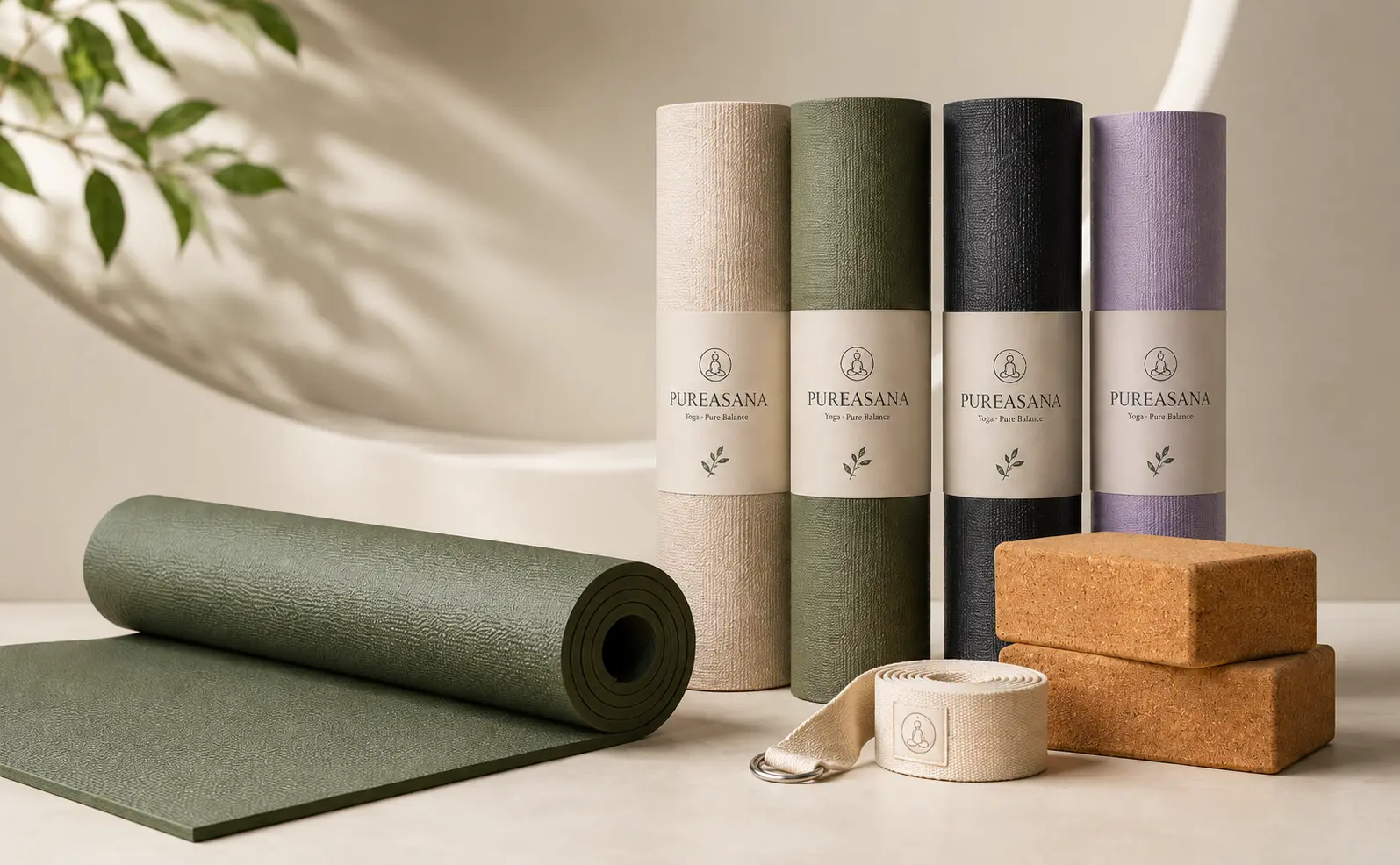
Choosing a yoga mat for a brand is not a search for one universally “best” product. A high-grip mat may still be unsuitable for e-commerce if its weight increases fulfillment costs, while a low-priced mat may not support premium positioning. The right choice must connect the target customer, use case, price level, specifications, sales channel, and commercial requirements.
This yoga mat buying guide for brands explains how to choose a yoga mat for your brand through a practical selection framework. It covers the product brief, material direction, specifications, performance priorities, sample comparison, and whether the final model is realistic for bulk and repeat orders.
Buyers can begin by reviewing the available wholesale yoga mats before narrowing the final specification package.
Start with the customer: Define who will use the mat, where it will be used, and which problems the product should solve.
Match specifications to the positioning: Select the material, thickness, size, finished weight, and surface according to the intended retail level and sales channel.
Compare commercial fit as well as performance: Review samples, MOQ, unit cost, packaging, shipping, lead time, and reorder feasibility before approving the final model.
The right yoga mat is not necessarily the most expensive or technically advanced option. It is the product that best supports the brand’s customer, price position, channel, and product promise.
Brands should define the product brief before comparing materials or quotations. A clear brief tells the supplier who the mat is for, how it will be used, and which requirements are essential.
The target customer influences cushioning, grip, portability, cleaning, appearance, and acceptable price.
Beginners may prefer straightforward benefits, manageable weight, and moderate pricing. Experienced practitioners may prioritize grip, dense support, and stability. Studios usually consider durability, storage, cleaning, and replacement cost.
The buyer does not need to create an overly detailed consumer profile. However, the brand should know which product benefits matter most to its intended customer and which compromises are acceptable.
The same customer may need different products for home practice, hot yoga, travel, or studio use. The main use case should therefore guide the selection priorities.
|
Main Use Case |
Selection Priorities |
|---|---|
|
Home practice |
Comfort, appearance, and storage |
|
Yoga studio |
Durability, cleaning, and stable grip |
|
Hot yoga |
Moisture response, stable base, and cleaning |
|
Travel |
Low weight, compact format, and portability |
|
General fitness |
Cushioning, durability, and multipurpose use |
|
Premium practice |
Dense support, refined surface, and performance |
A brand can cover several use cases through a collection, but one mat should not be forced to meet conflicting needs. A cushioned fitness mat and a lightweight travel mat require different structures.
Yoga mat product positioning should be confirmed before material selection. Entry-level, mid-range, and premium products require different balances of cost, performance, appearance, packaging, and differentiation.
|
Product Position |
Typical Priorities |
Common Buying Direction |
|---|---|---|
|
Entry-level |
Cost, broad usability, and clear features |
Standard sizes, practical surfaces, and simple packaging |
|
Mid-range |
Balanced performance and differentiation |
Refined texture, custom colors, and stable repeat specifications |
|
Premium |
Specialized experience and brand presentation |
Distinctive surfaces, layered structures, and premium presentation |
Premium positioning does not simply mean choosing the most expensive material. Surface experience, weight, branding, packaging, and retail price must tell the same story.
Entry-level products also need clear value. Selecting only by the lowest quotation can create weak differentiation, inconsistent specifications, or unexpected landed costs.
Brands planning a new collection can also review the 2026 yoga product sourcing trends affecting materials, customization, packaging, quality, and supplier selection.
Brands should use the product brief to narrow the material direction instead of asking which yoga mat material is universally best.
Material suitability depends on formulation, density, surface, structure, weight, use case, target price, and market requirements.
|
Material Direction |
Often Suitable For |
Main Buyer Considerations |
|---|---|---|
|
TPE |
Lightweight mainstream and starter collections |
Density, texture, finished weight, and price |
|
PVC |
Value-focused or specification-flexible projects |
Formulation, density, odor, and market requirements |
|
Natural rubber |
Dense, stable, and higher-grip positioning |
Weight, cost, storage, and rubber formulation |
|
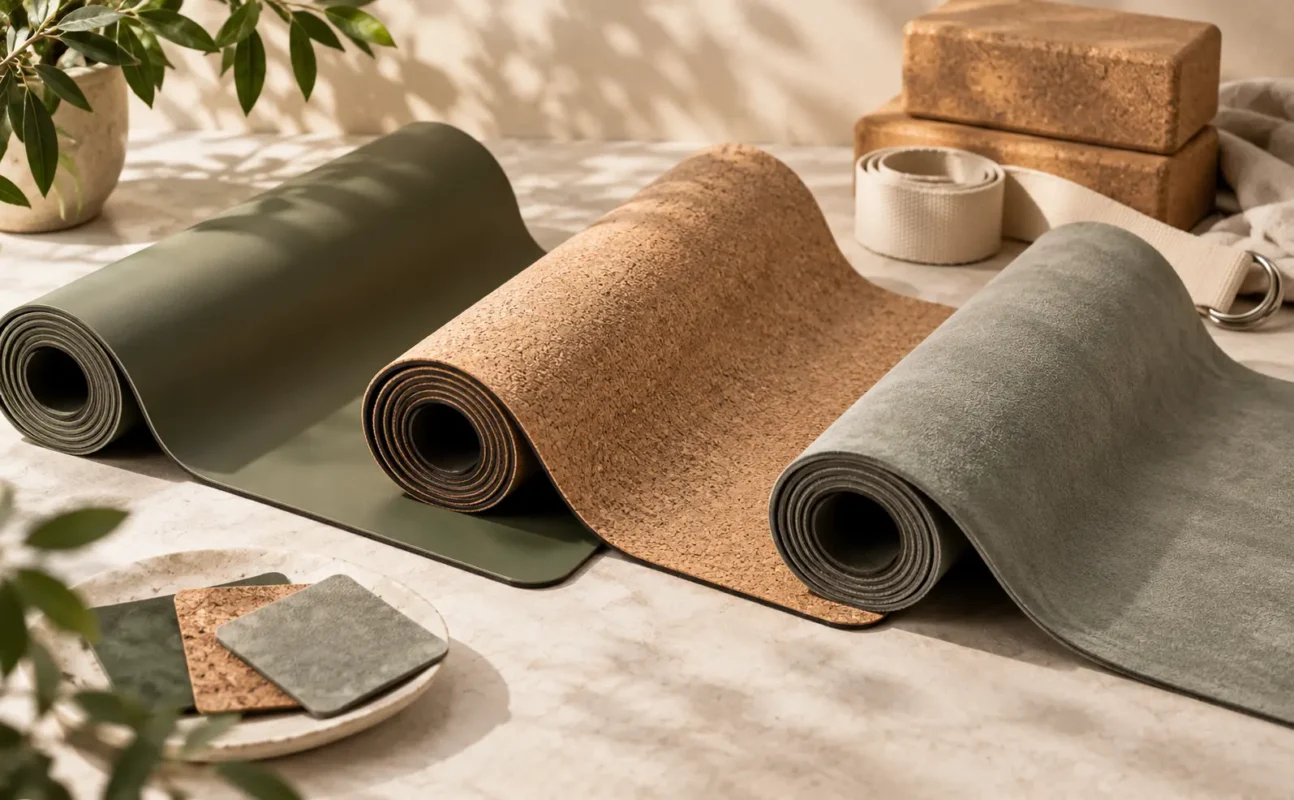
Cork or PU composites |
Distinctive or performance-led collections |
Surface behavior, bonding, cleaning, and base material |
|
Suede composites |
Printed, travel, or moisture-responsive products |
Print quality, wet response, and layer construction |
These directions are starting points, not fixed rules. Products using the same material can differ in density, grip, hardness, odor, and weight.
Buyers should compare the final construction rather than rely only on the material name. A material that works well for a premium studio mat may not suit a lightweight e-commerce product.
For a deeper comparison, review how TPE, PVC, and natural rubber differ in grip, cushioning, weight, price positioning, and private-label suitability.
Thickness, size, and finished weight should be selected together. Changing one specification can affect user experience, material consumption, unit cost, carton quantity, and shipping efficiency.For a detailed comparison of standard, wide, and longer formats, see our yoga mat size guide.
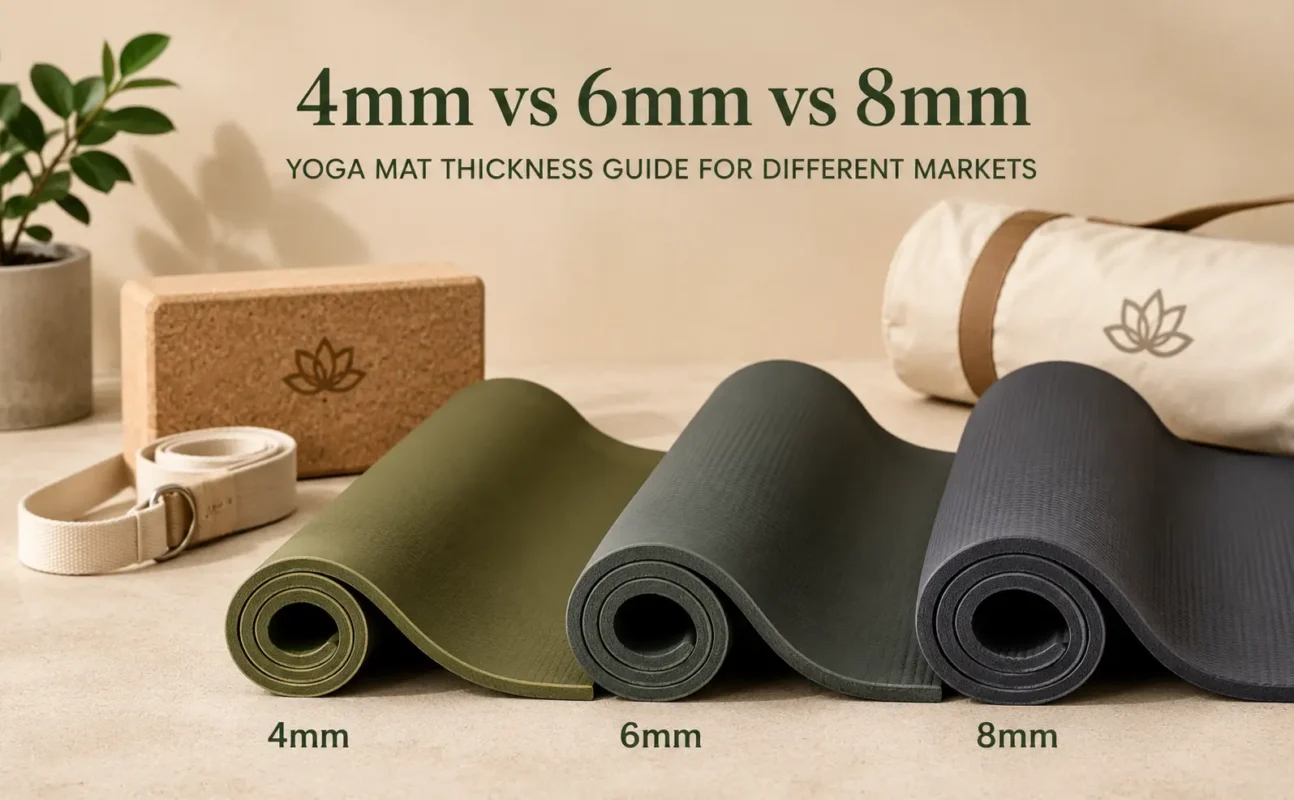
Thinner mats are generally lighter and give more direct floor feedback. Medium thicknesses often balance cushioning, stability, and portability.
Thicker mats can support comfort-focused positioning but may increase weight, rolled diameter, packaging volume, and instability during balance-focused use.
Common options include:
Thickness alone does not determine how a mat feels. Density and product construction can make two mats of the same thickness feel significantly different.
A dense 6 mm mat may provide firmer support than a softer 8 mm mat. Buyers should therefore compare thickness, density, hardness, and finished weight together.For a detailed comparison of cushioning, stability, roll size, shipping, and market fit, review our yoga mat thickness guide for 4mm, 6mm, and 8mm mats.
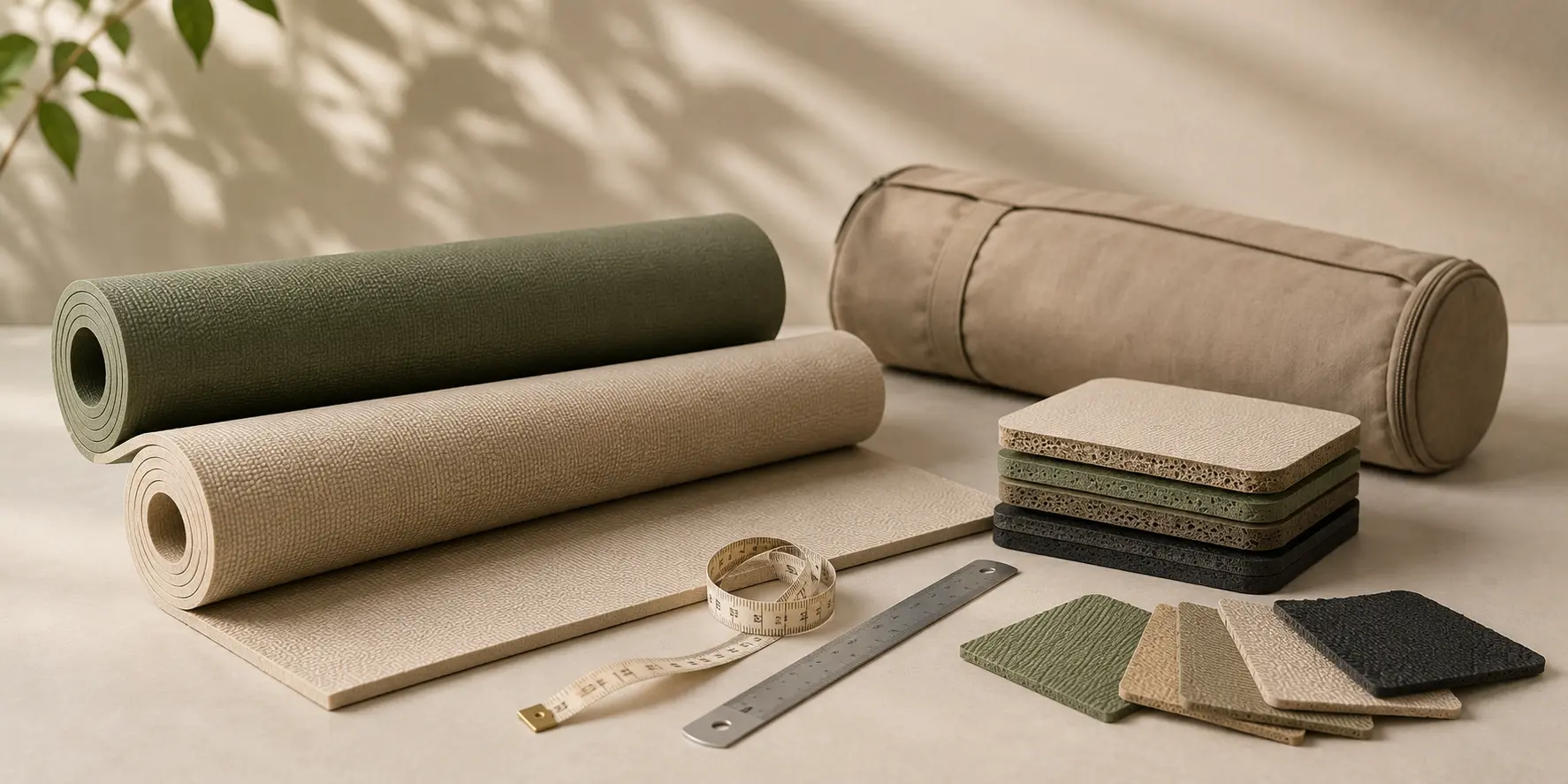
Common yoga mat sizes include:
Larger mats provide more practice space but also increase material use, weight, carton size, and freight cost.
How does product weight affect yoga mat shipping cost? Higher finished weight can increase parcel charges, carton gross weight, warehouse handling, and freight allocation, while also affecting portability and customer expectations.
Wholesale yoga mat specifications should therefore include dimensions and an agreed weight reference. When suppliers quote products with different sizes or weights, the prices should not be treated as directly comparable.
A brand does not need every performance characteristic to be maximized. The better approach is to identify two or three priorities that directly support the product promise.
|
Product Concept |
Primary Performance Priorities |
|---|---|
|
Beginner collection |
Comfort, simple cleaning, stable use, and manageable cost |
|
Travel collection |
Low weight, compact format, and portability |
|
Hot yoga collection |
Moisture-responsive surface and stable floor grip |
|
Studio collection |
Durability, cleaning, storage, and repeat consistency |
|
Premium practice line |
Dense support, refined surface, and defined grip |
Surface grip and floor grip should be reviewed separately. A surface may feel secure under the hands while the mat base still moves on the floor.
Cushioning must also be balanced with stability. A soft mat may feel comfortable during kneeling positions but provide less stable support during standing poses.
Moisture response matters mainly when it supports the intended practice. A surface designed for wet grip may not be necessary for a general beginner mat.
Features that customers cannot recognize or use may raise cost without improving the commercial offer.
Brands should separate must-have requirements from nice-to-have features. Must-have items should become pass-or-fail criteria during sample selection.
The same yoga mat can perform differently across e-commerce, retail, distribution, studio, and promotional channels.
The sales model changes how buyers should evaluate weight, packaging, presentation, and landed cost.
|
Sales Channel |
Selection Priorities |
|---|---|
|
E-commerce |
Weight, parcel dimensions, protection, return risk, and clear online features |
|
Retail stores |
Shelf presentation, barcodes, packaging, and price ladder |
|
Distributors |
Range consistency, carton quantity, repeat supply, and assortment planning |
|
Yoga studios |
Durability, cleaning, storage, and replacement cost |
|
Promotional projects |
Cost control, logo visibility, quantity, and delivery schedule |
E-commerce brands should estimate fulfillment and return effects before approving a heavier mat. A product that looks attractive in photos may still create excessive parcel costs or customer complaints about portability.
Retail buyers need clear packaging without wasting carton space. Packaging should communicate the product benefits, but oversized boxes or unnecessary empty space may reduce shipping efficiency.
Distributors require stable specifications across different colors and repeat orders. Yoga studios often value service life, cleaning convenience, and replacement planning more than decorative packaging.
Landed cost should include:
Factory prices are not comparable unless the product specifications and packaging requirements match.
Customization should reflect value customers can recognize and complexity the brand can manage.More customization is useful only when it supports differentiation or a specific commercial requirement.
A standard structure with a logo and simple packaging can suit:
This option allows the brand to establish basic visual identity without changing the core product structure.
A modified product may use:
This approach often creates visible differentiation without redesigning the full structure.
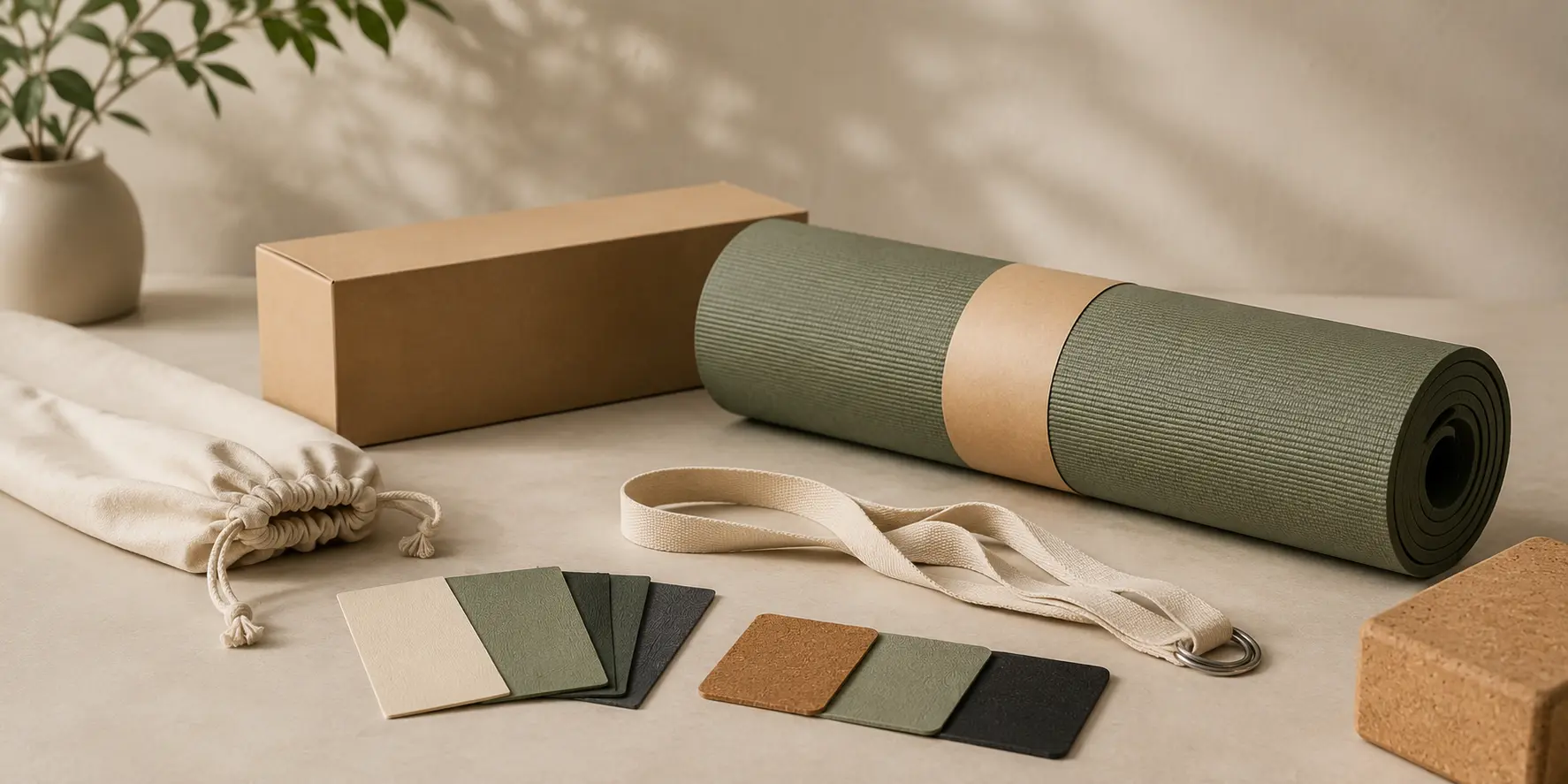
A deeper project may involve:
These choices can affect sampling, MOQ, unit cost, lead time, and repeat-order requirements.
Once the customization level is clear, buyers can review the complete private-label yoga mat development process before confirming artwork and samples.
A yoga mat sample comparison should use the same criteria for every candidate.
Selecting by first impression, color, or one strong feature can hide commercial weaknesses in weight, cost, packaging, or repeat-order feasibility.
|
Evaluation Area |
Questions to Ask |
|---|---|
|
Customer fit |
Does the mat match the target user and main use case? |
|
Positioning |
Does the product support the intended retail level? |
|
Performance |
Do grip, cushioning, stability, and cleaning match the promise? |
|
Size and weight |
Is the mat practical for use, storage, and shipping? |
|
Appearance |
Do the color, texture, edges, and finish fit the brand image? |
|
Customization |
Can the logo and packaging be applied effectively? |
|
Commercial fit |
Are MOQ, cost, lead time, and reorder terms realistic? |
|
Risk |
Are specifications, claims, and acceptance standards clear? |
Buyers can score each area from one to five, but critical requirements should not be averaged away.
A travel mat that fails the weight target should not win because its color scores highly. A hot-yoga product should meet the required moisture-response standard. A premium mat should deliver the intended surface experience and visual finish.
The scorecard should therefore contain two types of criteria:
After selecting the preferred sample, document:
Then define the yoga mat quality control checks that will be used during bulk production and pre-shipment inspection.
Most selection problems begin before production because buyers compare products without a consistent commercial brief.
Common mistakes include:
A disciplined private label yoga mat selection process keeps customer fit, product promise, and commercial feasibility connected.
A sample is not ready for bulk ordering until its specifications and business conditions are clear.
What yoga mat specifications should buyers confirm? Use the checklist below to verify the complete product and commercial package before finalizing the purchase order.
|
Decision Area |
What the Brand Should Confirm |
|---|---|
|
Customer |
User level, use case, main needs, and expected price |
|
Positioning |
Entry-level, mid-range, or premium |
|
Material |
Performance, weight, cost, and market fit |
|
Specifications |
Size, thickness, density, and finished weight |
|
Performance |
Grip, cushioning, stability, cleaning, and durability |
|
Channel |
E-commerce, retail, distribution, studio, or promotion |
|
Customization |
Color, logo, structure, accessories, and packaging |
|
Commercial terms |
MOQ, sample cost, unit cost, lead time, and reorder terms |
|
Final approval |
Sample scorecard, approved sample, and specification sheet |
Complete this checklist before finalizing the purchase order.
It gives suppliers a clearer quotation basis and prevents products with different specifications from being treated as equivalent.
A practical yoga mat buying guide for brands begins with customer and commercial fit, not with one material, thickness, or factory price.
Define the target user, confirm the use case, set the product position, select the specification package, evaluate the sales channel, and compare samples consistently.
The right yoga mat is the option that can deliver the promised experience at a realistic landed cost and remain reproducible for future orders.
Looking for the right yoga mat for your brand? Share your target customer, market, channel, material direction, size, thickness, quantity, branding, packaging, price position, and delivery plan with Pureasana. We can help narrow the options before sampling and quotation.
There is no universal best yoga mat for a private label brand. The right model depends on the target customer, sales channel, price position, finished weight, performance priorities, customization requirements, and destination market.
Buyers should compare complete product structures rather than choose only by the material name.
Yoga mat thickness should match the use case and product position.
Mainstream collections often seek a balance of cushioning, stability, and manageable weight, while travel, premium-practice, and general-fitness products may need different thickness directions. Density and structure should be evaluated together with thickness.
Use the same scorecard for customer fit, positioning, grip, cushioning, size, weight, appearance, customization, MOQ, cost, lead time, and reorder feasibility.
Critical requirements should be pass-or-fail conditions instead of being averaged with decorative features.
A standard structure with branding is often practical for a smaller or market-testing launch.
A more customized yoga mat is suitable when the brand has a clear customer requirement, differentiated product concept, realistic order quantity, and retail position that can support the added development cost.
Buyers should provide:
Clear information helps suppliers recommend comparable and commercially realistic options.
Explore Product Materials