EMAIL
BESPOKE INQUIRY
pureasanaofficial@gmail.com
Explore Articles by Topic:
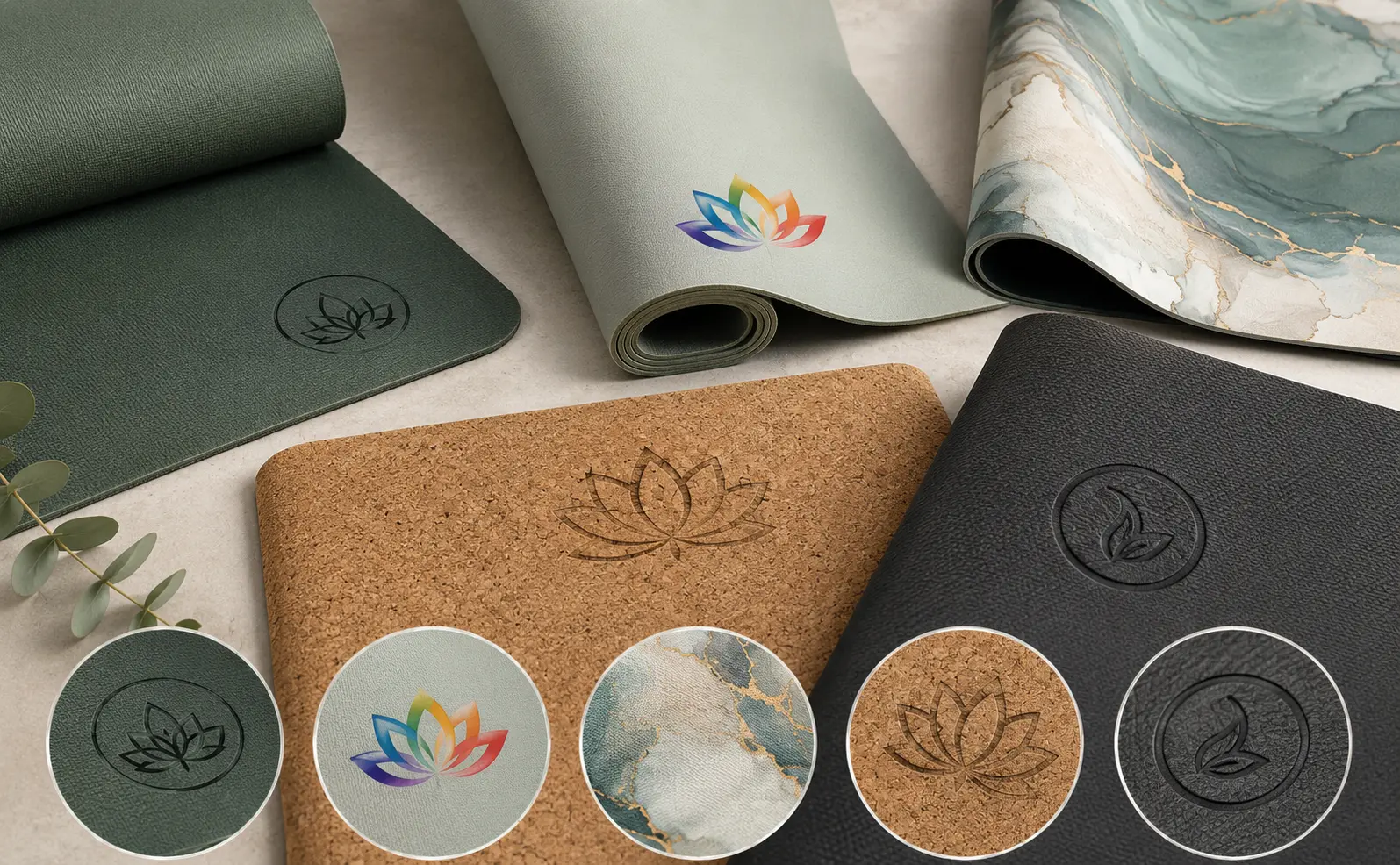
Choosing among different yoga mat logo printing methods affects more than appearance. The selected process must match the yoga mat material, surface texture, logo design, color requirements, durability expectations, order quantity, and target retail position.
A simple one-color mark may suit screen printing, while detailed multicolor graphics may require heat transfer or digital printing on a compatible surface. Cork, suede, PU, TPE, PVC, and natural rubber respond differently to ink, heat, pressure, and engraving. This guide compares the main methods, material compatibility, pricing factors, artwork requirements, sample checks, and purchasing considerations for wholesale and private-label projects.
The best logo method depends on the yoga mat material, surface texture, artwork complexity, color requirements, print area, order quantity, target market, and durability expectations. Buyers should confirm the final logo size, position, color, surface effect, and adhesion on a finished sample before approving bulk production.
The best method depends on material compatibility, texture, logo complexity, color count, intended use, quantity, and brand positioning.
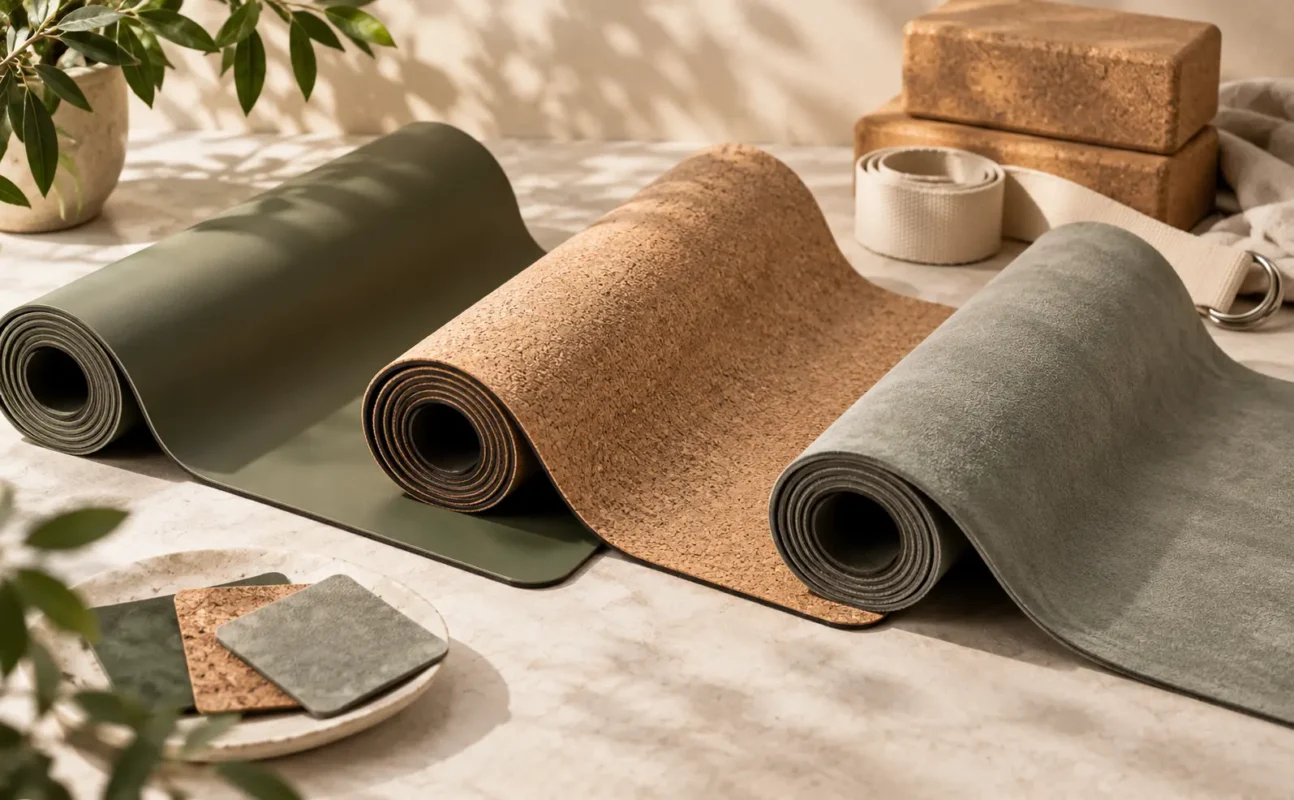
The mat surface affects ink adhesion, heat tolerance, edge clarity, color appearance, deformation risk, and logo durability. TPE and PVC often have textured foam or polymer surfaces. PU is commonly used as a functional practice surface, cork has natural particles and visual variation, and suede or microfiber behaves more like a textile.
Even mats made from the same material may require different solutions, so testing must use the exact finished structure.Logo compatibility can also change with the finished construction, so buyers may compare single-layer and double-layer yoga mats before approving the final branding process.
Simple one-color logos are easier to reproduce consistently than gradients, fine lines, small text, or multicolor graphics. Each additional color may increase setup and alignment requirements.
A small corner logo and full-surface artwork are also different projects. Buyers should confirm the size, number of positions, color reference, and whether branding appears on one or both sides.
Entry-level collections prioritize cost control, while mid-range private-label yoga mats balance durability and branding, and premium brands may prefer engraving or embossing.
E-commerce products need visible branding, while studio mats may require stronger resistance to handling.
Brands that are still defining their target customer, sales channel, or price position can use our yoga mat buying guide for brands before selecting the final branding method.
The main yoga mat logo printing methods are screen printing, heat transfer, digital or sublimation printing, laser engraving, and embossing or debossing.
|
Logo Method |
Best Application |
Color Capability |
Branding Effect |
Key Limitation |
|---|---|---|---|---|
|
Screen Printing |
Simple logos and bulk orders |
Usually limited colors |
Clear and practical |
Complex graphics require more setup |
|
Heat Transfer |
Detailed or multicolor logos |
Multiple colors and gradients |
Bright and precise |
Heat compatibility requires testing |
|
Digital or Sublimation |
Full-surface designs |
Full color |
Strong visual differentiation |
Requires compatible textile-like surfaces |
|
Laser Engraving |
Cork and suitable surfaces |
Material-tone result |
Natural and minimalist |
No full-color result |
|
Embossing or Debossing |
Simple premium branding |
No printed color |
Subtle and integrated |
Fine details may be unclear |
Screen printing on yoga mats applies ink through a prepared mesh screen. It is commonly used for simple one- or two-color logos, medium branding areas, and regular wholesale orders.
It can provide clear branding on tested TPE, PVC, rubber, or other compatible surfaces. Gradients, fine lines, and several colors require more setup, while texture may interrupt small details.
A heat transfer yoga mat logo uses controlled heat and pressure on a compatible surface. It can suit multicolor logos, gradients, detailed graphics, and small text.
The mat must tolerate the process because some foam surfaces may show indentation or texture changes. Buyers should inspect edges, flexibility, and adhesion; heat transfer is not automatically more durable than screen printing.
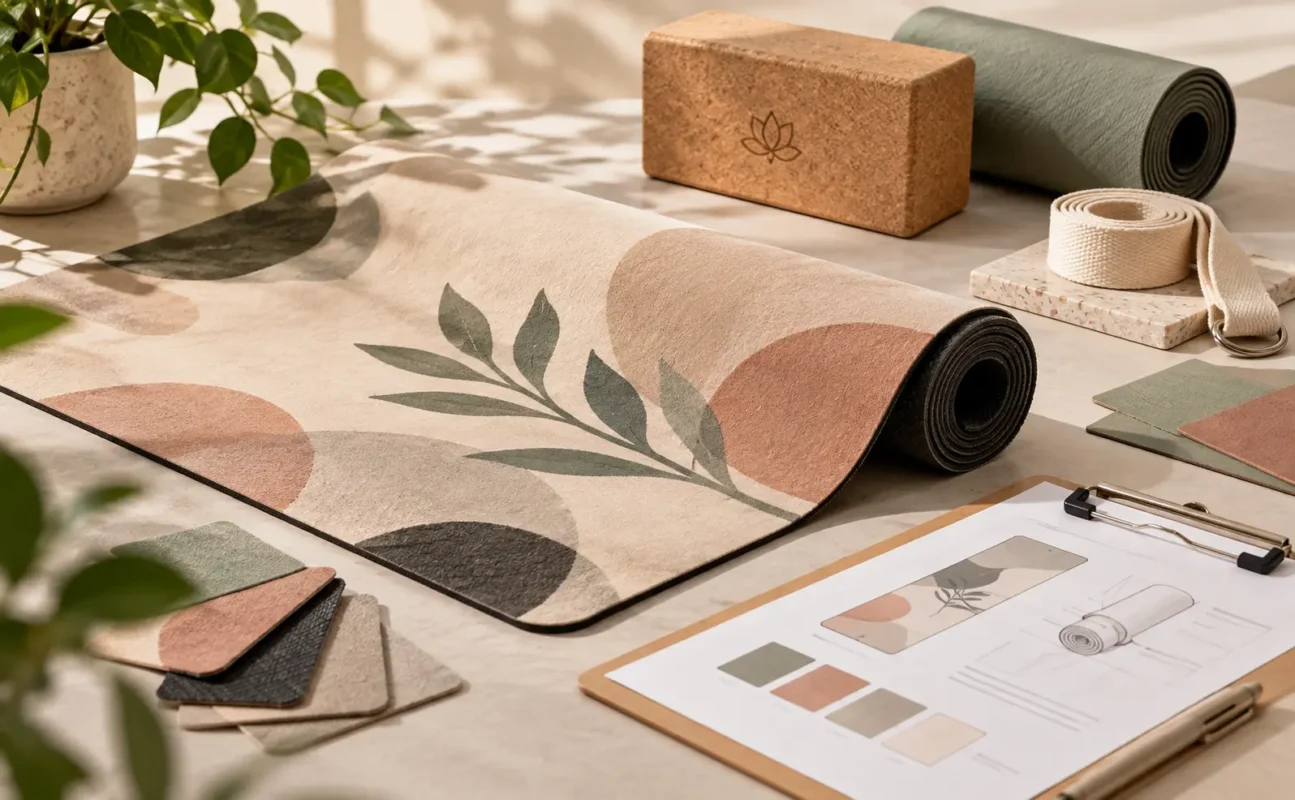
Digital or sublimation printing is commonly used for full-color or full-surface designs on textile-like surfaces such as suede and microfiber. It can reproduce gradients, photographs, artistic patterns, and coordinated design collections.
The process offers strong visual differentiation but is not suitable for every mat material. Buyers should check color accuracy, resolution, alignment, trimming, and the surface after rolling and cleaning.
Laser engraving creates a logo by changing the material surface rather than adding colored ink. It is often considered for cork yoga mats and compatible products with a natural or minimalist positioning.
Because engraving changes the material surface rather than adding a printed layer, it avoids visible transfer-film edges. However, it does not create a standard full-color result.
Embossing or debossing forms a raised or recessed logo directly in the mat surface. It is suitable for tone-on-tone branding, simple logos, and understated premium collections.
The effect creates a clean, integrated appearance without printed color. The material must support the process, and fine details may not reproduce clearly. Depth and position should be confirmed through a sample.
Logo compatibility must be confirmed on the finished mat because texture, density, coatings, and formulations affect the result.Brands still deciding between PU, cork, and microfiber suede can first compare PU vs cork vs suede yoga mat surfaces before selecting the final branding method.
|
Material |
Common Logo Directions |
Main Points to Confirm |
|---|---|---|
|
TPE |
Screen printing, suitable transfer methods, embossing |
Texture, heat sensitivity, adhesion |
|
PVC |
Screen printing, selected transfer methods, embossing |
Surface finish and formulation |
|
PU Surface |
Selected compatible printing methods after testing |
Grip surface and coating stability |
|
Natural Rubber |
Printing or embossing depending on surface |
Texture and surface treatment |
|
Cork |
Laser engraving or simple printing |
Natural variation and contrast |
|
Suede |
Digital or sublimation printing |
Color accuracy and alignment |
Screen printing is often considered for simple logos on TPE and PVC yoga mats. Selected transfer or embossed methods may also be possible. Texture affects edge clarity, while heat sensitivity affects transfer suitability. Buyers should not assume that all formulations use the same settings.
Suede and microfiber surfaces commonly support digital or sublimation printing. They are suitable for full-surface artwork, gradients, and complex multicolor patterns. Buyers should confirm resolution, color, cropping, edge alignment, and pattern position.
Custom yoga mat logo pricing, MOQ, and lead time depend on the method, color count, print area, artwork complexity, material compatibility, setup requirements, quantity, and packaging.
One-color logos are simpler than gradients, full-surface designs, repeated patterns, or branding on both sides.
Buyers should specify the position and number of print areas because multiple locations may increase cost.
Screen printing may require screen preparation, while embossing or debossing may require a custom mold. Full-surface printing may also require additional artwork preparation, color confirmation, cropping, and alignment approval.
For smaller orders, setup costs may have a greater effect on the unit price.
At Pureasana, the regular MOQ is typically around 100 pieces, depending on the product, logo method, and packaging requirements. Standard samples generally take about 3–7 days, while customized samples may take about 10–20 days.
Bulk production usually takes about 25–40 days after confirmation. Actual timing depends on the material, logo, colors, packaging, quantity, and final specifications.
Accurate quotations for yoga mat logo printing methods require a vector logo whenever possible, together with the print size, position, colors, and intended mat material.
Preferred formats include AI, EPS, SVG, or vector PDF. Vector artwork can be resized without losing clarity.
If only a PNG is available, it should have a transparent background, high resolution, correct proportions, and no visible compression. Screenshots and images downloaded from messaging apps may not be suitable.
Before sampling, confirm:
Complex artwork may need changes to line width, text size, or color separation.
A finished sample should be checked for visual accuracy, adhesion, flexibility, placement, and its effect on the practice surface.
Logo peeling, color transfer, and other branding-related quality problems are also covered in our guide to common yoga mat defects and prevention.
Review size, alignment, edge clarity, color, readability, missing areas, ink spread, and surface deformation.
Buyers can gently rub the logo, roll and unroll the mat, bend the branded area, and clean it using the expected care method. Then inspect for color transfer, cracking, peeling, lifting edges, or visible surface changes.
For a broader inspection framework covering specifications, branding, packaging, defects, and pre-shipment approval, review our yoga mat quality control checks for bulk orders.
A logo should not create an obviously slippery, raised, stiff, or uncomfortable area in an important hand or foot placement zone. This is especially relevant for PU grip surfaces, large heat-transfer graphics, thick ink layers, and full-surface printed products.
The approved sample should record the mat material, color, logo method, size, position, color reference, surface condition, and packaging layout. It can then support bulk production and inspection.
The right method should match the product material, artwork, target price, sales channel, and desired branding effect.
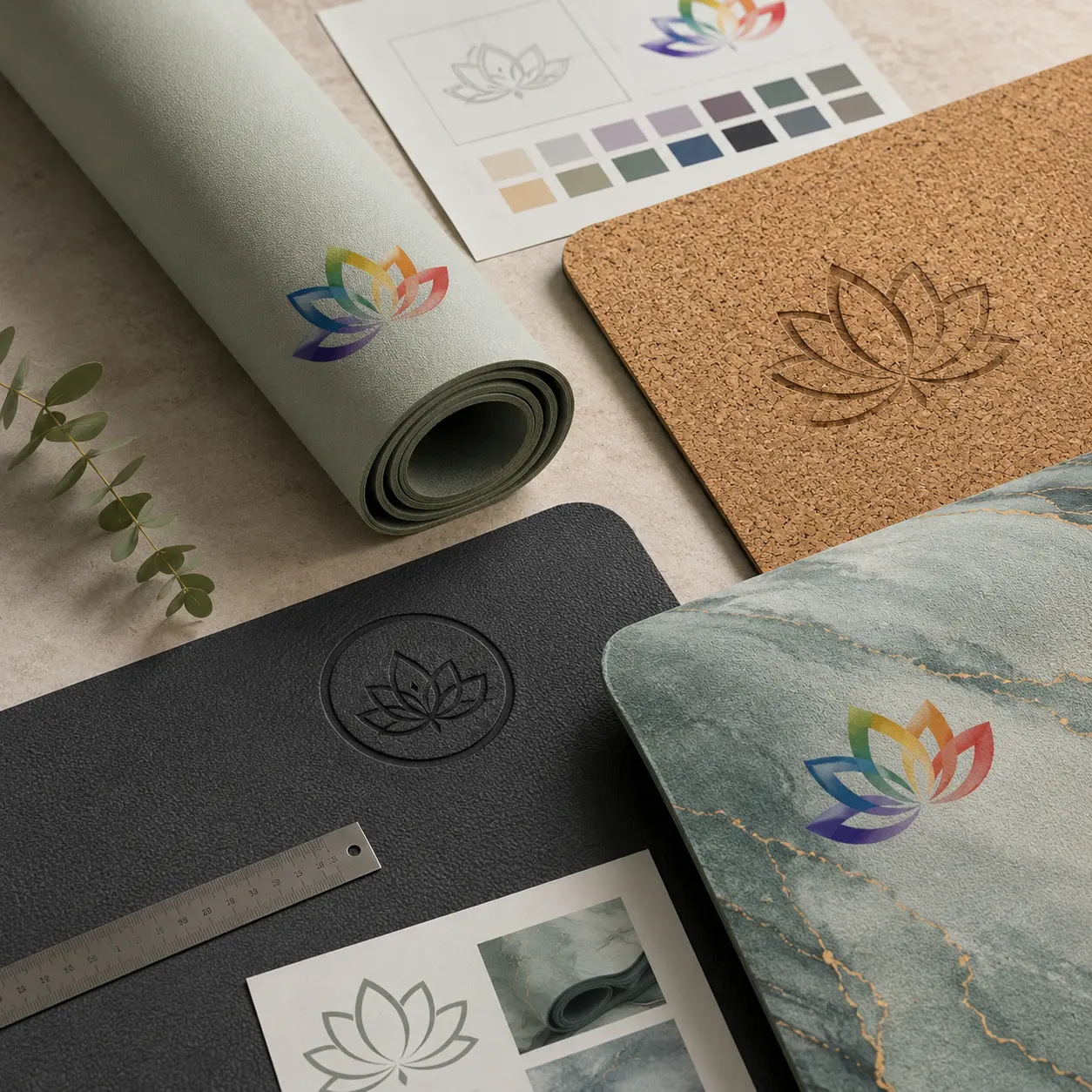
Brands can divide branding between the product and packaging: the mat carries a clean logo, while sleeves, straps, cards, bags, or boxes present full-color information.
Logo customization problems often come from incomplete specifications, unsuitable artwork, or insufficient sample evaluation. These mistakes may affect print clarity, color consistency, production cost, delivery time, and the final appearance of a private-label yoga mat.
An accurate quotation request should include the yoga mat material, size, thickness, quantity, logo file, number of colors, print dimensions, logo position, preferred printing method, packaging requirements, target market, and delivery schedule. Complete specifications help the supplier recommend a more suitable process, calculate setup requirements, and reduce misunderstandings during sampling and bulk production.
The best choice among yoga mat logo printing methods depends on the mat material, logo complexity, color requirements, order quantity, durability expectations, and target market.
Screen printing suits simple bulk logos, heat transfer supports detailed multicolor graphics, digital or sublimation printing suits full-surface designs, laser engraving fits natural minimalist products, and embossing provides integrated tone-on-tone branding. The final decision should be based on a finished sample.
Planning a custom yoga mat collection? Share the material, size, quantity, artwork, colors, print dimensions, packaging, target market, and delivery schedule with Pureasana.
Our team can compare suitable branding methods and discuss a wholesale or private-label solution.
Screen printing is commonly used for simple one- or two-color logos. However, it is not suitable for every material or design. Surface texture, ink adhesion, color count, quantity, and durability requirements should be considered.
Screen printing generally suits simple logos and cost-controlled orders. Heat transfer is more suitable for multicolor designs, gradients, and fine detail. The better option depends on the material, artwork, print size, and sample performance.
Yes, when the finished surface supports a suitable process. Heat transfer may work for localized multicolor graphics, while digital printing or sublimation may suit full-surface artwork on compatible textile-like structures.
Laser engraving often suits cork mats that need a natural and minimalist appearance. Simple printing may also be possible. Buyers should approve the logo contrast and acceptable appearance variation on a finished sample.
Yes. MOQ can be affected by the method, color count, size, print positions, screen or mold setup, material, and packaging. A simple logo on an existing specification is usually easier to arrange than a full-surface design.For a broader comparison of material, color, size, packaging, and branding minimums, see our yoga mat MOQ guide.
Buyers can gently rub the logo, bend the branded area, roll and unroll the mat, and clean it using the expected care method. Check for cracking, peeling, lifting, color transfer, or surface changes.
Explore Product Materials