EMAIL
BESPOKE INQUIRY
pureasanaofficial@gmail.com
Explore Articles by Topic:
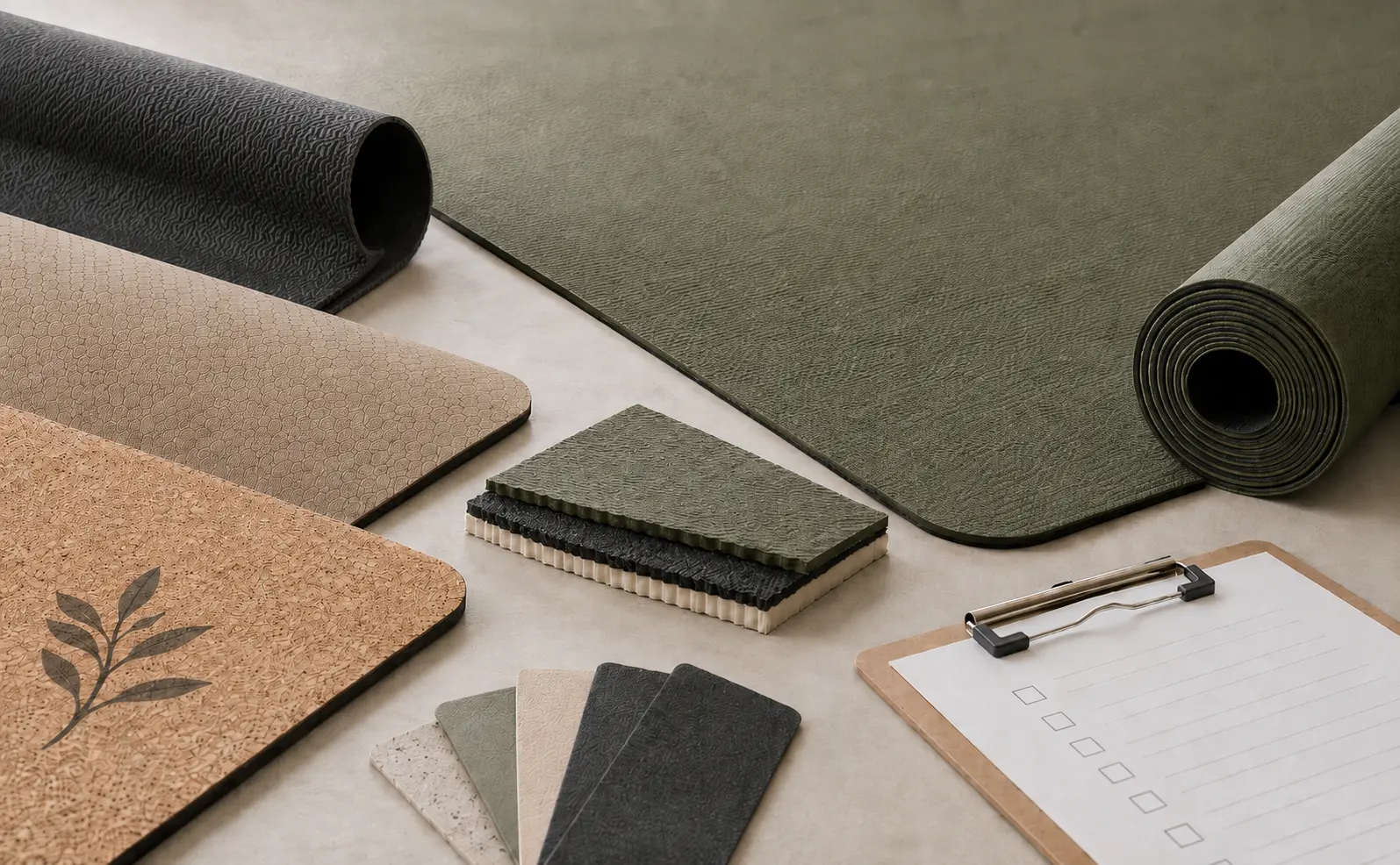
Understanding common yoga mat defects helps wholesale buyers evaluate supplier quality systems and define clearer product standards before approving bulk production. Defects may begin with raw materials, forming, foaming, bonding, cutting, printing, conditioning, packaging, or transportation. Some affect appearance, while others change dimensions, grip, cushioning, flatness, structural durability, or brand presentation.
Most yoga mat manufacturing defects begin before final inspection, so preventing them earlier is more effective than sorting affected products at the end. Different materials and constructions also create different risks: a single-layer foam mat, a PU surface with a natural rubber base, and a cork-surface mat should not be judged by exactly the same criteria. For a broader material comparison, review how TPE, PVC, and natural rubber yoga mats differ in density, weight, grip, durability, and quality priorities.This guide explains the main defect categories, likely causes, manufacturer prevention methods, and the standards buyers should confirm before mass production.
Effective defect prevention depends on raw-material control, stable manufacturing, approved reference samples, documented requirements, and traceable inspections. Final appearance alone cannot confirm overall yoga mat quality.
A yoga mat defect is an appearance, dimensional, structural, functional, branding, or packaging condition that falls outside the approved specification or agreed acceptance standard.
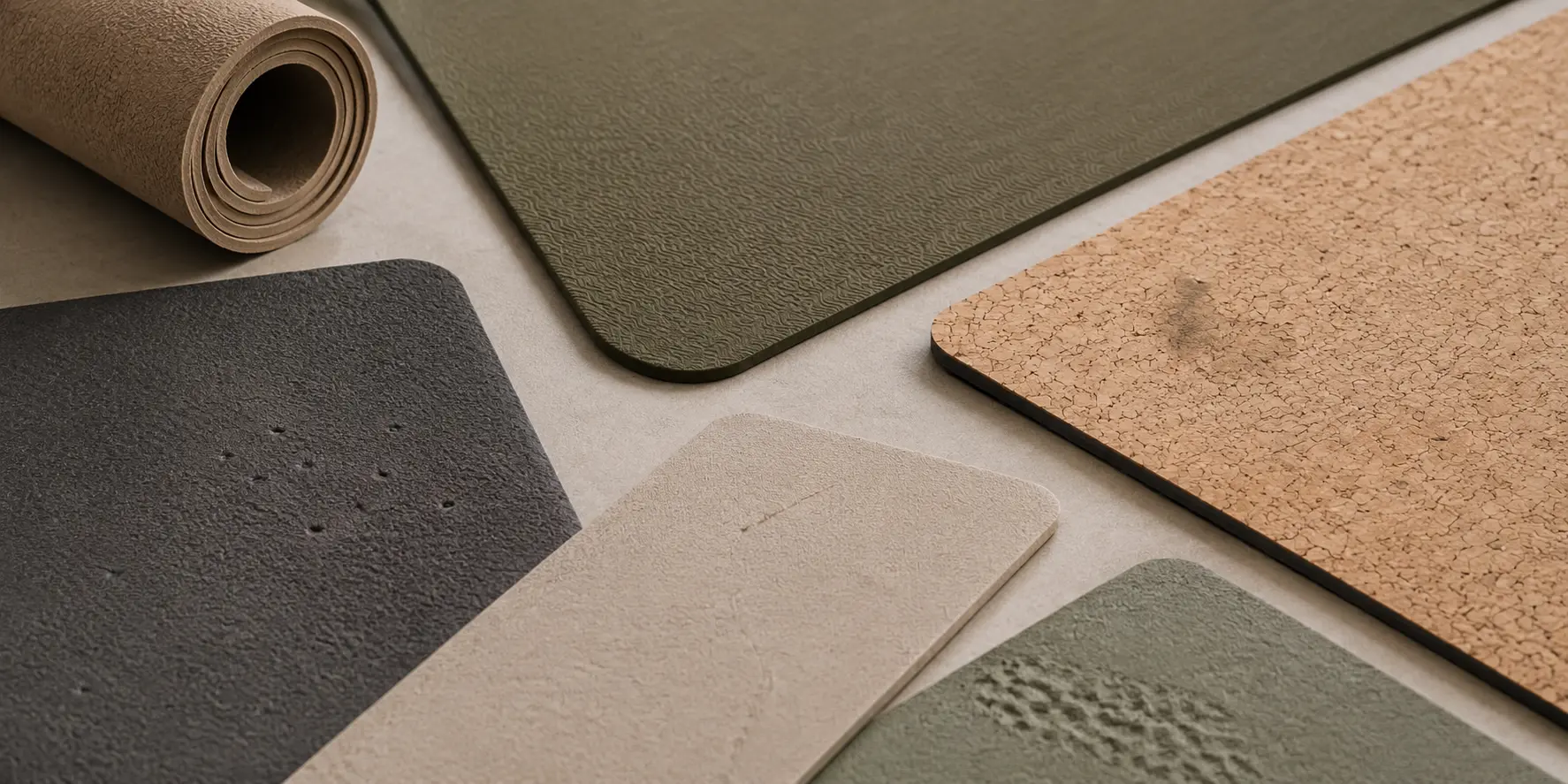
Cosmetic defects may include unexpected color variation, surface marks, uneven gloss, incomplete texture, or printing differences. However, natural cork, natural rubber, and other material surfaces may show reasonable visual variation.
Buyers and manufacturers should distinguish normal material character from cracks, contamination, excessive particle shedding, or inconsistent finishing.
Dimensional and structural defects include incorrect length or width, uneven thickness, excessive weight variation, warped edges, permanent curling, tears, poor cutting, or layer separation.
These defects may affect retail consistency, packaging efficiency, user experience, and product durability.
Functional defects include inconsistent grip, uneven cushioning, poor flatness, or unstable support. Branding and packaging defects may include peeling logos, blurred printing, incorrect labels, damaged cartons, or missing straps and inserts.
Every decision should be based on the approved specification rather than subjective appearance alone.
|
Defect |
Common Causes |
Manufacturer Prevention |
Buyer Confirmation |
|---|---|---|---|
|
Color variation |
Material batches or pigment mixing |
Batch control and color approval |
Compare with approved sample |
|
Bubbles or pinholes |
Mixing, foaming, or contamination |
Process and surface control |
Inspect under clear lighting |
|
Thickness variation |
Forming or cutting inconsistency |
Calibration and measurement |
Measure several positions |
|
Curling or warping |
Tension, storage, or shrinkage |
Conditioning and flatness checks |
Roll and unroll the mat |
|
Delamination |
Poor compatibility or bonding |
Material and bonding control |
Check edges and bending |
|
Logo defects |
Unsuitable process or artwork |
Finished logo sample approval |
Check position and adhesion |
|
Packaging damage |
Pressure or weak protection |
Packaging and loading control |
Inspect rolls, edges, and cartons |
Custom yoga mat quality issues related to logos and packaging often result from incomplete specifications, unsuitable processes, weak artwork, poor positioning, inadequate protection, or skipped sample approval.
Yoga mat color variation may result from raw-material batches, pigment mixing, production conditions, surface texture, or differences between the approved sample and bulk production. The problem may appear as a batch-to-batch shade difference, uneven local color, mismatched layers, or a printed background that does not match the approved artwork.
Manufacturers reduce these risks by using suitable artwork, confirming dimensions and colors, making a finished sample on the final material, and checking the logo after rubbing, bending, rolling, and cleaning.
Buyers should confirm whether the reference is a Pantone code, a physical swatch, or an approved finished mat. Natural materials also need an agreed range of acceptable variation.
Bubbles, pinholes, and dents may be related to uneven mixing, unstable foaming, foreign particles, dirty equipment, uneven forming, or pressure during storage. Surface marks can also appear when finished mats are stacked or rolled before the material has stabilized.
Prevention starts with clean materials, controlled mixing, equipment and mold cleaning, in-process surface inspection, and segregation of nonconforming pieces. Packing teams should also avoid excessive pressure that may create permanent impressions.
Size, thickness, and weight variation usually result from unstable forming, cutting, density, conditioning, or measurement processes. Common problems include uneven edges, mismatched corners, local thickness changes, and inconsistent finished weights within one model.
Manufacturers should calibrate cutting equipment, approve the first piece, measure thickness at several positions, check individual weight, and use one documented measuring method. Double-layer mats also require confirmation of each layer’s thickness, not only the total thickness.
Curling, warping, and delamination are structural problems that may result from material tension, insufficient conditioning, tight rolling, storage pressure, layer shrinkage, poor compatibility, or unstable bonding.
Yoga mats may curl because of uneven tension, insufficient stabilization, tight rolling, or pressure inside cartons. Buyers should separate temporary curl after unpacking from a mat that cannot return to an acceptably flat condition.
Manufacturers can reduce curling by allowing the product to stabilize after forming, controlling rolling tension, checking flatness before packing, and avoiding excessive carton compression. For double-layer constructions, the two materials should also behave compatibly during production and storage.
Yoga mat delamination occurs when bonded layers separate at the edges or inside the mat because of poor material compatibility, surface preparation, bonding, stabilization, or storage.
Warning signs include:
Prevention requires compatible layer selection, clean contact surfaces, consistent combining and alignment, edge inspection, repeated rolling checks, and comparison with an approved sample. Manufacturers should inspect mats again before packaging because some bonding problems become more visible after rolling.
Buyers can reduce structural risk by checking several edges, bending different areas, rolling and unrolling the mat, and comparing bulk products with the approved [Single-Layer vs Double-Layer Yoga Mats] reference.
Grip and cushioning variation is usually controlled through material formulation, density, texture, thickness, cleanliness, and finished-product sampling.
Grip can vary because of uneven texture, surface contamination, material batch differences, density changes, or logo printing across important practice areas.
Buyers should distinguish:
These are separate functions and should not be evaluated as one general “non-slip” characteristic.
Uneven cushioning may come from thickness variation, unstable foaming, permanent dents, or inconsistent layer ratios. Manufacturers should compare thickness, weight, compression, recovery, and surface condition during production.
Noticeable odor or contamination may result from raw materials, production residues, storage, insufficient conditioning, moisture, or sealed packaging. Common issues include dust, oil marks, foreign particles, packaging smell, material odor, or moisture-related odor.
Manufacturers reduce these risks through controlled material storage, clean equipment and worktables, adequate product conditioning, inspection before packing, and a clean packing area.
A light material-specific odor is not automatically a defect. Acceptance depends on the approved sample, intensity, duration, and agreed standard. Claims such as “completely odor-free” should not be made without appropriate support.
Logo and packaging defects often result from incomplete specifications, unsuitable processes, weak artwork, poor positioning, inadequate protection, or skipped sample approval.
Typical branding problems include:
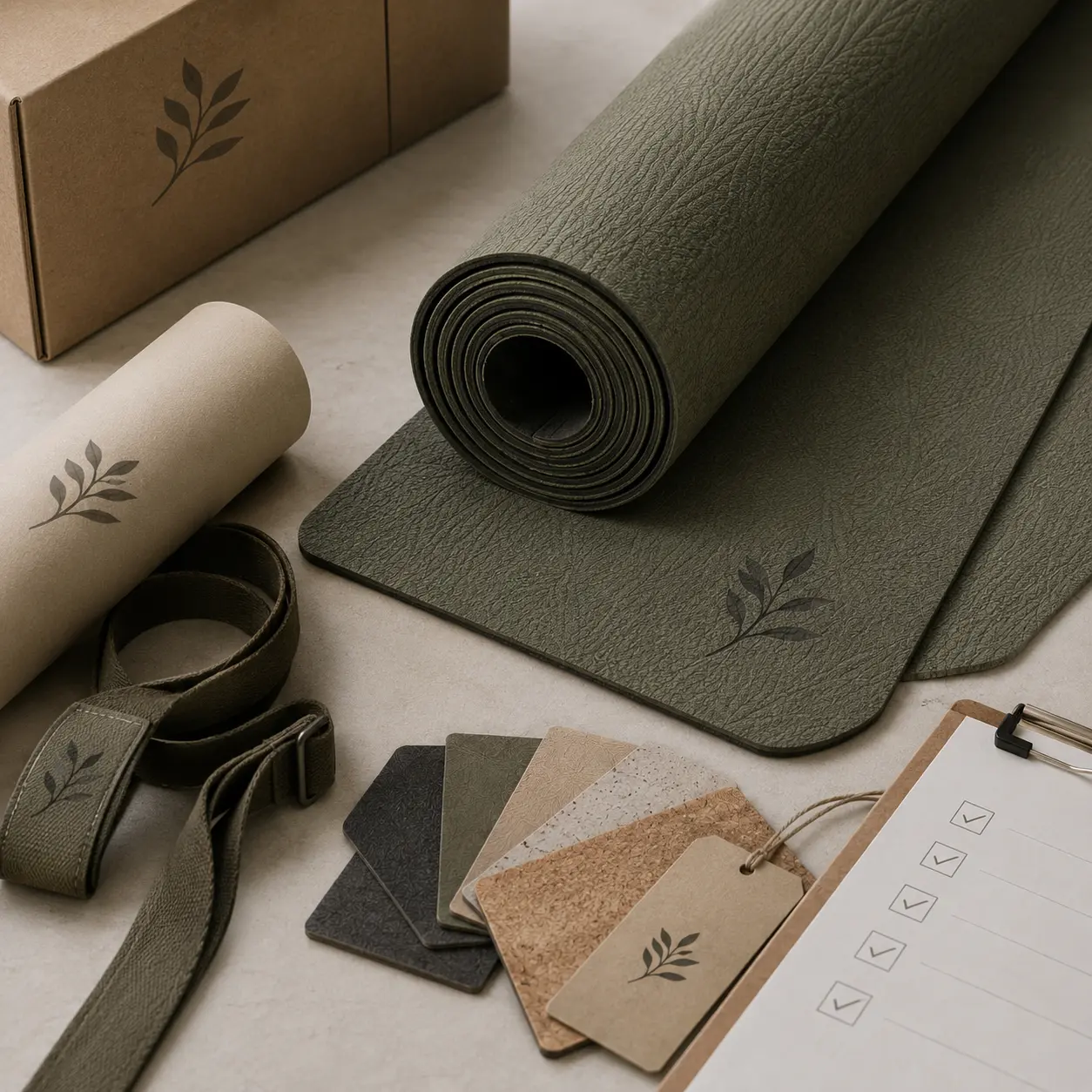
Manufacturers reduce these custom yoga mat quality issues by using suitable artwork, confirming dimensions and colors, making a finished sample on the final material, and checking the logo after rubbing, bending, rolling, and cleaning.
The first bulk piece should be compared with the approved sample. The logo should also be rechecked before packing.
For detailed branding guidance, buyers can review [Yoga Mat Logo Printing Methods Compared].
Packaging problems include compression marks, crushed edges, excessive rolling, damaged cartons, moisture exposure, scratched sleeves, incorrect labels, or missing accessories.
Manufacturers should control rolling tension, use suitable inner protection, confirm carton quantity and gross weight, select an appropriate carton specification, verify loading direction, and inspect packed products. Labels, straps, inserts, and other accessories should be counted before cartons are closed.
Packaging damage can increase returns, replacements, and customer complaints even when the yoga mat itself was produced correctly.
A reliable yoga mat quality control system combines incoming material checks, first-article approval, in-process inspection, final inspection, and batch traceability.
Incoming checks may cover:
The purpose is to prevent unsuitable or unstable materials from entering production.
The first finished piece and approved sample should confirm:
A digital rendering cannot replace a finished sample because it cannot show the actual surface response, structural stability, color result, or packaging pressure.
In-process yoga mat inspection should focus on the characteristics most likely to change during production:
When an abnormal result appears, the related batch should be identified and reviewed before the issue spreads.
Final inspection should confirm appearance, dimensions, weight, structure, branding, packaging, carton quantity, labels, and accessories.
Production records and retained samples also help identify the relevant material batch and production stage if a later problem is reported.
Buyers should confirm a complete product specification, an approved reference sample, and clear inspection priorities before bulk production begins.
The specification should cover:
Brands that are still defining their target customer, material, thickness, weight, or sales channel can use our yoga mat buying guide for brands before setting the final quality criteria.
Buyers and manufacturers should define which variations are acceptable, which require rework, and which make a product unsuitable for shipment.
A single universal tolerance does not suit every material and product position. The standard should reflect the final specification, intended market, packaging, and approved sample.
The approved sample should serve as the reference for material, color, dimensions, weight, texture, logo, and packaging.
The same sample can support production control and the final [Key Quality Control Checks for Bulk Yoga Mat Orders] process.
Quality disagreements often begin before production because requirements are incomplete, subjective, or changed after sample approval.
Clear specifications, a finished reference sample, and written acceptance criteria are more effective than instructions such as “same as usual” or “make it good quality.”
Preventing common yoga mat defects requires more than a final visual inspection. Material control reduces color and performance variation; stable forming, cutting, and conditioning reduce surface, dimensional, and flatness problems; and compatible structures reduce delamination risk.
Finished sample approval confirms the color, logo, structure, and packaging, while in-process and final inspections help detect changes before shipment. Buyers support this system by providing complete specifications and agreeing on practical acceptance standards before production.
Planning a wholesale or private-label yoga mat order? Share your preferred material, structure, size, thickness, quantity, logo, packaging, target market, target price, and quality requirements with Pureasana.
Our team can help confirm suitable specifications and discuss inspection priorities before sample and bulk production.
Common yoga mat defects include color variation, bubbles, surface marks, incorrect dimensions, uneven thickness, curling, delamination, logo problems, and packaging damage. The main risks vary by material and construction, so buyers should confirm the inspection priorities for each model.
Bubbles or pinholes may result from material mixing, foaming, contamination, dirty equipment, or unstable forming. Manufacturers reduce the risk through controlled materials, equipment cleaning, process monitoring, and surface inspection before the mats move to later production stages.
Edge curling may result from material tension, insufficient conditioning, tight rolling, storage pressure, or different shrinkage between bonded layers. Buyers should distinguish temporary curl after unpacking from a mat that does not return to an acceptably flat condition.
Manufacturers help prevent yoga mat delamination by confirming material compatibility, keeping bonding surfaces clean, stabilizing the combining process, checking alignment and edges, and repeatedly rolling the finished sample. Bulk mats should then be compared with the approved structure.
No. Some materials and newly opened packaging may have a temporary characteristic odor. Acceptance depends on the material, intensity, duration, approved sample, and agreed standard. A strong, unusual, contaminated, or persistent odor should be investigated.
Buyers should use a complete specification, a finished reference sample, and written standards for color, dimensions, weight, texture, structure, logo, and packaging. The agreement should identify acceptable variation, rework conditions, and problems that make a product unsuitable for shipment.
Explore Product Materials